
Inside IMISCOE 2025: MPG’s Role in the conversation
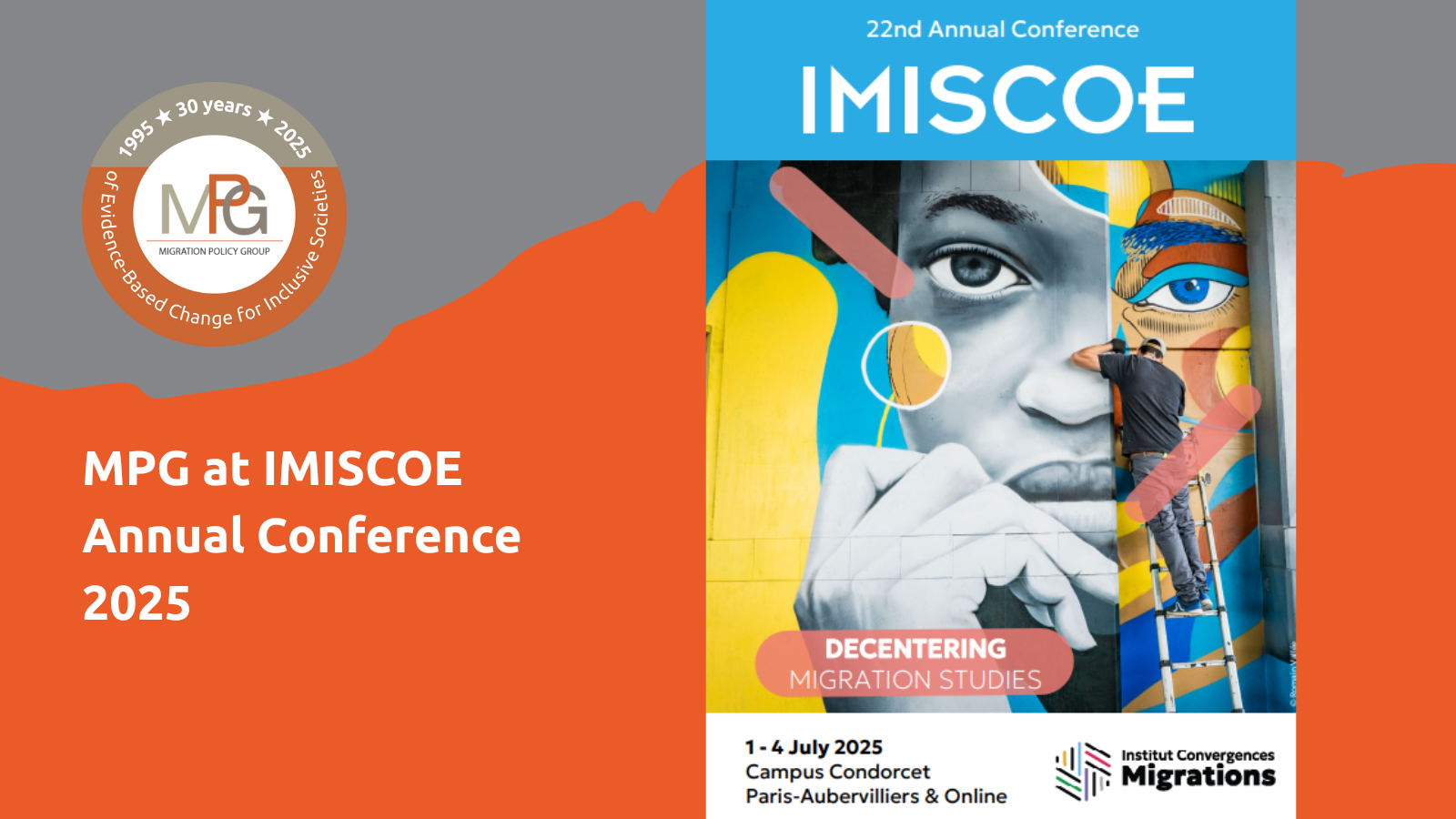
Each year, the IMISCOE Annual Conference offers a unique opportunity for MPG to engage with the leading voices in migration research and policy. As the largest interdisciplinary network on migration, integration, and diversity in Europe, IMISCOE provides a vital platform to exchange ideas, present new findings, and connect with scholars, practitioners, and decision-makers shaping migration governance.
At the 2025 edition, MPG contributed to four sessions, sharing insights from our two flagship tools: the Migrant Integration Policy Index (MIPEX) and the Migration Return Policy Index (MIREX). These instruments are central to our mission of promoting rights-based, evidence-informed migration policies across Europe and beyond.
Why IMISCOE Matters for MPG
Our annual participation in IMISCOE is a strategic investment. It allows us to:
- Share our latest research with a global community of migration scholars and practitioners
- Receive feedback that helps refine our tools and ensure their relevance
- Build partnerships that turn evidence into action
- Stay connected to emerging debates and methodological innovations
This year’s sessions helped us explore new directions for collaboration, particularly around national integration policies, open science, and rights-based return frameworks. As we prepare to launch the full MIPEX 2025 results in September and expand the reach of MIREX, IMISCOE remains a key space for reflection, connection, and impact.
MIPEX 2025: A Multi-Dimensional Picture of Integration
In her contribution, “The updated MIPEX: A Multi-Dimensional Picture of Migrant Integration Opportunities” Dr. Başak Yavçan, Head of Research at MPG, previewed the upcoming MIPEX 2025 results. She highlighted key trends from 2020 to 2024, including:
- A decline in political participation and more demanding naturalisation procedures
- Modest improvements in education and anti-discrimination policies
- Ongoing structural weaknesses in areas such as family reunification and healthcare
Başak also contributed to two workshops:
- In “Tools, Services and Platforms for Open Science in Migration Research” she discussed how MIPEX can evolve as an open-source resource to support collaboration and data accessibility.
- In “Ukrainian Exile: Coping with Protracted Temporariness” she presented findings from the Voice of Ukraine (VoU) survey of over 12,000 refugees:
- Most Ukrainian refugees remain in their first host country, reflecting “spatial inertia” due to high mobility costs and uncertain return.
- Integration outcomes vary by gender, education, and national policies.
- Refugees in countries with higher MIPEX scores are more likely to pursue education and find better job matches.
- The temporary protection status creates a legal and psychological limbo – refugees are neither fully migrants nor conventionally protected, complicating long-term adaptation.
These sessions reinforced MIPEX’s role as both a monitoring tool and a platform for dialogue across sectors.
Explore MIPEX.
Başak Yavçan said:
“At this year’s IMISCOE Annual Conference in Paris, as MPG’s Head of Research, I actively contributed to key discussions on migration and integration. I presented updated data on MIPEX scores and their policy and research implications. I also shared how they relate to our new findings on the integration and return intentions of Ukrainian refugees, helping disseminate MPG’s latest data and insights to an international audience.
I also participated in panels reflecting on the role of local integration processes and their impact on public opinion toward refugees. This important conference also offered valuable opportunities to engage with leading scholars and stakeholders on cutting-edge research, explore future collaborations, and discuss joint initiatives for upcoming calls for proposals and collaborative dissemination efforts.
My presence underscored MPG’s commitment to advancing evidence-based dialogue and partnerships in the field of migration and integration policy”.
MIREX: Measuring Fairness in Return Policies
In the workshop, “Beyond Returns: Exploring Viable Alternatives to Return Policies in Migration Management” and the panel “Decentralising Methods in Migration Research” Dr. Carmine Conte, Senior Legal Policy Analyst at MPG, presented key findings from the Migration Return Policy Index (MIREX), the first tool to assess return policies across Europe from a rights-based perspective.
Drawing on data from 11 countries, Carmine highlighted:
- Limited support for voluntary return and underused alternatives to detention
- Gaps in legal safeguards, particularly for vulnerable groups and children
- Rare and restrictive regularisation mechanisms
- Minimal stakeholder involvement in return policymaking
These sessions brought return policy into the broader migration debate, reinforcing the need for more humane, accountable, and transparent approaches across Europe.
Learn more about MIREX and the FAIR Return project.
Carmine Conte said:
“Presenting the preliminary findings of the MIREX Index on return policies, as part of the FAIR project, at IMISCOE was a valuable opportunity to showcase MPG’s unique evidence-based and comparative approach to analyse return policies in Europe. With return high on the EU policy agenda, the presentation helped position MIREX as a timely research and policy-relevant tool to assess the fairness and fundamental rights compliance of national return policies. The feedback from academics was highly constructive and sparked rich discussions on the importance of providing better alternatives to return and safeguards for migrants, and the need for further research on the topic. It also opened the door to promising collaborations, particularly with other HORIZON projects, to explore return policies across Europe and in third-countries, and expand the analysis to additional dimensions of return policies”.
 About the Migration Policy Group (MPG)
MPG is an independent think-and-do-tank based in Brussels. MPG’s purpose is rooted in its ability to inspire networks to provide evidence-based projects, research and campaigns in the areas of integration, migration and anti-discrimination.