
New policy brief exposes democratic gaps for migrants and racialised communities in Europe
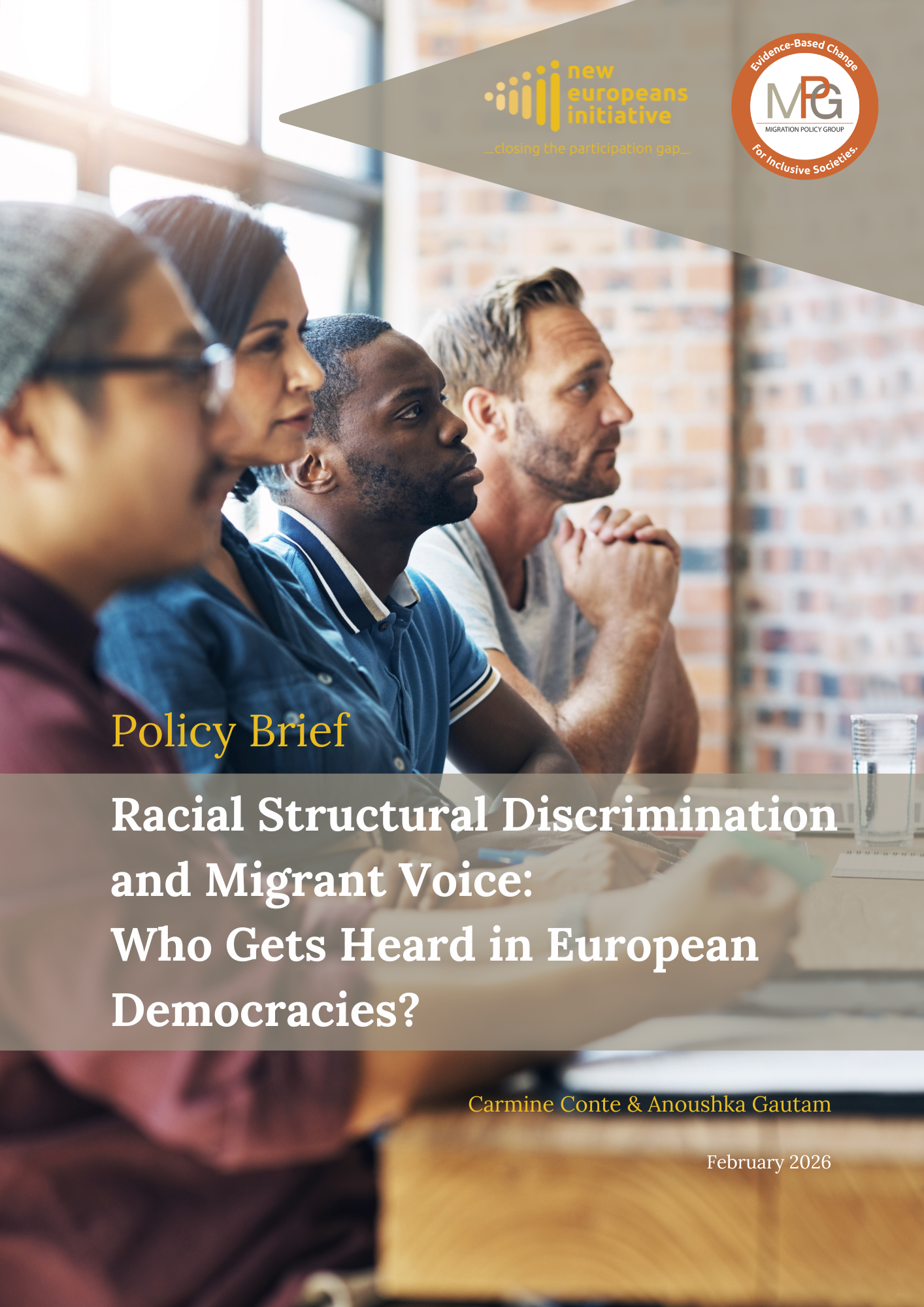
A new policy brief by MPG’s New European Initiative and written by Carmine Conte and Anoushka Gautam reveals how racial structural discrimination continues to limit the political participation of migrants and racialised communities across Europe.
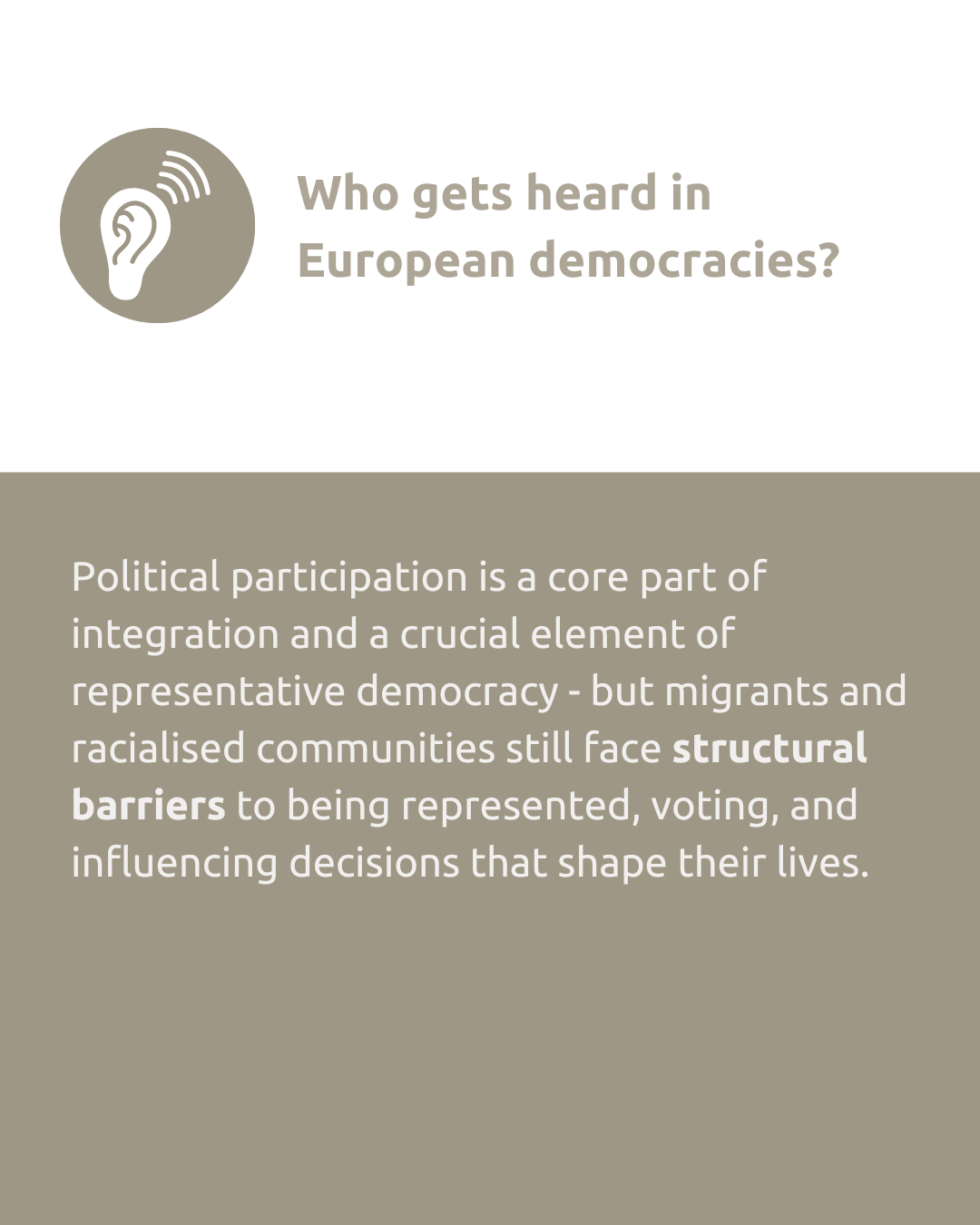
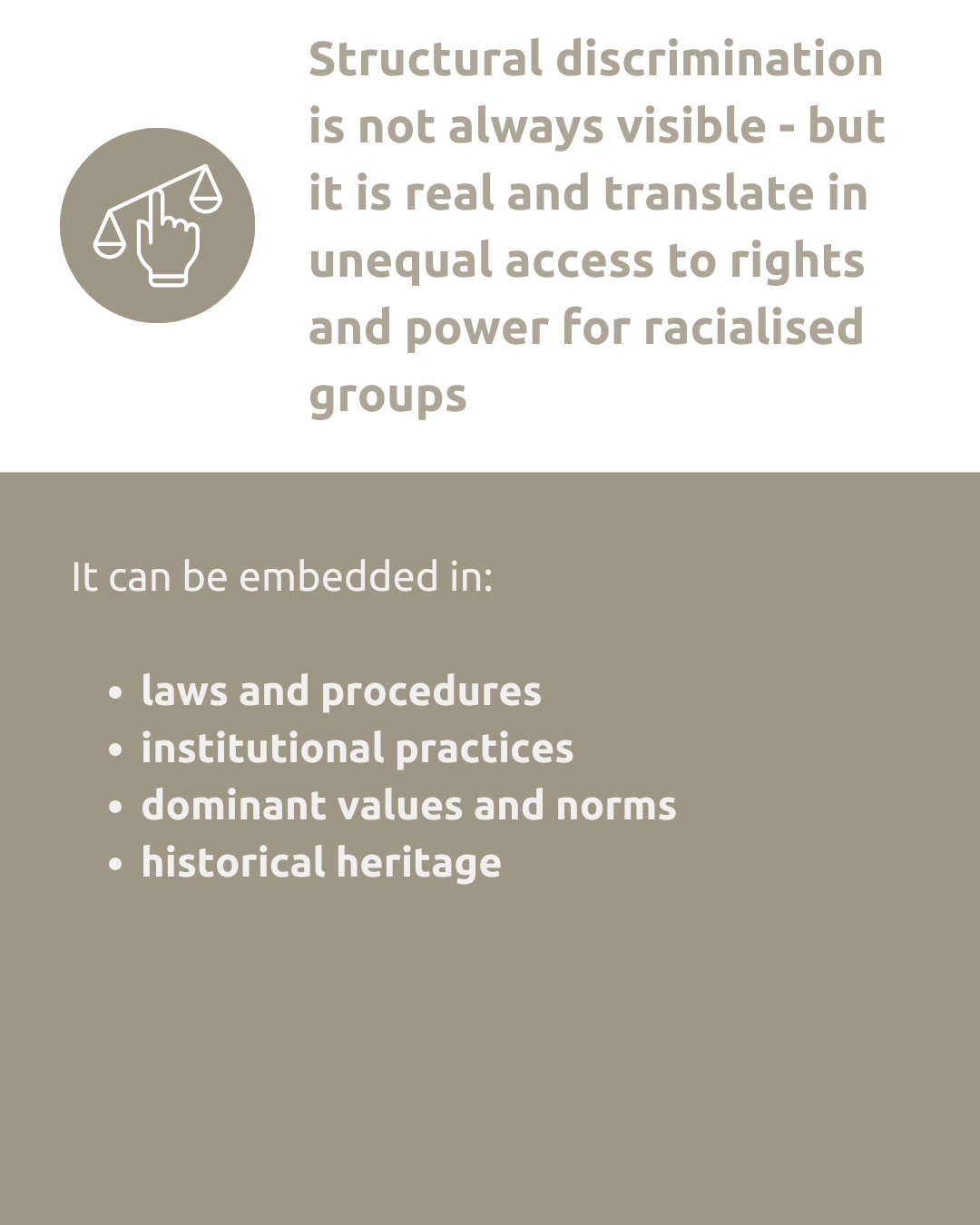
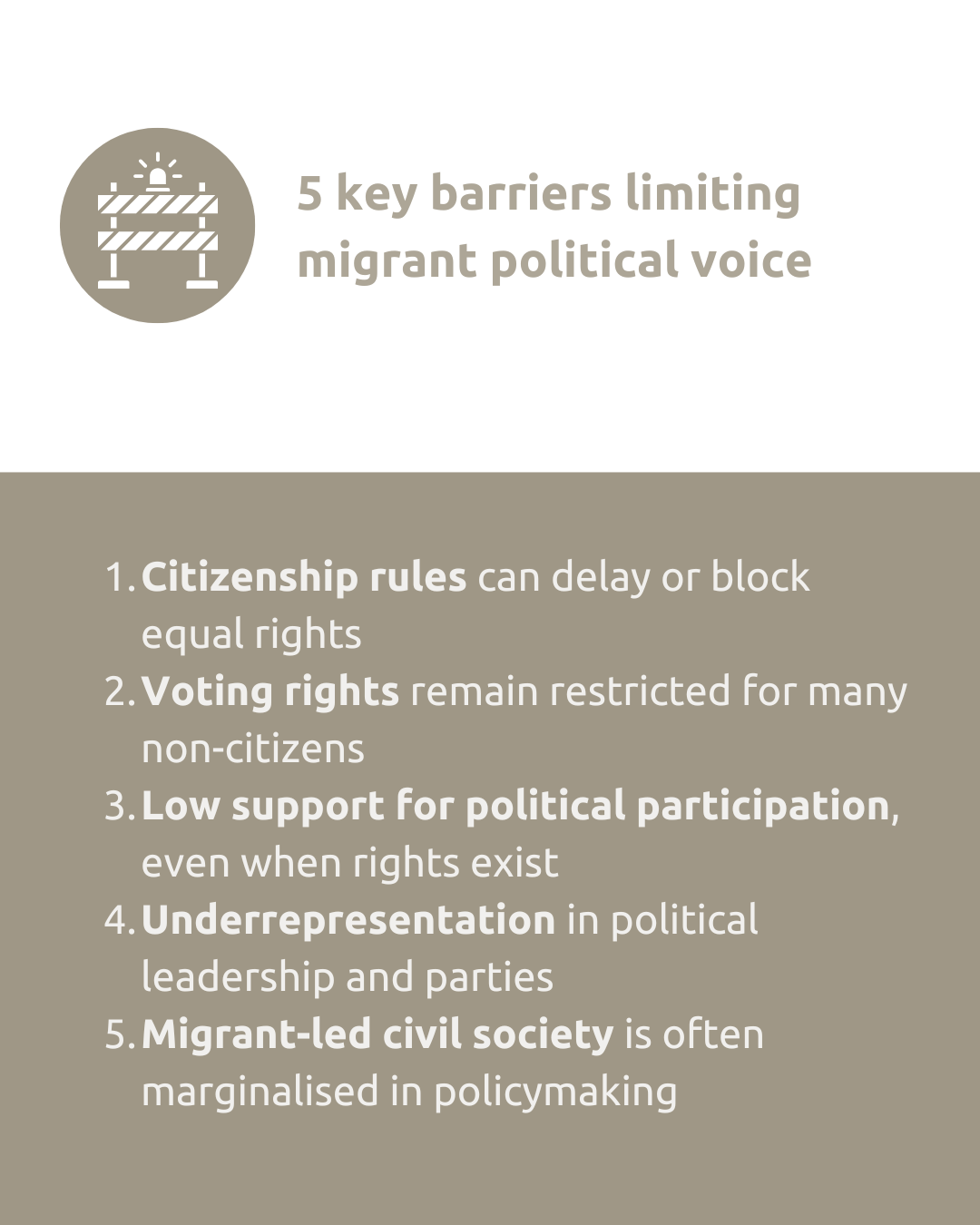
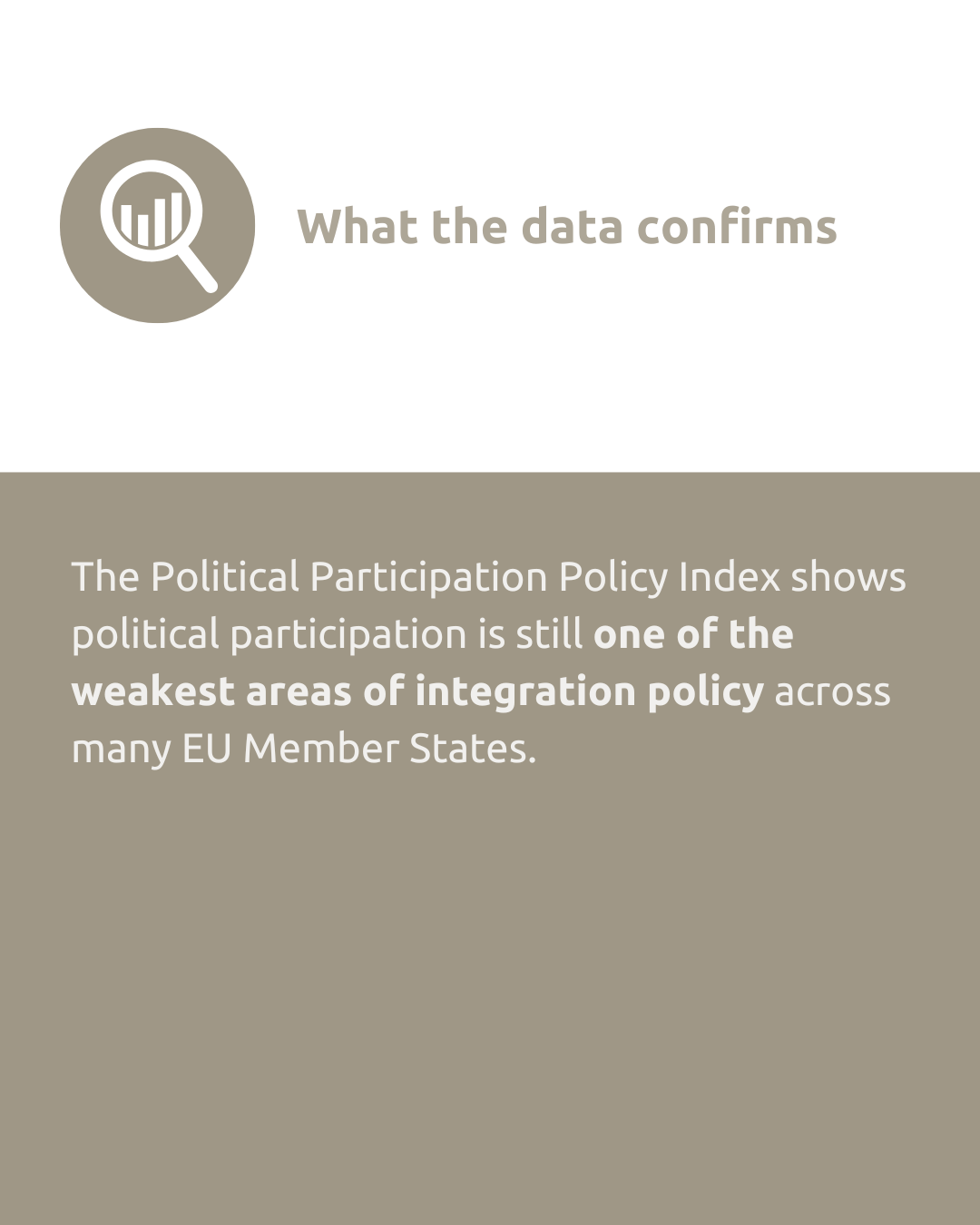
Titled Racial Structural Discrimination and Migrant Voice: Who Gets Heard in European Democracies?, the report shows that unequal access to citizenship, restricted voting rights, low political representation, and limited support for migrant-led civil society organisations combine to create a persistent democratic deficit. Drawing on evidence from across EU Member States and the Political Participation Policy Index, the brief finds that these inequalities are not the result of individual choices, but of deeply embedded institutional, societal, and historical barriers.
The analysis highlights how restrictive naturalisation systems, lack of encouragement to vote, and exclusion from decision-making spaces systematically marginalise migrants and racialised groups. These structural obstacles weaken trust in public institutions and undermine the promise of inclusive democracy.
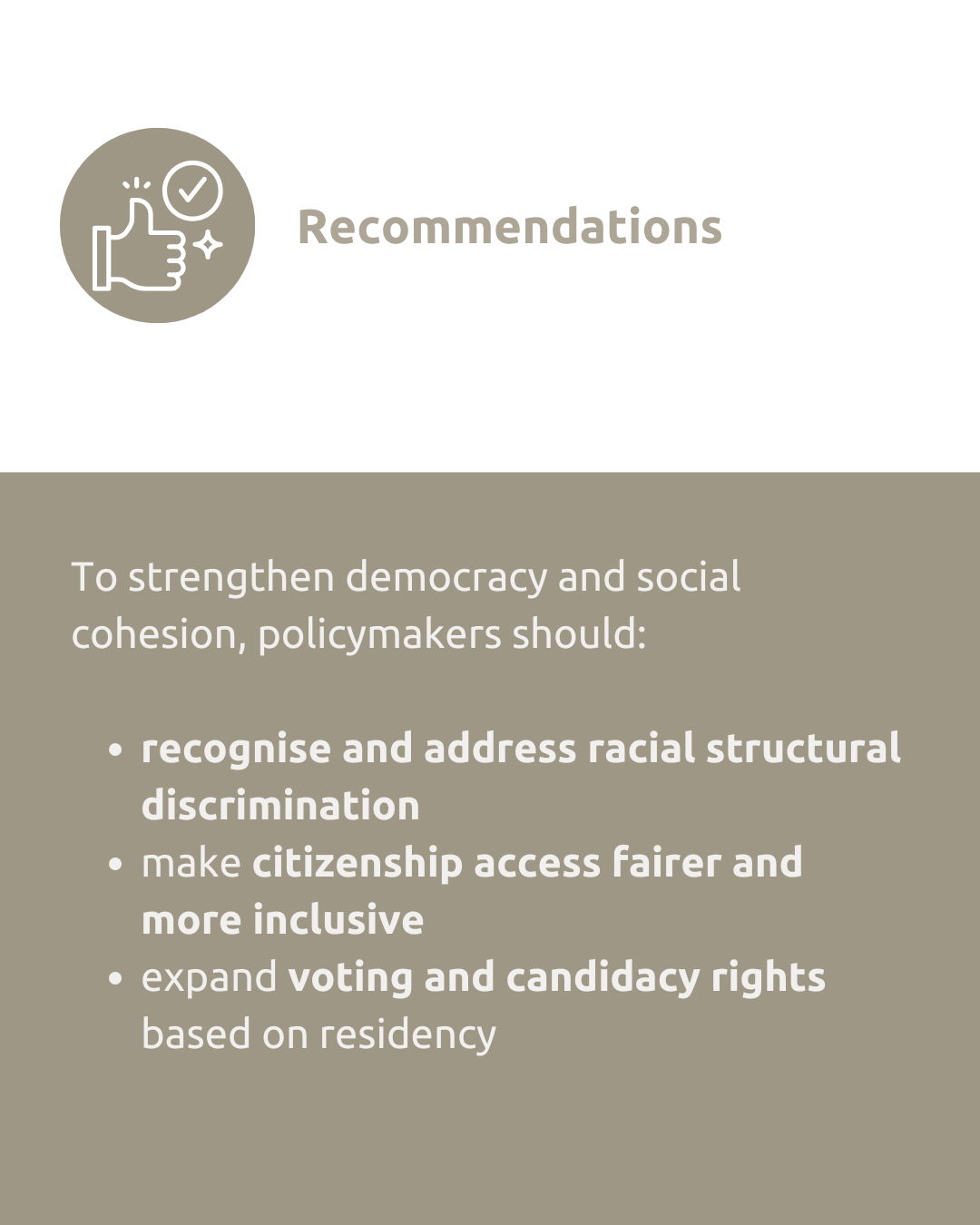
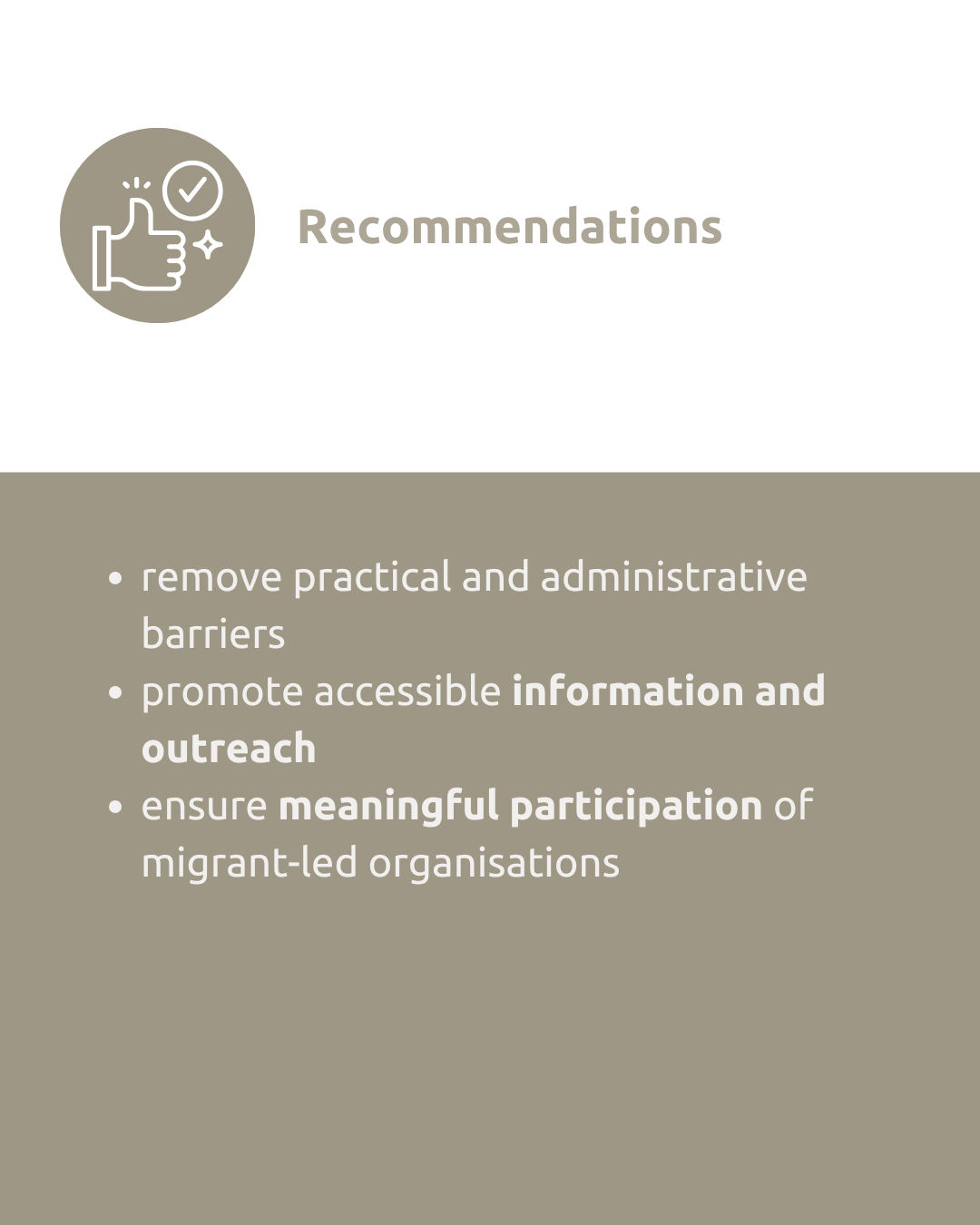
The policy brief also outlines practical recommendations for change. These include recognising structural discrimination in law, reforming citizenship frameworks, extending voting and candidacy rights based on residency, removing administrative barriers to participation, and strengthening the role and funding of migrant-led civil society.
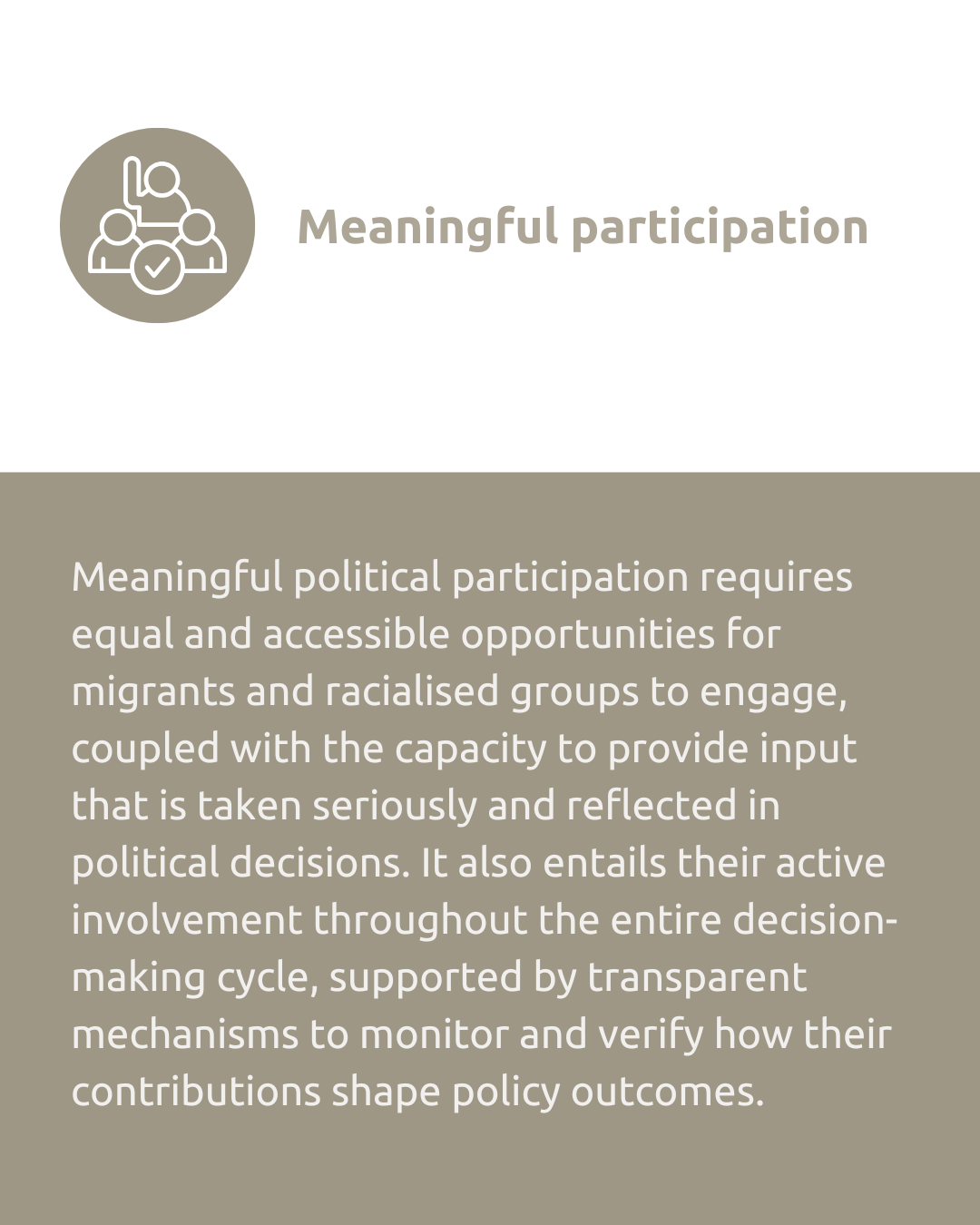
The authors argue that meaningful democratic participation is essential for social cohesion and equality, and that Europe’s democracies can only thrive when everyone who lives in them has a real voice in shaping public life.
Policy Brief Racial Structural Discrimination and Migrant Voice: Who Gets Heard in European Democracies? in a few slides


About the Migration Policy Group (MPG)
MPG is an independent think-and-do-tank based in Brussels. MPG’s purpose is rooted in its ability to inspire networks to provide evidence-based projects, research and campaigns in the areas of integration, migration and anti-discrimination.