Faster Returns, Weaker Rights? What MIREX Reveals About the New Return Regulation
26 March 2026 vote in the European Parliament marks a significant step towards the adoption of the new EU Return Regulation, a development that raises serious concerns about the direction of EU migration policy.
Last night, 1 June 2026, the EU Parliament and Council reached a provisional agreement on the new Return Regulation, aiming to simplify and speed up procedures. Yet the evidence from our Migrant Return Policy Index (MIREX) shows that return policies already fall short on human rights, oversight mechanisms, and regularisation pathways.
The agreement prioritises forced returns, imposing an obligation to leave immediately or within a set deadline. MIREX however shows that returns are legitimate and sustainable only when people can access voluntary programs, have adequate time and support to prepare for their departure.
Under the new regulation, the duration of detention will increase to 30 months, with the possibility to impose new periods of detention each time a person moves to another EU country. The length of detention is already among the worst-performing areas measured by MIREX, and this change risks making it effectively unlimited. Worse still is the provision for the detention of children, including unaccompanied minors: almost none of the countries analysed by MIREX prohibit it, and codifying it at the European level is incompatible with the UN Convention on the Rights of the Child.
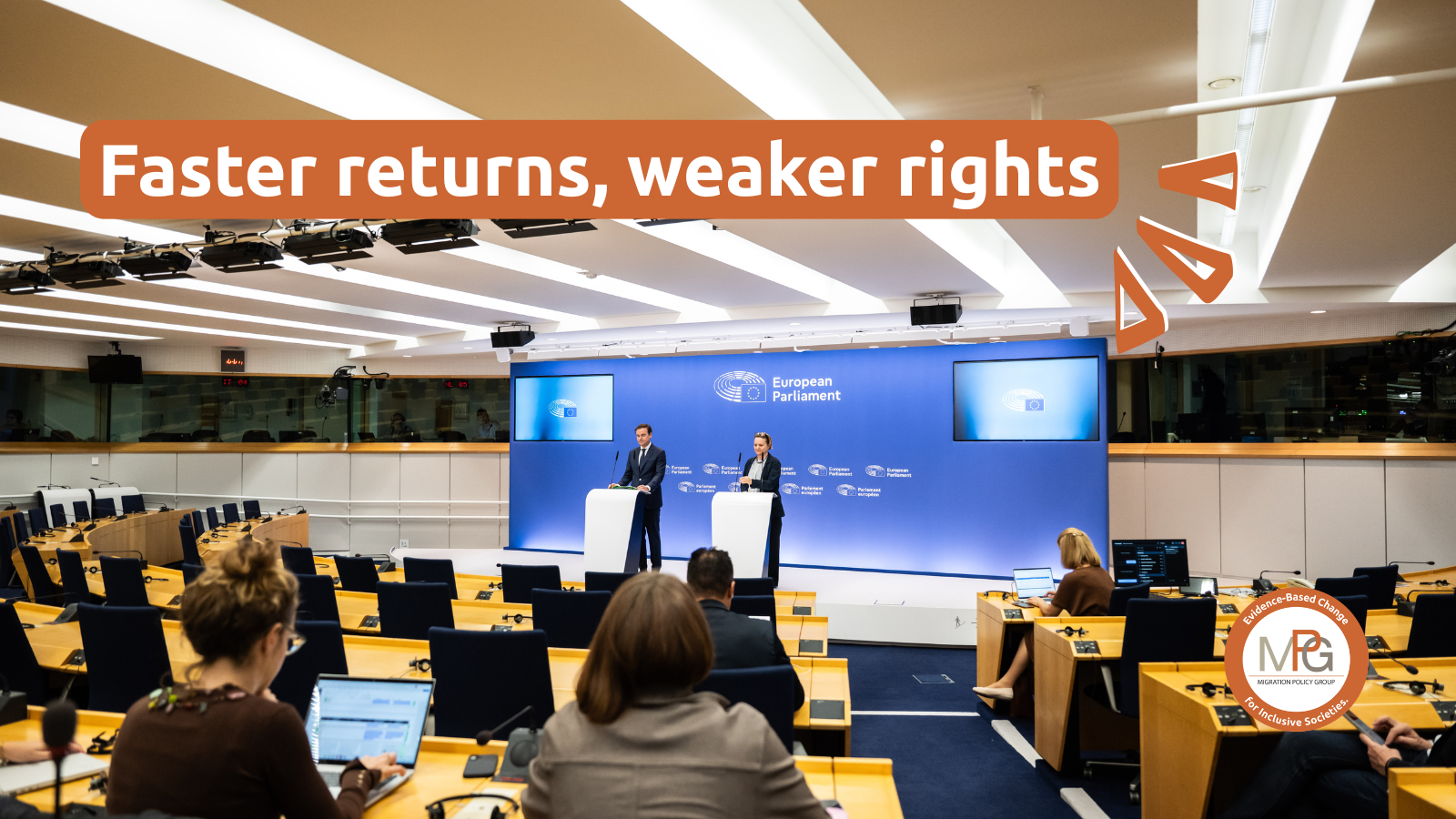
In addition, the so-called return hubs allow transfers to third countries, but MIREX finds that none of the countries analysed monitor what happens once a person is handed over. Without independent oversight, respect for the principle of non-refoulement remains on paper. And as Member of the European Parliament (MEP) Malik Azmani noted at the press conference presenting the agreement, children can also be sent to return hubs, with single exception of unaccompanied minors.
Finally, the text is built mainly around forced return, detention and enforcement. In contrast, regularisation pathways – which reduce legal limbo, support integration and provide durable and safe solutions for those who cannot be returned – are entirely absent. The agreement pursues speed and efficiency, but it deepens the weak points our MIREX research has already mapped. And while it still needs formal adoption, the substance is settled and unlikely to change in any meaningful way.
To see more about the challenges of return and MPG’s recommendations for better policies in the area, explore the MIREX report and its findings.
About the Migration Policy Group (MPG)
MPG is an independent think-and-do-tank based in Brussels. MPG’s purpose is rooted in its ability to inspire networks to provide evidence-based projects, research and campaigns in the areas of integration, migration and anti-discrimination.