
MIPEX 2025 Canada results launched
Canada: A Global Leader in Migrant Integration, but Gaps Remain
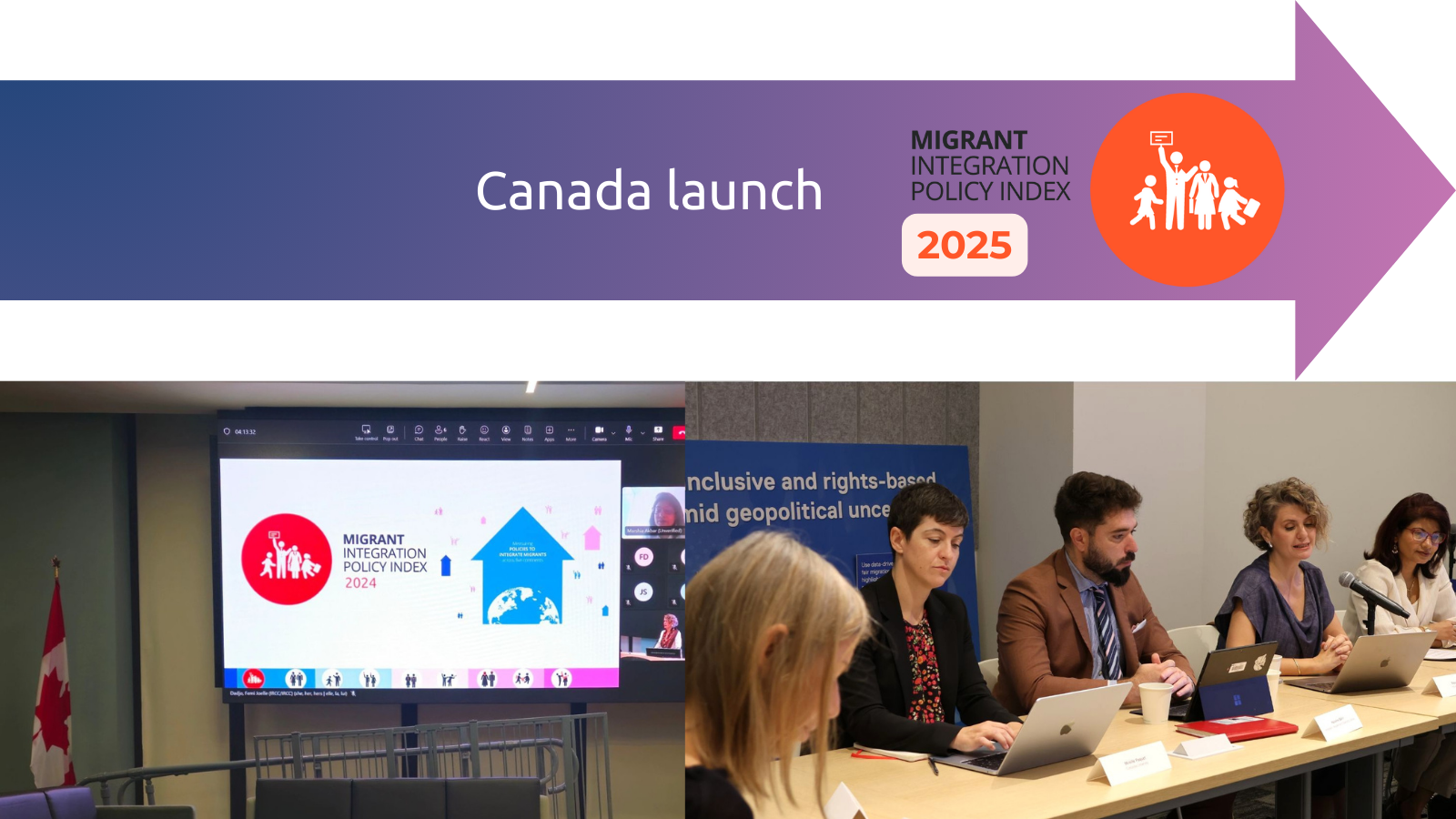
At the launch of the MIPEX Canada report, Canada was confirmed as one of the world’s top performers in migrant integration policies. With a score of 81/100, Canada ranks 4th globally, just behind Sweden, Finland, and Portugal.
The presentation, delivered by Başak Yavçan, Head of Research at MPG, and Marshia Akbar, Director of the BMO Newcomer Workforce Integration Lab, offered an in-depth look at how Canada performs across the eight MIPEX policy areas.
Strengths: Inclusive Policies in Key Areas
Canada has seen steady progress in several areas over the past five years:
- Labour Market: Targeted programmes such as the Racialized Newcomer Women Pilot and the Youth Employment and Skills Strategy have expanded opportunities for migrant women and youth. Temporary residents can access employment services and workplace protections.
- Education: Ranked 1st globally, Canada guarantees universal access to compulsory education regardless of status. Initiatives such as the Student Refugee Program and Settlement Workers in Schools strengthen support. Teacher training increasingly reflects diversity and multiculturalism.
- Health: The pandemic prompted more inclusive policies, with asylum seekers covered by the Interim Federal Health Program and migrants more involved in service design.
- Family Reunification: Among the most inclusive globally, with no language or cultural tests required for sponsorship and strong settlement support services.
Remaining Gaps and Challenges
Despite its strong overall performance, the presentation highlighted key areas where Canada lags:
- Political Participation: Canada scores poorly, with no voting or standing rights for non-citizens and no permanent consultative body for migrant communities. This remains the weakest area for migrant integration.
- Undocumented Migrants: Still face significant barriers to healthcare, higher education, and social services, relying heavily on local community initiatives.
- Public Opinion: A growing share of Canadians (58% in 2022) believe immigration levels are too high, reflecting wider global shifts in attitudes toward migration.
Key Takeaway
Canada’s experience demonstrates that inclusive integration policies work—improving outcomes for migrants and strengthening society as a whole. But sustaining this leadership requires addressing gaps in political rights and ensuring that undocumented migrants are not left behind.
👉 For more on MIPEX Canada see Canada infographic and visit MIPEX Canada page.
 About the Migration Policy Group (MPG)
MPG is an independent think-and-do-tank based in Brussels. MPG’s purpose is rooted in its ability to inspire networks to provide evidence-based projects, research and campaigns in the areas of integration, migration and anti-discrimination.