
Inside Europe’s Migration Machine: Rare first-hand accounts of immigration detention and deportation
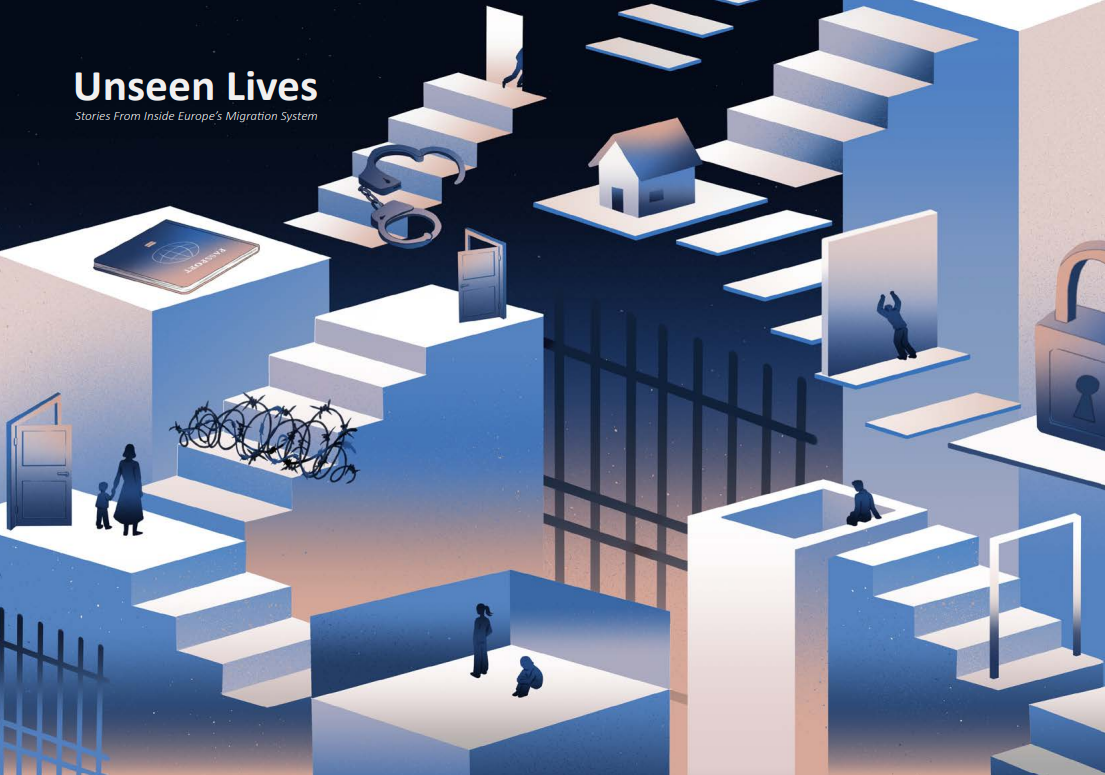
The EU-funded FAiR research project has published “Unseen Lives”, a new powerful booklet gathering rare testimonies of people who experienced immigration detention, deportation and the long, uncertain journeys in between – from across Europe and beyond. The publication also features striking accounts of doctors, lawyers and volunteers working inside and against Europe’s immigration system. The testimonies highlight the profound insecurity faced by people living undocumented in Europe – what scholars call “hyper-precarity”: a condition marked by extreme instability, limited rights, and high vulnerability to exploitation. For those held in immigration detention, the testimonies show how this system is a structural injustice that causes widespread psycho-social, medical, legal and sometimes fatal harm.
Among the stories featured in the booklet, you can read about:
- Dr. Nicola Cocco, humanitarian doctor and activist who visited the Milan immigration detention centre. He recounts open bathrooms without privacy, people sedated into silence, and violence during deportations.
- Sam, a Rwandan professional dancer arrested at Brussels Airport despite holding a valid passport. After four weeks in a dentention centre, a forced “voluntary” return spiralled into a nightmare: Belgium’s handling of his passport led to his imprisonment in Rwanda, separation from his Belgian wife and children, and years of ongoing trauma. His family is still fighting for justice — and for reunion.
- Maia, a Georgian mother who moved to Austria seeking essential medical treatment for her daughter. After surviving a cancer diagnosis, Maia and her family were deported back to Georgia in 2024, which left them without much-needed medical continuity. For people who have returned – whether voluntarily or by force – reintegration remains fraught. People who were returned or deported to Georgia, Iraq and Nigeria speak of exclusion, poverty, and stigma, with support structures often poorly adapted to their needs. The publication comes at a defining moment for EU migration policy. In March 2025, the European Commission proposed a Regulation establishing a “Common European System for Return,” aimed at expanding and accelerating deportations. However, FAiR’s extensive research shows that reliance on punitive measures, coercion, and detention is neither effective nor sustainable.
Instead, Unseen Lives underscores the need for a shift in approach. FAiR recommends:
- Prioritising alternatives to return, including accessible regularisation pathways and inclusive policies that enable access to rights – measures shown to strengthen social cohesion and support labour markets.
- Investing in return and reintegration programmes that are adequate, sustainable, and shaped by the experiences and needs of returnees themselves.
- Upholding fundamental rights for every person, regardless of status, with robust procedural safeguards, independent monitoring, and post-return oversight. Crucially, the booklet calls for policies that centre the voices of undocumented people and those with direct experience of detention and return, alongside civil society actors working in the field.
About the Migration Policy Group (MPG)
MPG is an independent think-and-do-tank based in Brussels. MPG’s purpose is rooted in its ability to inspire networks to provide evidence-based projects, research and campaigns in the areas of integration, migration and anti-discrimination.