
Solidarity is not a crime: humanity won!
Solidarity is not a crime: humanity won!
MPG warmly welcomes the news that the trial involving 24 humanitarian workers, including Seán Binder, with whom we have collaborated in the past on the issue of criminalisation of solidarity, has finally come to an end with the acquittal of all defendants. For the sole reason of having helped save the lives of migrants arriving in Lesvos, they had been facing up to 20 years in prison.
Despite the very real concerns around the criminalisation of solidarity across Europe – concerns that particularly affect search and rescue (SAR) actors – today we are relieved that the Greek justice system has acknowledged what should never have been in doubt: that the role of NGOs is essential to uphold the human rights of people on the move, not a threat to be fought.
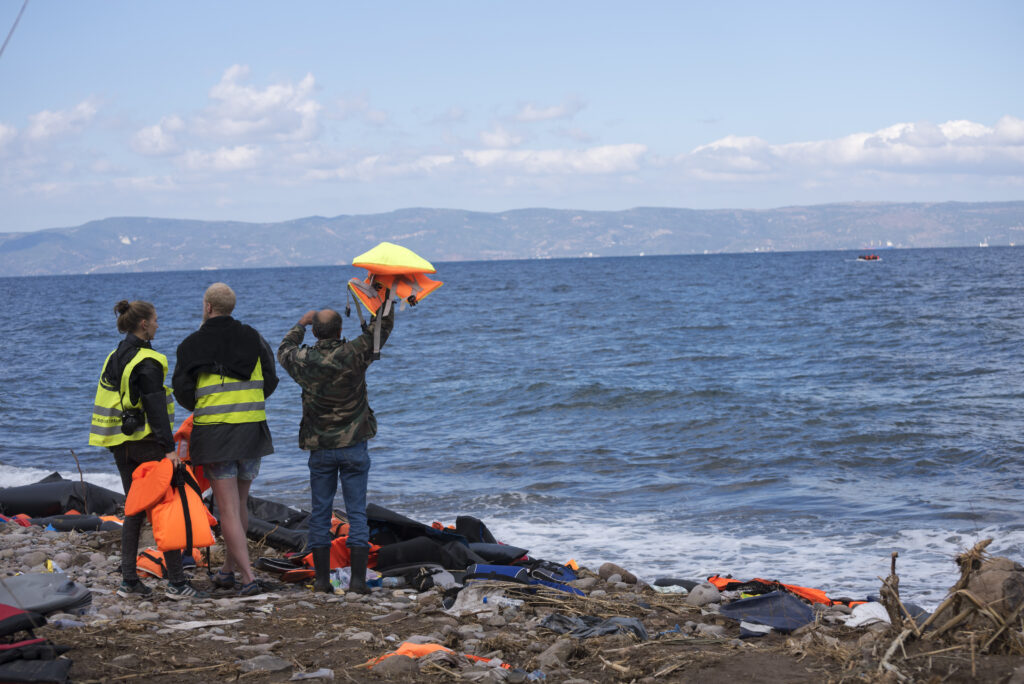
The Greek island of Lesvos is one of the main points of arrival for migrants in Europe, but also one of the most dangerous. This is why, in 2017, Seán Binder decided to volunteer with the NGO Emergency Response Centre International (ERCI), supporting search and rescue operations.
In 2018, he was placed in pre-trial detention for 107 days, alongside another volunteer. From that moment, an ordeal began that has only now come to an end. Seán and 23 other humanitarian workers were accused of migrant smuggling, participation in a criminal organisation, espionage and money laundering – charges carrying the risk of up to 20 years in prison.
MPG first met Seán in 2019, shortly after his release from pre-trial detention. At the time, MPG was conducting key research on the criminalisation of solidarity through the ReSOMA project – the Research Social Platform on Migration and Asylum. Our findings documented clear Europe-wide patterns in which solidarity is increasingly treated as a crime, and highlighted how the EU Facilitation Directive could be revised to better protect humanitarian organisations. Today, the Directive still relies on an overly vague definition of “migrant smuggling”, enabling the misuse of this legislation against those whose actions are aimed at saving lives.
While this case has now ended with a full acquittal, two dozen human rights defenders were left in legal limbo for more than seven years. This has caused profound personal and financial harm – not only to the individuals involved, but also to their organisations and humanitarian work. It also means that, during this period, lives that could have been saved may instead have been lost at sea. And even when prosecutions do not end in convictions, the damage to solidarity can still be real.
Despite the hardship endured, today we share in the relief and joy of this outcome. We stand with Seán, the other defendants, and all their loved ones, with deep affection and renewed hope. And we carry forward Seán’s words as a reminder of why our work must continue – with even greater determination: “The more hopeless the situation becomes, the more we must continue to act.”
Linked resources: