19 young migrant leaders successfully completed MPG’s third annual Democracy Academy

A third class of participants successfully completed MPG’s annual Democracy Academy imitative in December 2025. As the initiative continues in 2026, MPG is planning to also offer additional learning and networking opportunities to the alumni of the previous academy classes.
The Democracy Academy, part of the New Europeans Initiative, is a series of online events dedicated to boosting the civic and political participation of people with various migration backgrounds. Since 2023, the academy has been bringing together up to 25 emerging New European leaders with prior civic and political participation experience in a shared space for training, knowledge-sharing and networking. The participants engage in five sessions led by select speakers – experienced professionals with proven achievements related to the themes of the classes.
The 2025 edition
The online academy included five sessions whose topics were identified by migrant leaders themselves through interviews. The session included:
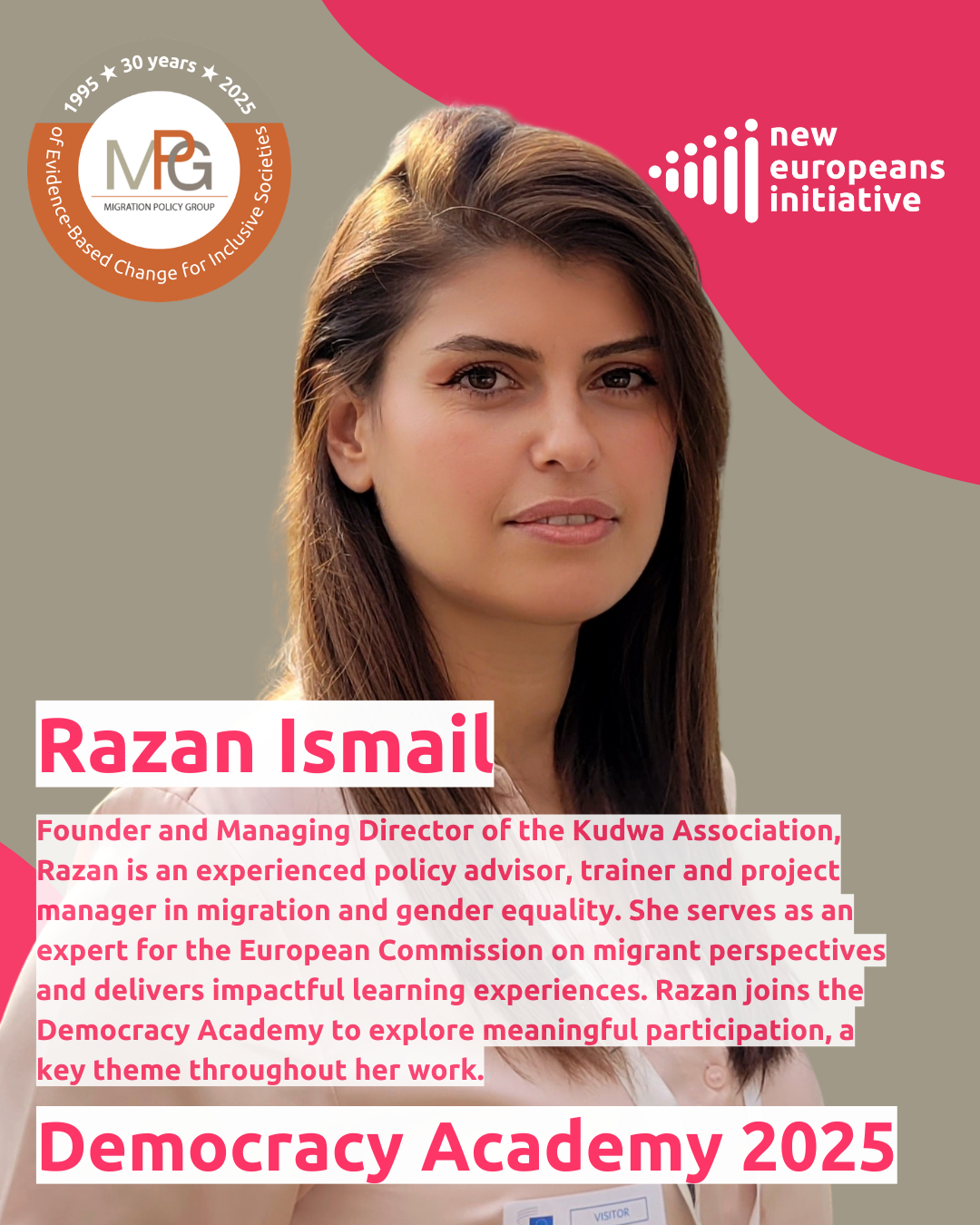
- Session 1, 13 November 2025: Welcome & meaningful participation, led by Razan Ismail, Founder of the Kudwa Association
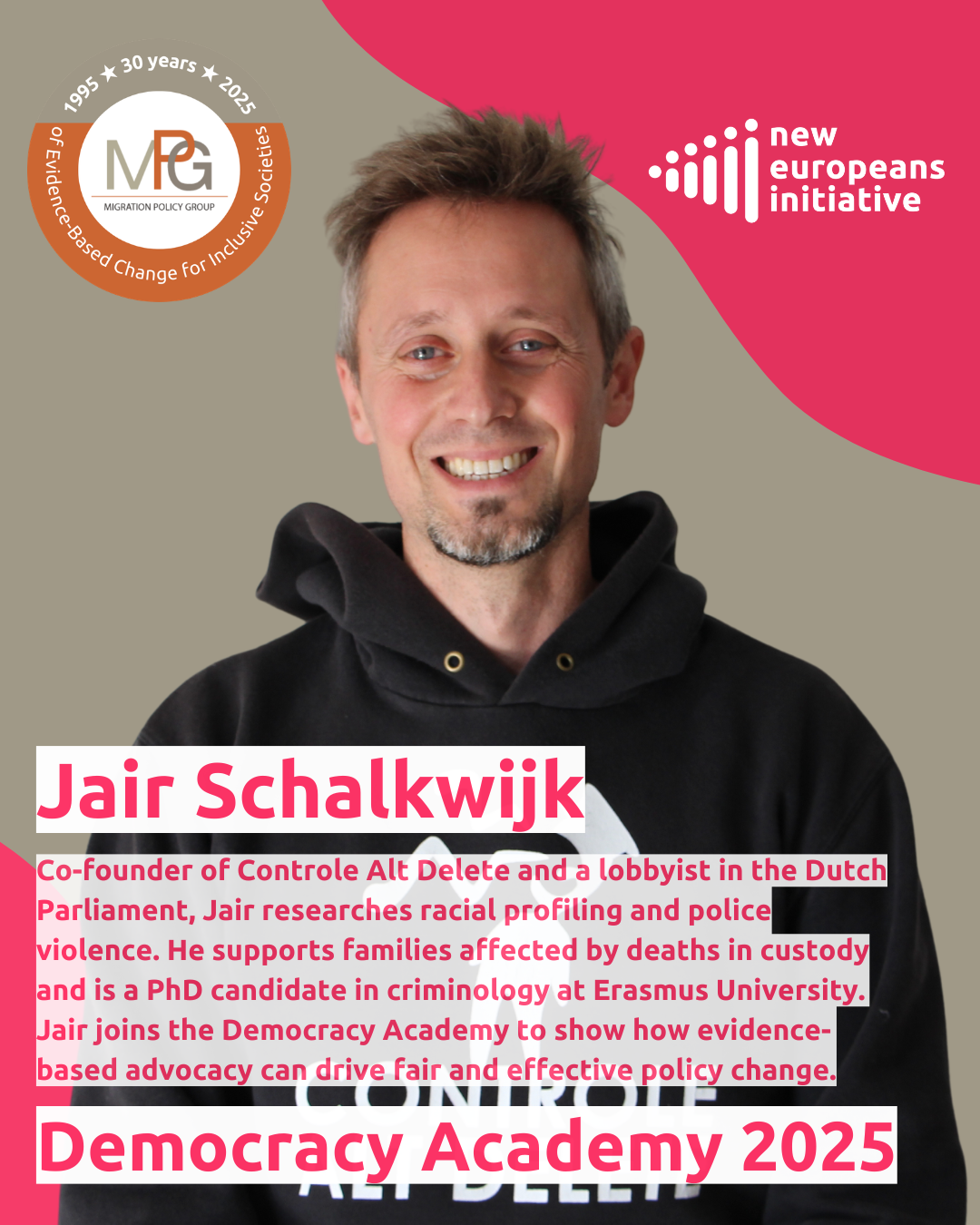
- Session 2, 20 November 2025: Evidence-based advocacy, led by Jair Schalkwijk, Project Leader at Controle Alt Delete & IZI Solutions
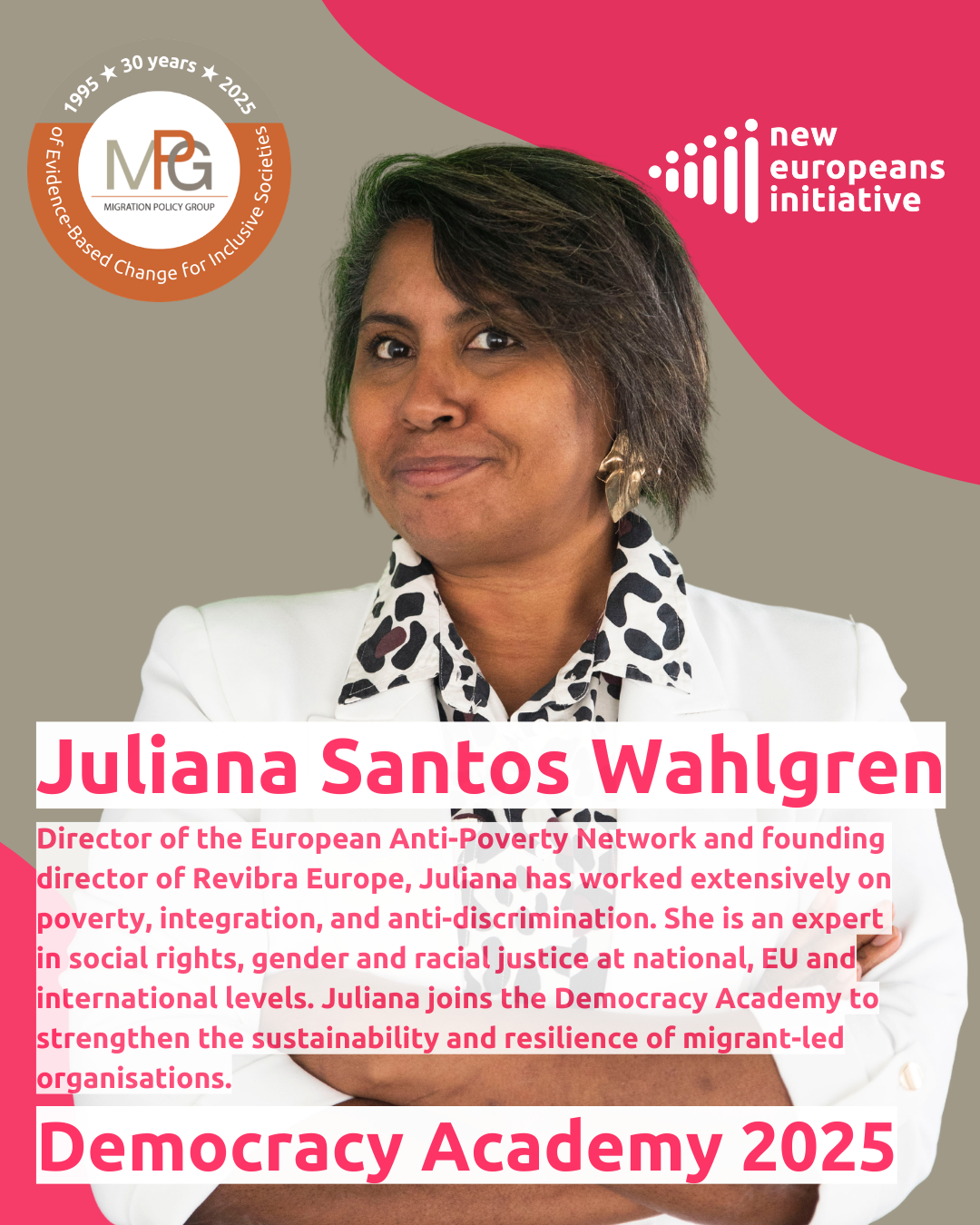
- Session 3, 27 November 2025: Organising for sustainability and resilience, led by Juliana Santos Wahlgren, Director of the European Anti-Poverty Network (EAPN)
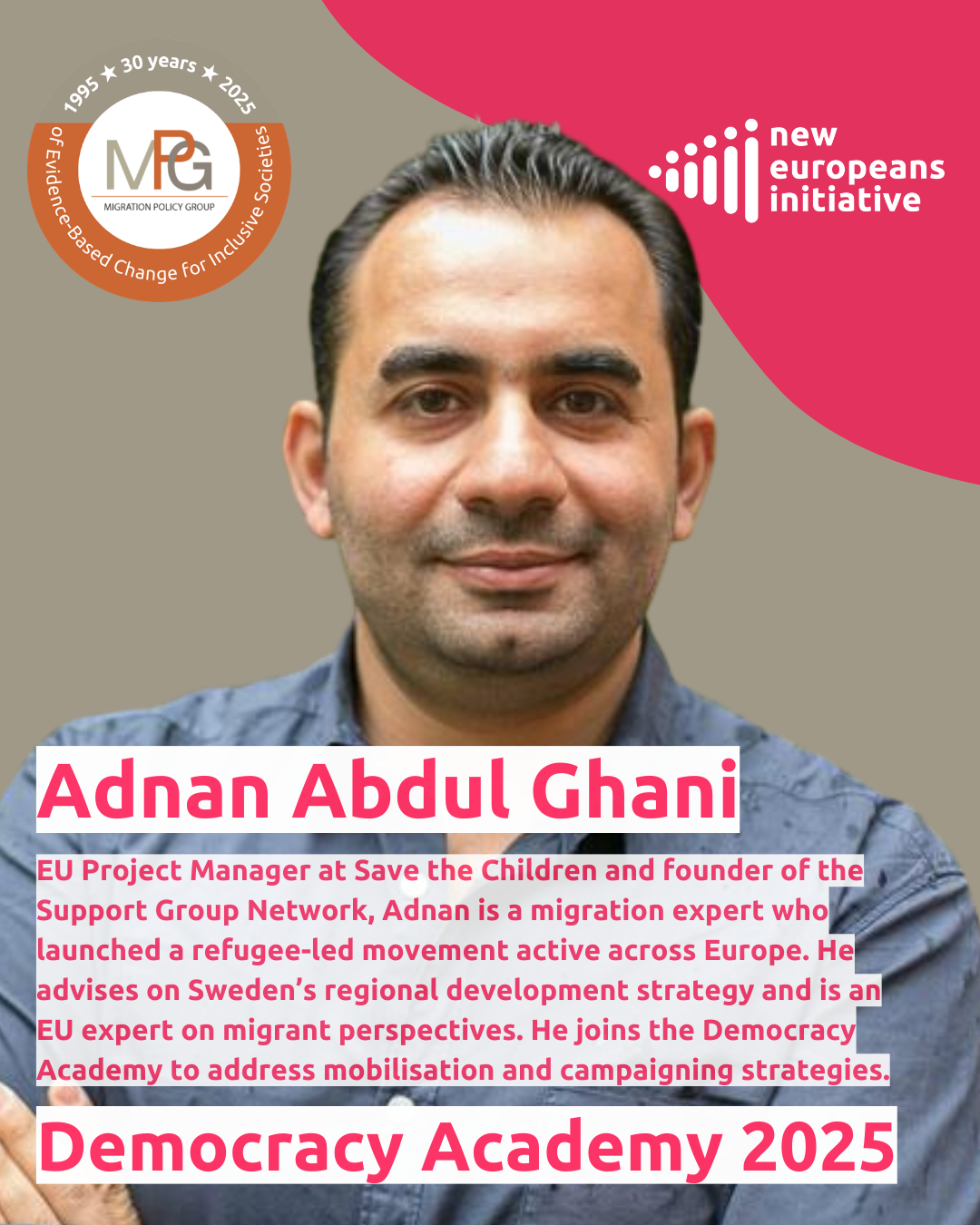
- Session 4, 4 December 2025: Mobilising and campaigning, led by Adnan Abdul Ghani, Founder of the Support Group Network (SGN) and EU Project Manager at Save the Children
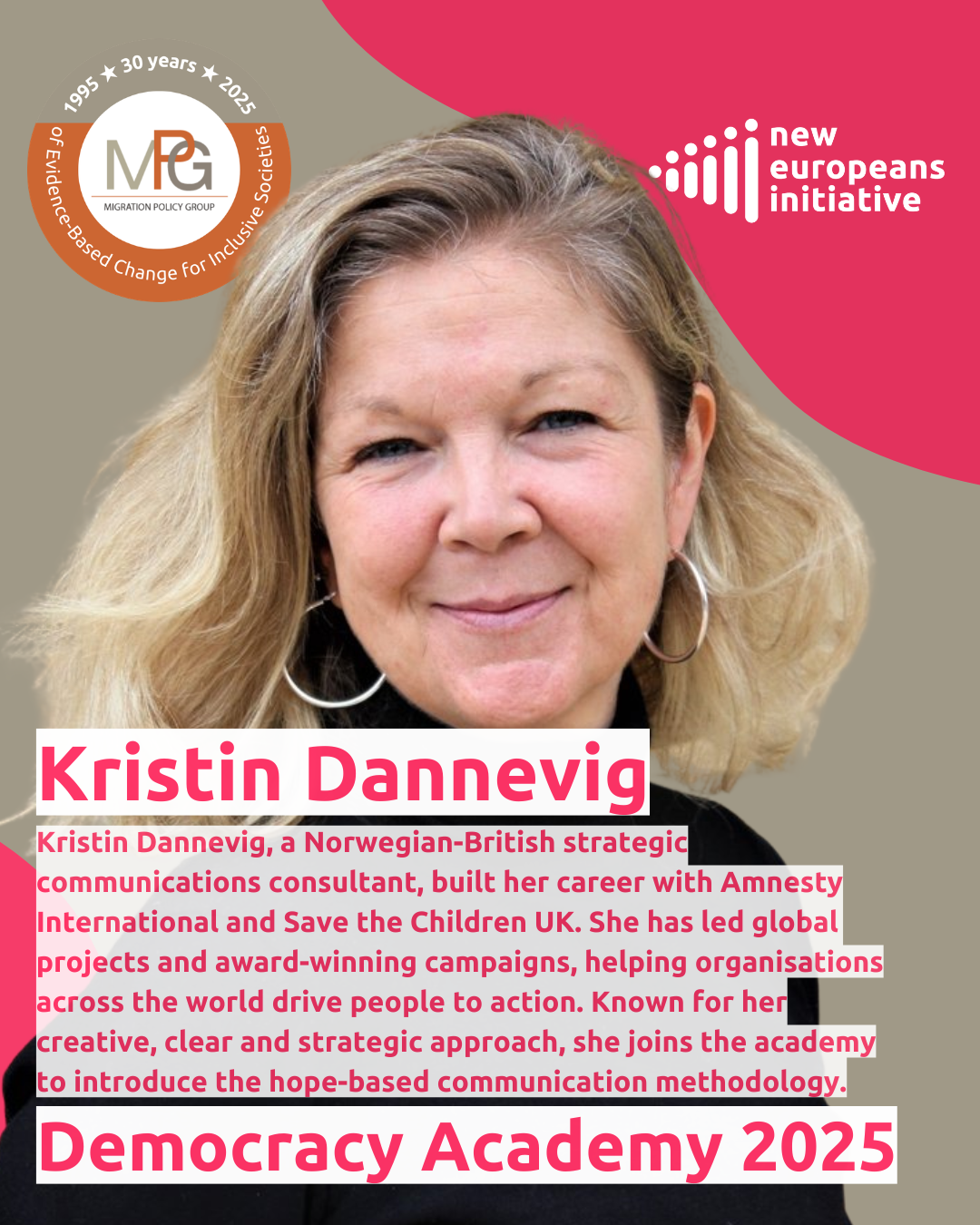
- Session 5, 11 December 2025: Communicating for change & lessons learned, led by Kristin Dannevig, strategic communications consultant, hope-based communication
To create the 2025 academy curriculum, MPG further adjusted and enriched the topic covered with the feedback of past academy participants and speakers. Special attention was also paid on allowing the speakers and the participants to connect and work closely together. The sessions also included practical assignments and quandaries to solve, often in breakout rooms and with the guidance of the respective speaker. During those exercises, the participants were asked to draw upon their own experience and expertise to distill their own answers. Along many others, examples of the issues discussed include:
- how to build and continually revise the rules of a community of practice, with an eye for identifying common goals and future collaboration opportunities;
- how to approach different (non-)state stakeholders when advocating on difficult topics (with a case study in advocacy against racial profiling practices);
- the history and lessons from the advocacy work which brought about EU anti-discrimination legislation, with MPG Director Isabelle Chopin offering advice about working on advocacy on multiple levels of governance;
- addressing burnout and fostering resilience within our teams;
- how to be financially sustainable in the context of dwindling funding opportunities;
- how to effectively counter populist narratives;
- how to create action plans to mobilise voters’ turnout;
- how to employ the hope-based approach to effectively communicate in the current increasingly hostile environment.
The ideas generated during these exercises are meant to serve as transferable solutions to similar real-life situations the participants are likely to encounter in their work.
Results and feedback
A total of 24 participants attended the academy. Currently based in the EU (joining the academy from 10 different EU Member States), this year’s cohort included people who identified 18 different countries of origin across Africa, Asia and South America.
Out of those 24 participants, 19 received certificates in January 2026 for the successful completion of the academy. The certificates’ reception is contingent on the attendance of all the sessions and the active participation in the academy.
The feedback at the end of academy has been overwhelmingly positive. In a follow-up survey, 100% of the participants said they would recommend the academy to others, while over 90% said they learned more about the topics covered in each session.
Genevieve Buck, one of the participants who successfully completed the academy, said: “The academy strengthened my ability to respond constructively to populist and negative rhetoric. […] I learned that immigrant political participation is a powerful tool for challenging populist narratives. Active engagement helps dismantle stereotypes by highlighting migrants’ contributions to society and countering misinformation.” She continued: “At the start of the Academy, I was not fully confident about my Master’s thesis topic. The Academy provided a strong foundation and helped me refine and confirm my research focus on the limitations of political participation among African immigrants and its impact on their integration.”
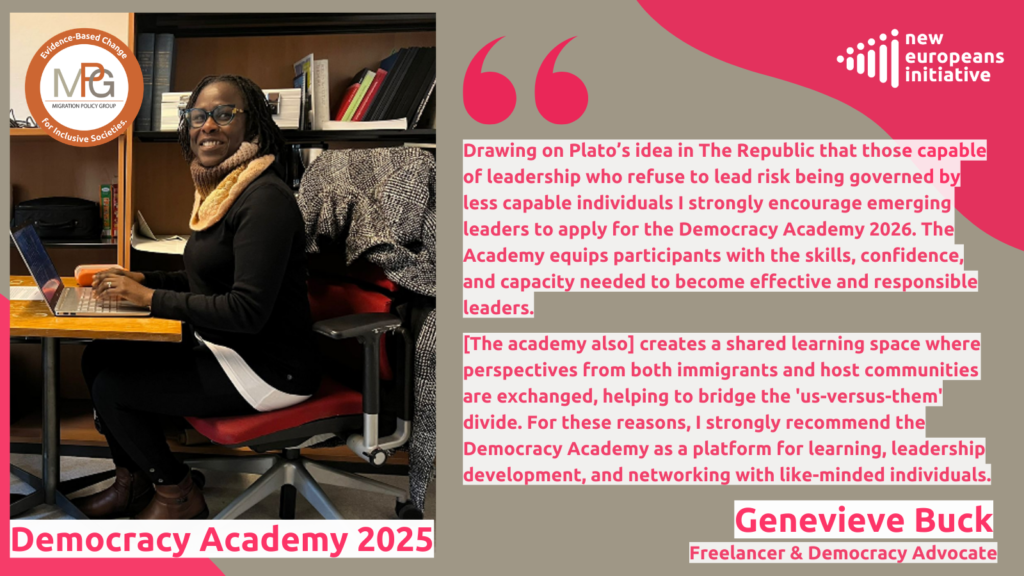
“I will also apply the ‘golden rules’ learned during the Academy: responding calmly rather than emotionally to negative engagement, continuously building alliances, keeping messages simple and supported by visuals, and countering misinformation early with a positive tone. Additionally, I plan to track progress, document outcomes, share them on social media, and celebrate both small and major wins,” Genevieve added.
Outside of the learning opportunities, networking opportunities are another major incentive to complete the academy. As in previous classes, collaborations among participants who shared interests and goals already started to form during the academy.
Previous ways in which academy graduates have leveraged their connections with each other, the speakers and MPG itself include launching webinars together, being invited as guest speakers in events in Brussels and beyond, collaborating on (EU-funded) projects, as well mobilising support for each other in consultative initiatives.
“One of the most important insights I gained from the 2025 Democracy Academy is that effective advocacy requires strong partnerships,” Genevieve continued, adding: “The most valuable aspect of the Academy was the breakout sessions and group work. These sessions ensured active participation by all participants and promoted a two-way learning process. Everyone was given the opportunity to contribute, which fostered inclusivity and collective ownership of the learning process.”
More to come in 2026
Another edition of the Democracy Academy will take place in November-December 2026. More information about the fourth academy will be shared in the summer.
In addition, in 2026, MPG is also planning to offer additional Masterclasses of the Democracy Academy specifically designed for alumni of the previous three academy editions. The idea behind the Masterclasses is to delve deeper into topics selected by the alumni and enable further networking across the different classes. MPG will soon be sharing initial information about this with past participants, and asking for their input in this.
For any questions regarding the Democracy Academy’s past and future events, as well as the certificates awarded, please contact Gergana Yovova, Project Manager.
 About the Migration Policy Group (MPG)
MPG is an independent think-and-do-tank based in Brussels. MPG’s purpose is rooted in its ability to inspire networks to provide evidence-based projects, research and campaigns in the areas of integration, migration and anti-discrimination.