New SIRIUS Watch 2026 report launched at SIRIUS Policy Conference on multilingual education in Europe
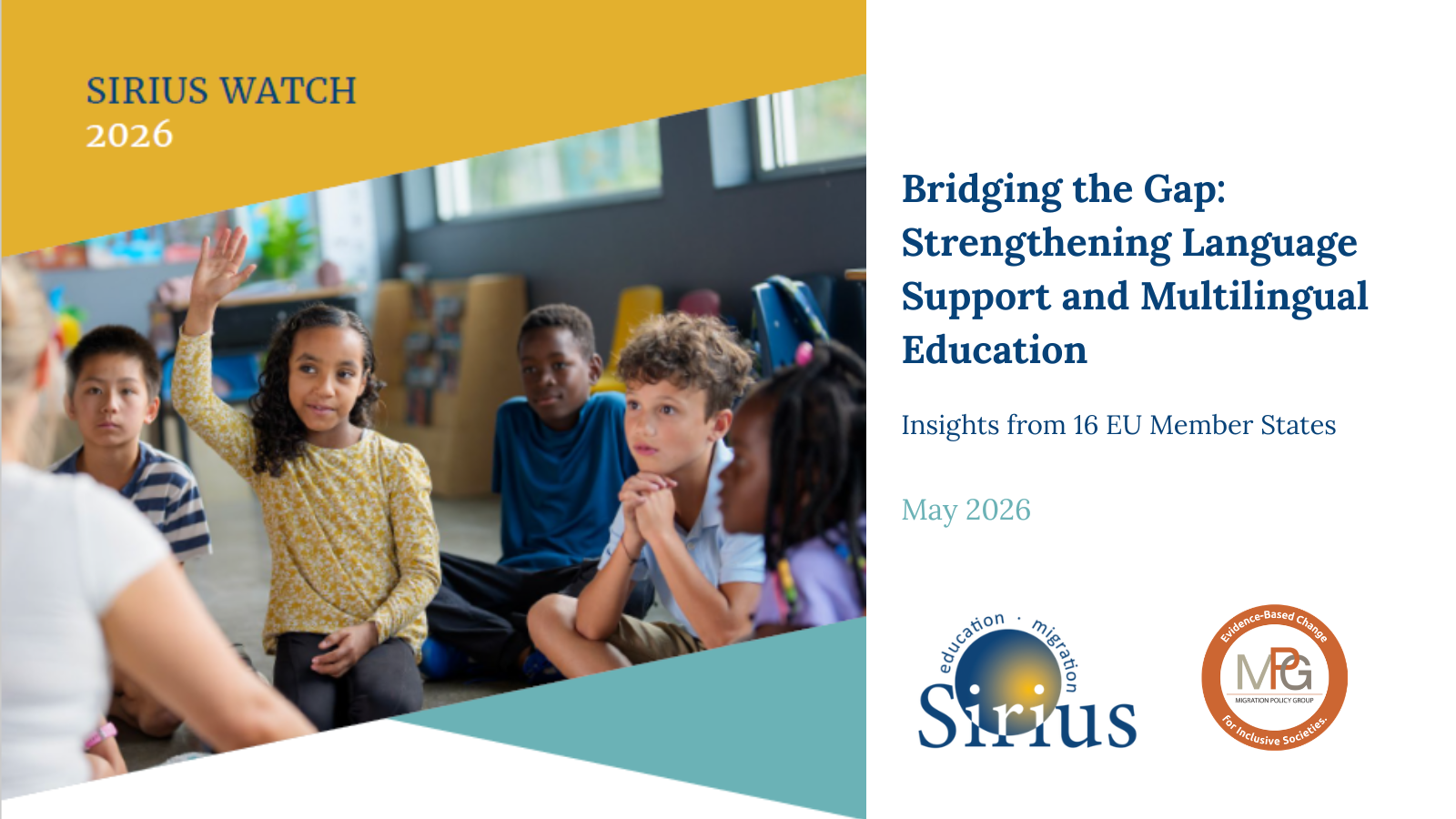
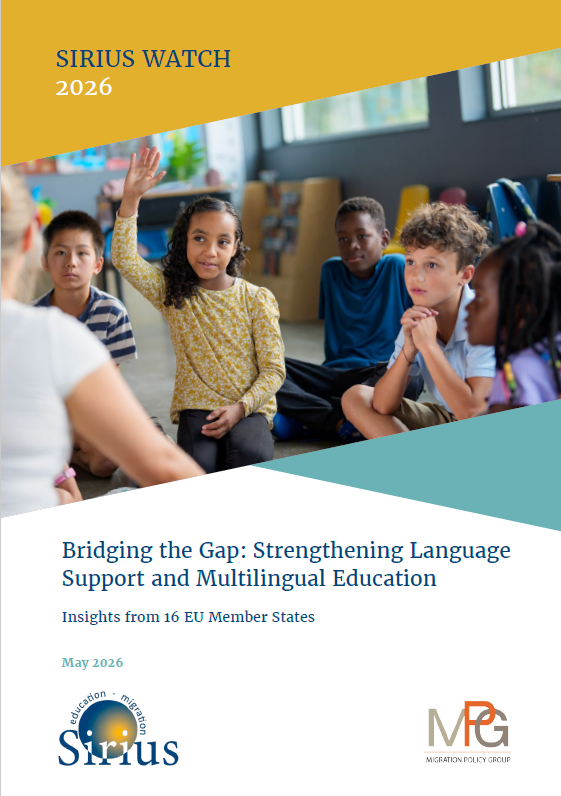
 MPG and the SIRIUS Policy Network on Migrant Education have launched the new SIRIUS Watch 2026 report, Bridging the Gap: Strengthening Language Support and Multilingual Education – Insights from 16 EU Member States, during the SIRIUS 3.0 Annual Policy Conference 2026, Multilingual Europe in Education. The online conference brought together researchers, policymakers, practitioners, and civil society actors to discuss how European education systems can better support migrant and refugee learners through comprehensive and inclusive language policies.
The conference focused on the growing importance of multilingualism in European classrooms and explored how education systems can move beyond fragmented approaches to language support. Drawing directly on the findings of the new SIRIUS Watch report, discussions highlighted both promising practices and ongoing structural gaps in the implementation of multilingual education policies across Europe.
The report examines policies and practices across 16 countries: Belgium, Bulgaria, Croatia, Estonia, Finland, France, Germany, Greece, Ireland, Italy, Lithuania, the Netherlands, Poland, Portugal, Slovenia, and Spain (Catalonia). It analyses four key dimensions of migrant education policy: assessment of language proficiency, access to language support, promotion of first or family languages, and teacher preparation for multilingual classrooms.
The launch comes at a time when European schools are becoming increasingly multilingual due to migration, mobility, and demographic change. According to the report, education systems across Europe are gradually recognising linguistic diversity as an asset rather than a barrier, yet implementation often remains uneven and dependent on local capacity.
One of the central messages of both the conference and the report is that language support cannot be treated as a temporary or isolated measure. Instead, multilingualism needs to be embedded across education systems through long-term policies, teacher training, and institutional support. The report identifies four major trends shaping current approaches across Europe:
- fragmented language support provision;
- a persistent gap between multilingualism policies and practice;
- the untapped potential of migrant teachers; and
- weak data systems that limit evidence-based policymaking.
The report shows that several countries, including Belgium, Finland, Germany, Ireland, Portugal, the Netherlands, and Spain (Catalonia), have developed more comprehensive language support systems combining preparatory classes, in-class support, targeted teaching, and whole-school approaches.
At the same time, structured support for learners’ first and family languages remains limited in many education systems. While EU-level discourse increasingly frames multilingualism as essential for inclusion and social cohesion, the report finds that support for home languages is still often extracurricular, project-based, or dependent on local initiatives rather than embedded within mainstream education systems.
The conference also highlighted examples of promising practices identified in the report. Finland’s multilingual education approach, Estonia’s Keelesamm programme for multilingual teacher training, and Greece’s Teach4Integration initiative were presented as examples of how coordinated policies and sustained investment can improve inclusion and educational outcomes for migrant learners.
A recurring theme throughout the event was the role of teachers and schools in responding to increasingly diverse classrooms. The report stresses that many teachers across Europe still lack systematic preparation in multilingual education, second-language pedagogy, and intercultural competence, with training opportunities often remaining voluntary rather than compulsory.
To address these challenges, the report outlines a series of policy recommendations, including establishing national standards for language support, institutionalising multilingual education, strengthening teacher training, integrating migrant teachers into the workforce, and improving national data systems on migrant education.
The SIRIUS network, active since 2012 and co-funded by the European Commission, aims to support evidence-based policymaking on inclusive education and migrant learners across Europe.
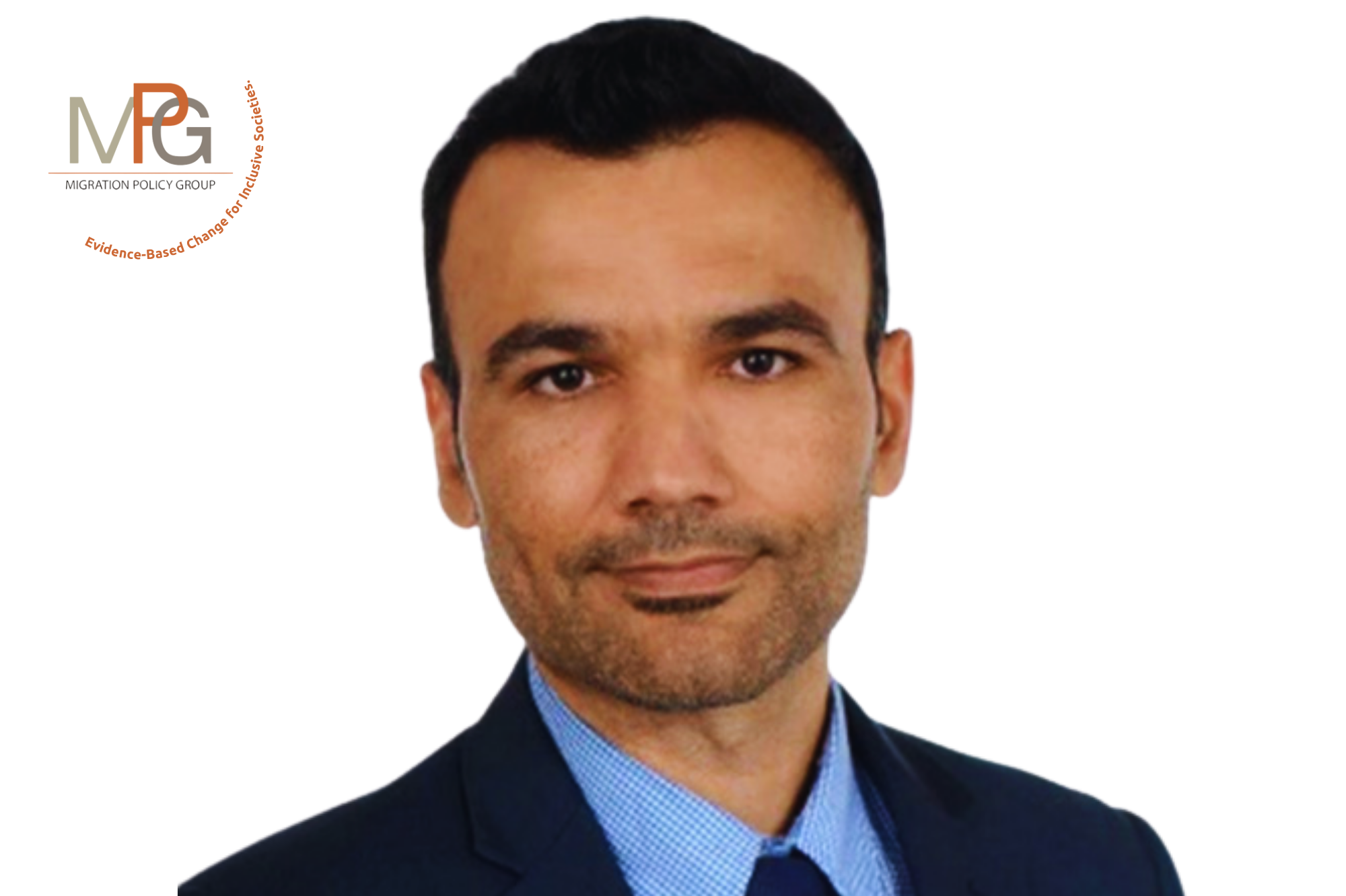
The full report, authored by Dr. Mojib Rahman Atal and Alexander Wolffhardt at MPG in collaboration with SIRIUS national partners, contributes to ongoing European discussions on how education systems can ensure equal opportunities for migrant and multilingual learners in increasingly diverse societies.
Publication
Authors
Dr. Mojib Rahman Atal
Integration Policy Analyst

Alexander Wolffhardt
Deputy Director
About the Migration Policy Group (MPG)
MPG is an independent think-and-do-tank based in Brussels. MPG’s purpose is rooted in its ability to inspire networks to provide evidence-based projects, research and campaigns in the areas of integration, migration and anti-discrimination.