
Commemorating 30 years of the Migration Policy Group
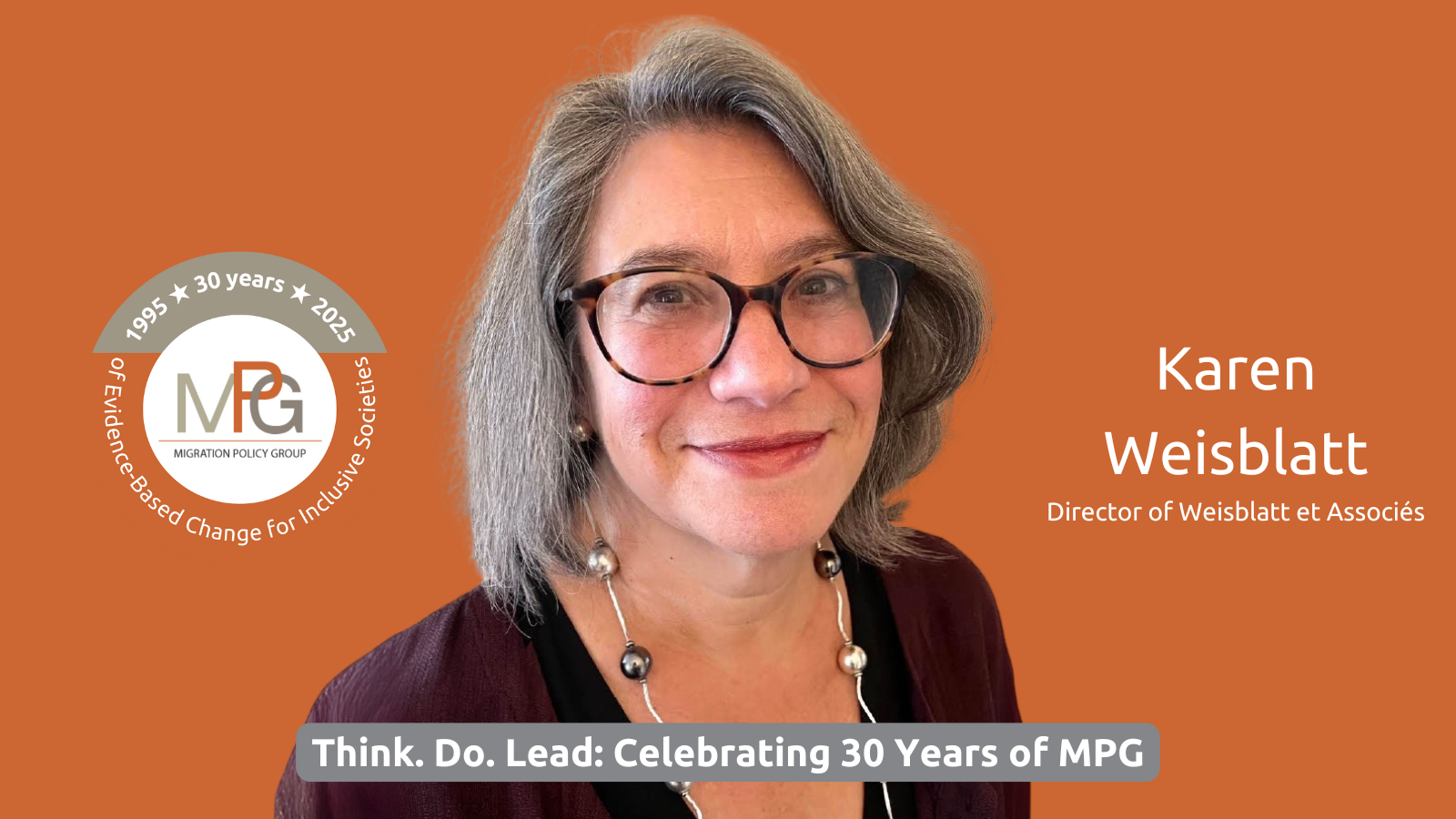
Karen Weisblatt
Director of Weisblatt et Associés
By Karen Weisblatt, Director of Weisblatt et Associés, Paris-based strategic philanthropy and social justice consulting.
Think. Do. Lead: Celebrating 30 Years of MPG
I first became familiar with MPG’s work in 2011 when I undertook an external evaluation of the flagship migrant integration policy index, MIPEX, on behalf of Atlantic Philanthropies, a strong early supporter. The report assessed its long-term viability and documented lessons learned, providing recommendations for follow-up actions. The ultimate purpose of the evaluation was to test the hypothesis that users are deeply engaged with the instrument and would like to carry on using it.
Flash forward to 2025, and MIPEX is still going strong. A stunning piece of work which has been refined and developed over the years, it now covers over 50 countries, from Europe to the Americas and beyond. Remarkably, it has not cut corners on quality to achieve a broader reach. Individual country launches continue to involve the participation of high-level partners, ranging from representatives of national Ministries of Foreign Affairs to foundations, civil society, and local partners, demonstrating that a full array of actors remains engaged. The MIPEX project embodies many of the exceptional qualities that exemplify MPG, tenacity, innovation, and creativity, making it a “think and do” tank par excellence.
Since 2011, I have continued to work with MPG on governance and strategic planning issues. Our overarching goal has always been to ensure MPG’s long-term sustainability and independence, enabling it to maintain its leadership role as a civil society organisation with deep ties to European institutions, providing knowledge while promoting change in the fields of asylum, migration, and race policy.
MPG’s projects and activities demonstrate that when imaginative minds are brought together with focus and purpose, new ideas can emerge in the complex world of policy-making, especially when resources match ambition to ensure successful completion of an initiative. A case in point is a recent MPG effort exploring institutional and structural racism, funded by the Robert Bosch Foundation, which shows that independently funded activities can enable the organisation to delve into uncharted territory while maintaining the same high standards.
However, to bolster its capacity to shine a spotlight on the challenges to democratic values facing Europe today, MPG must continue to attract long-term core support from independent philanthropic entities. Over the past three decades, it has proven its ability to fulfil its mission to inform, mobilise and innovate over a sustained period. Now is the time to ensure that this independent and trusted voice continues to be heard for the next thirty years!