
MPG presents latest MIPEX findings on Spain in Barcelona
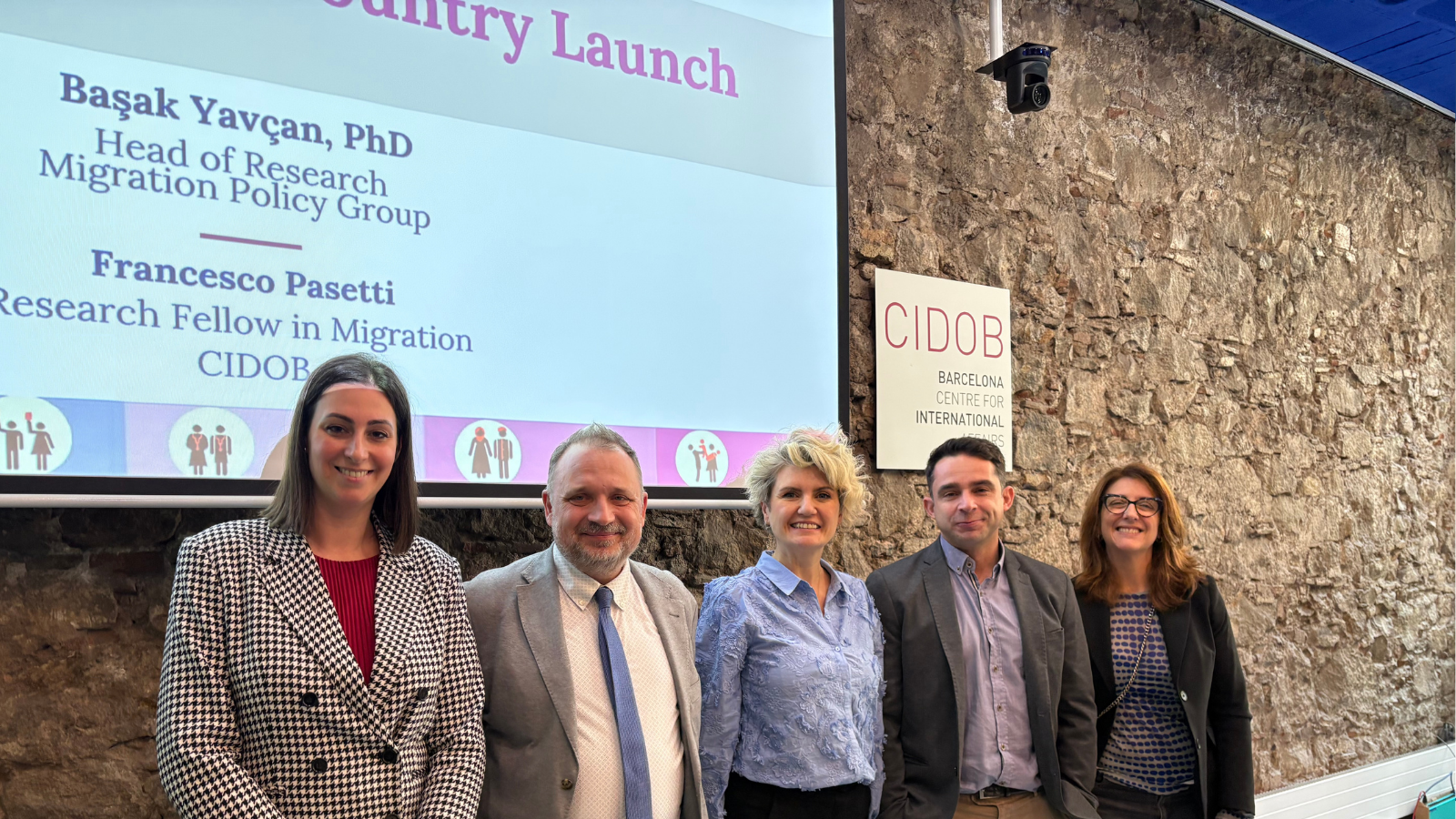
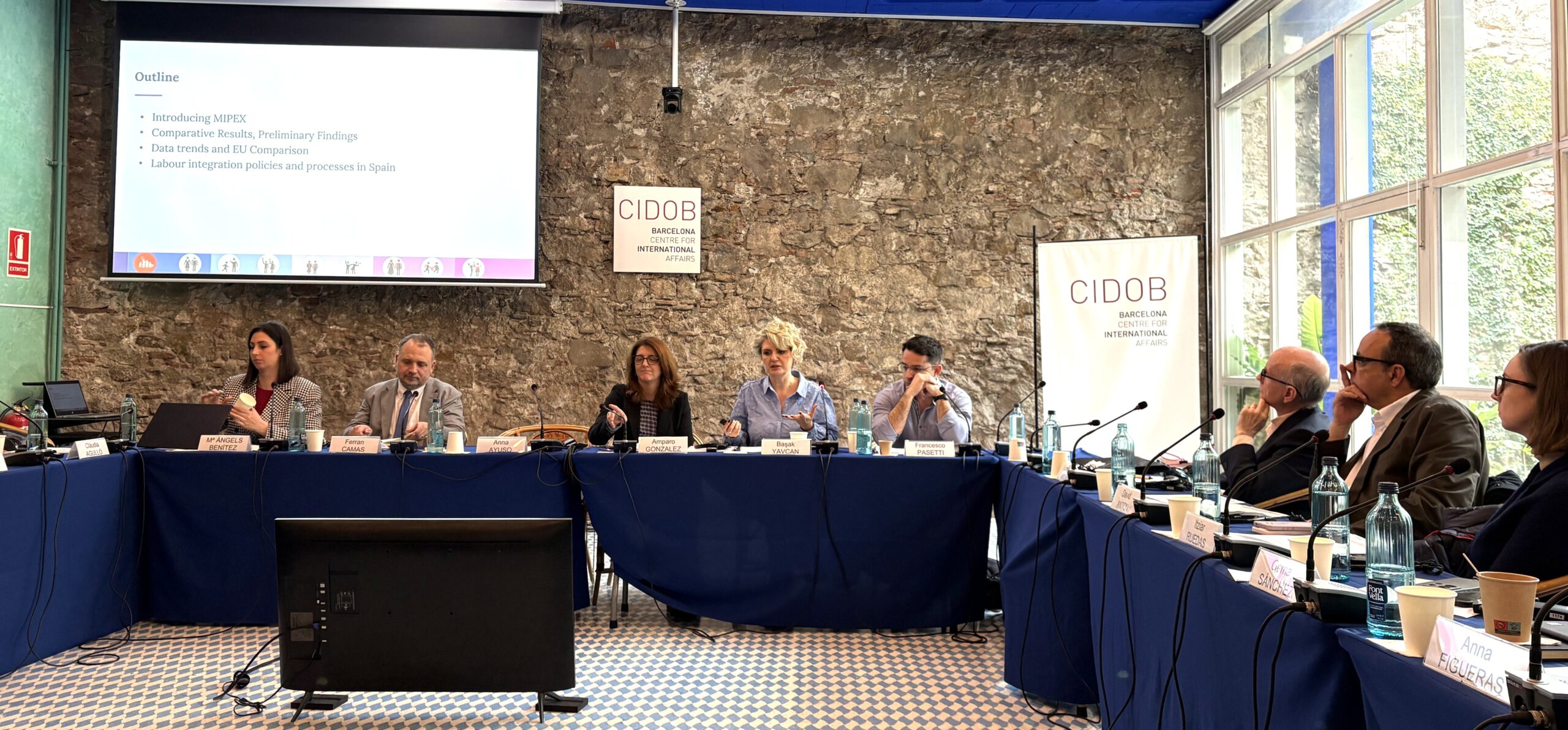
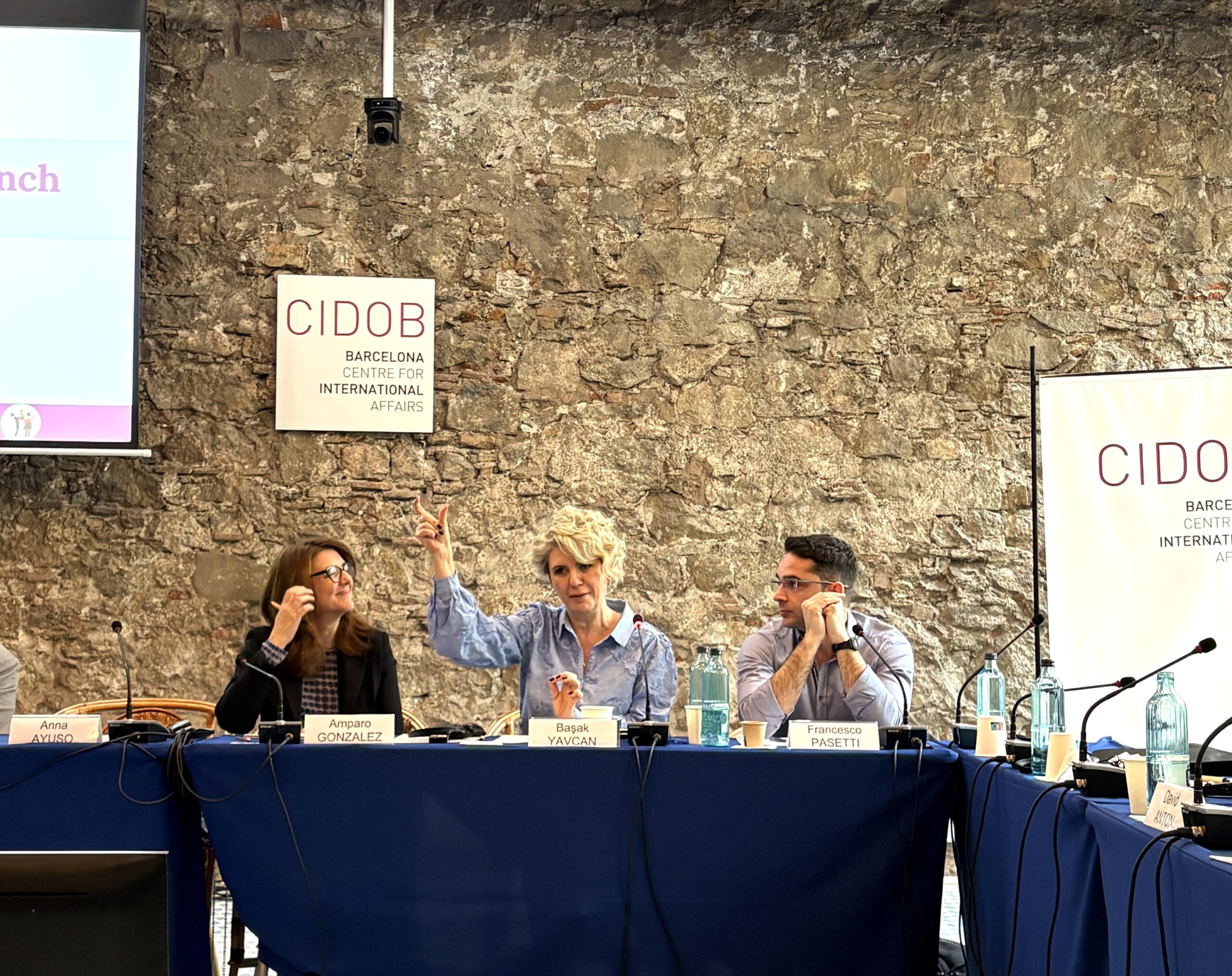
On 19 March 2026, MPG presented the latest findings from the Migrant Integration Policy Index (MIPEX) on Spain at a policy event in Barcelona. The event, organised by CIDOB – Barcelona Centre for International Affairs and PIMEC – the employers’ association that represents micro, small and medium-sized companies, as well as self-employed individuals, in Catalonia, brought together policymakers, researchers, and practitioners to discuss labour migration and integration, with a focus on evidence-based solutions and future policy directions
MPG’s Head of Research, Başak Yavçan, delivered a presentation on Spain’s integration policies, with particular attention to labour market integration and recent legislative developments.
Spain as a promising example in a stagnating EU context
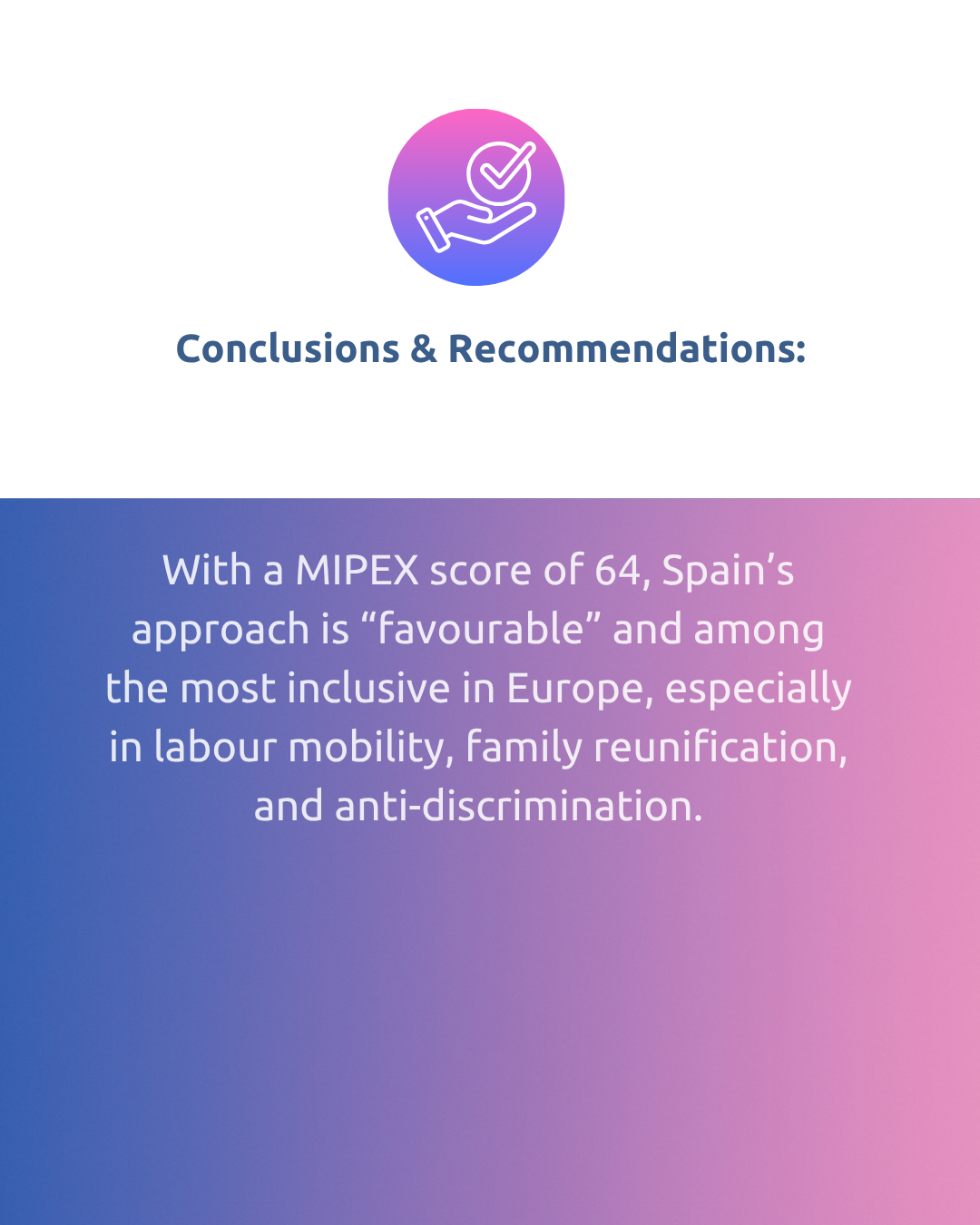
The latest MIPEX results position Spain as a relatively strong performer in the European context. At a time when integration policies across the EU have largely stagnated, Spain has introduced reforms that prioritise legal pathways, regularisation, and access to employment.
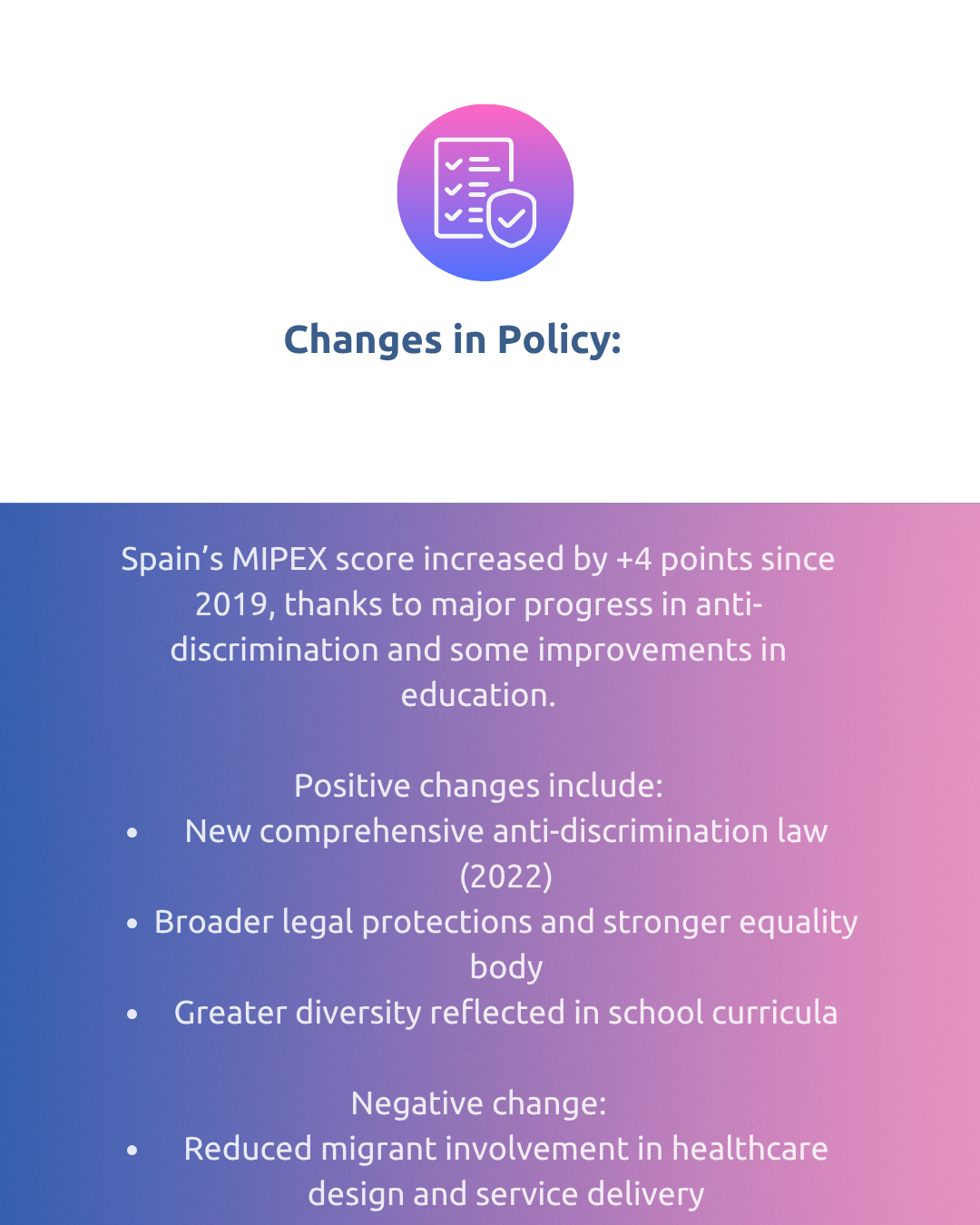
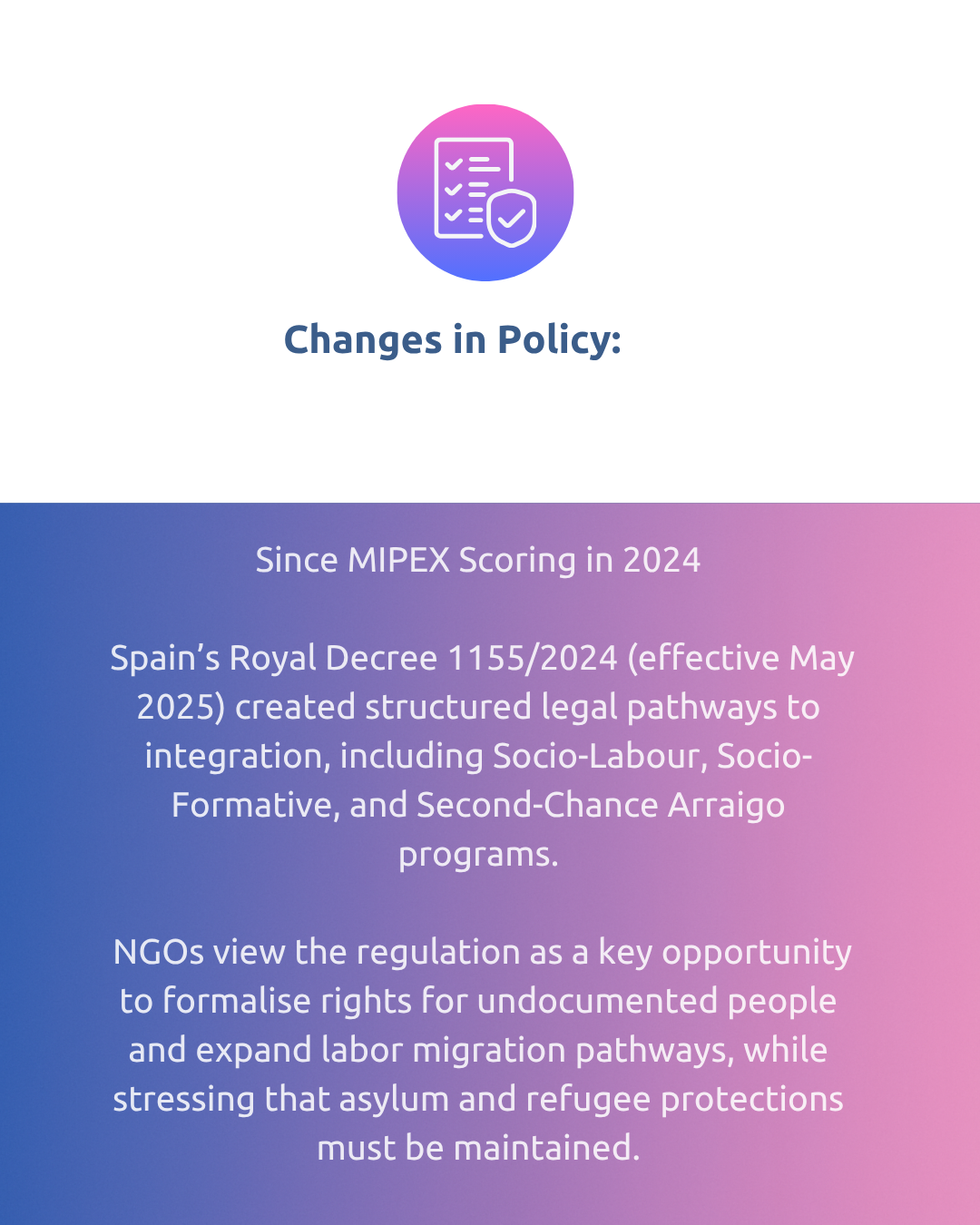
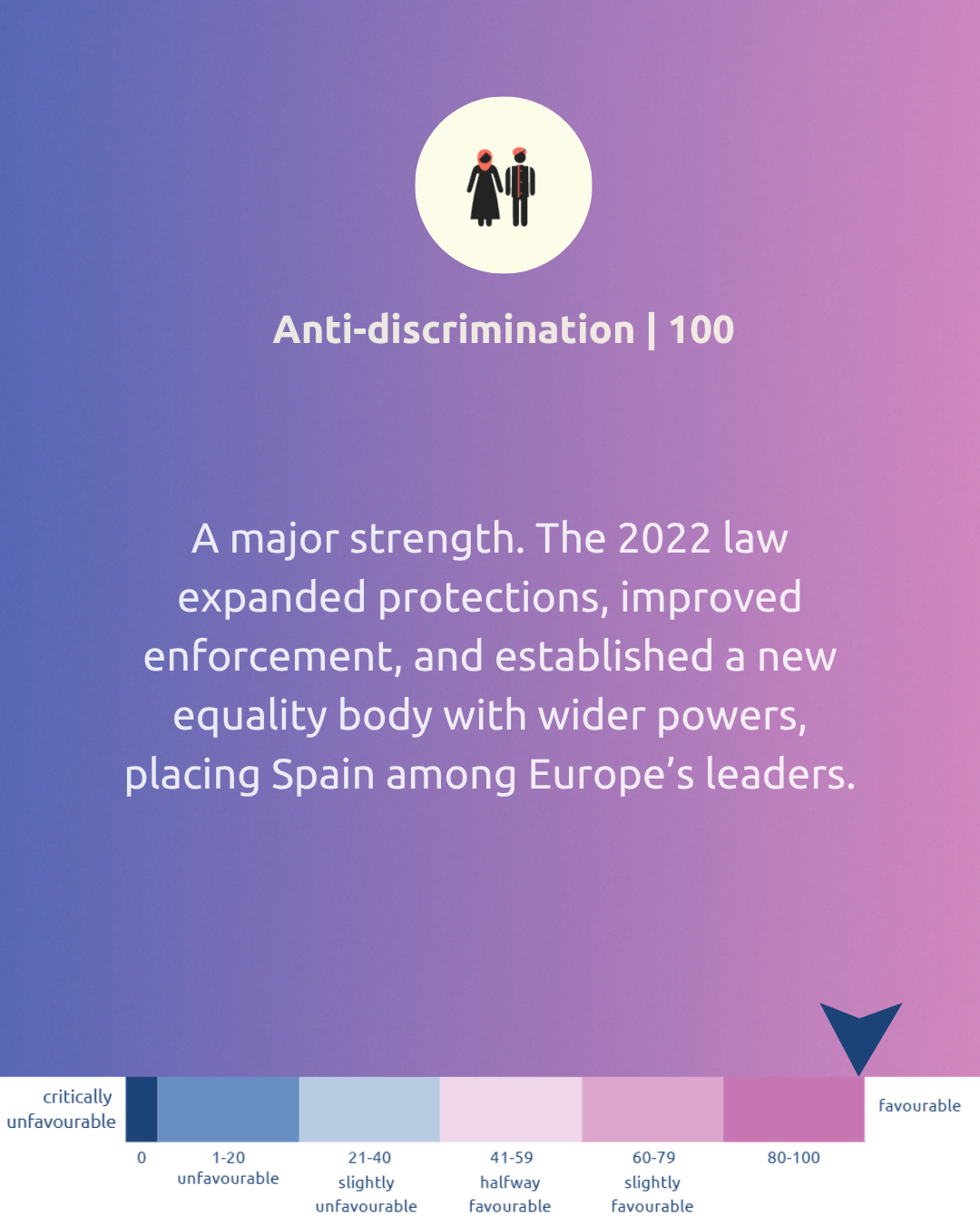
Recent changes to immigration regulations, including new forms of “arraigo” and expanded legal routes into the labour market, demonstrate a policy approach that seeks to facilitate inclusion. In parallel, Spain has made significant progress in the area of anti-discrimination, notably through the adoption of a comprehensive law on equal treatment in 2022.
These developments reflect a broader policy direction that emphasises integration and equal treatment, rather than restrictive or return-oriented approaches.
Progress remains partial
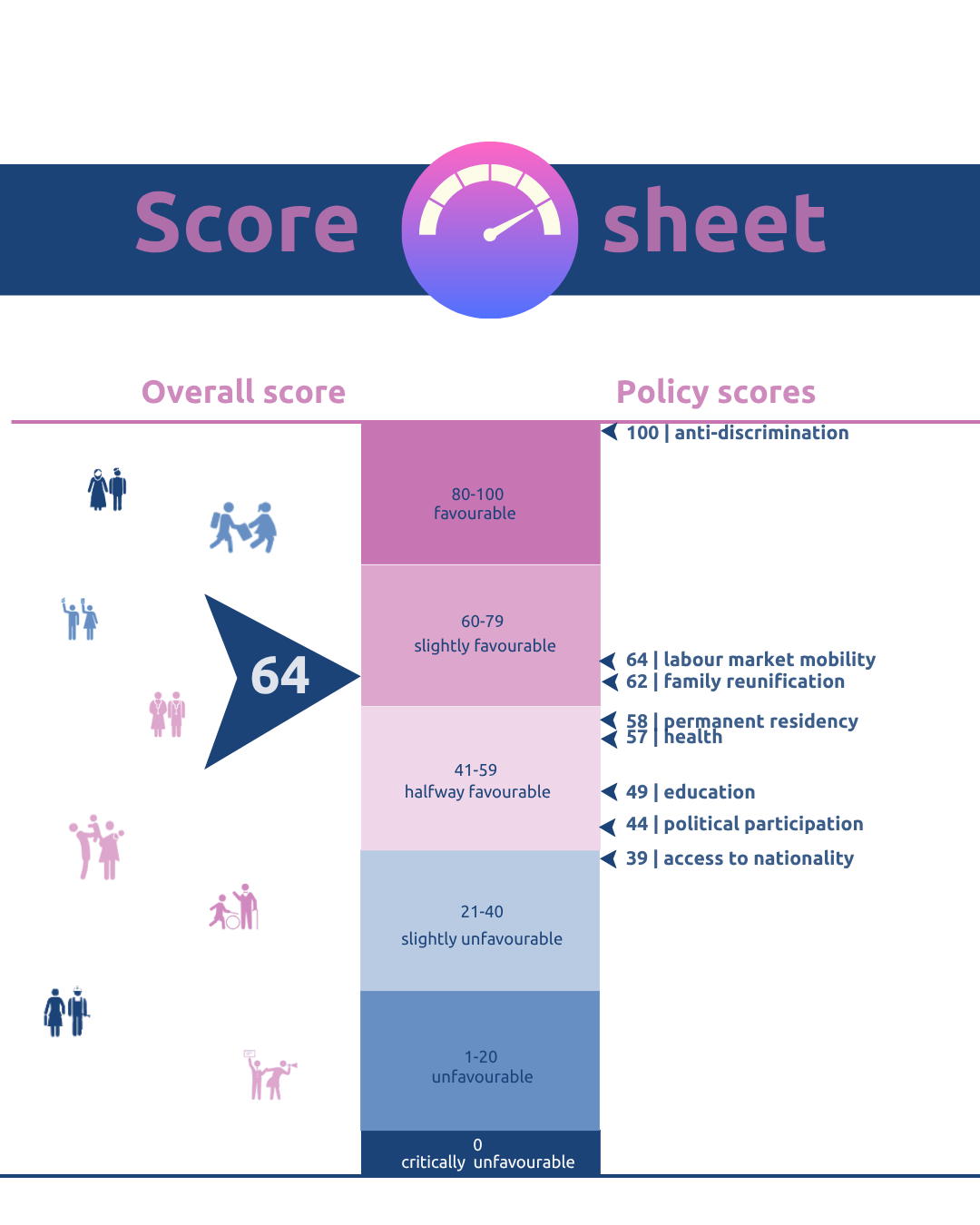
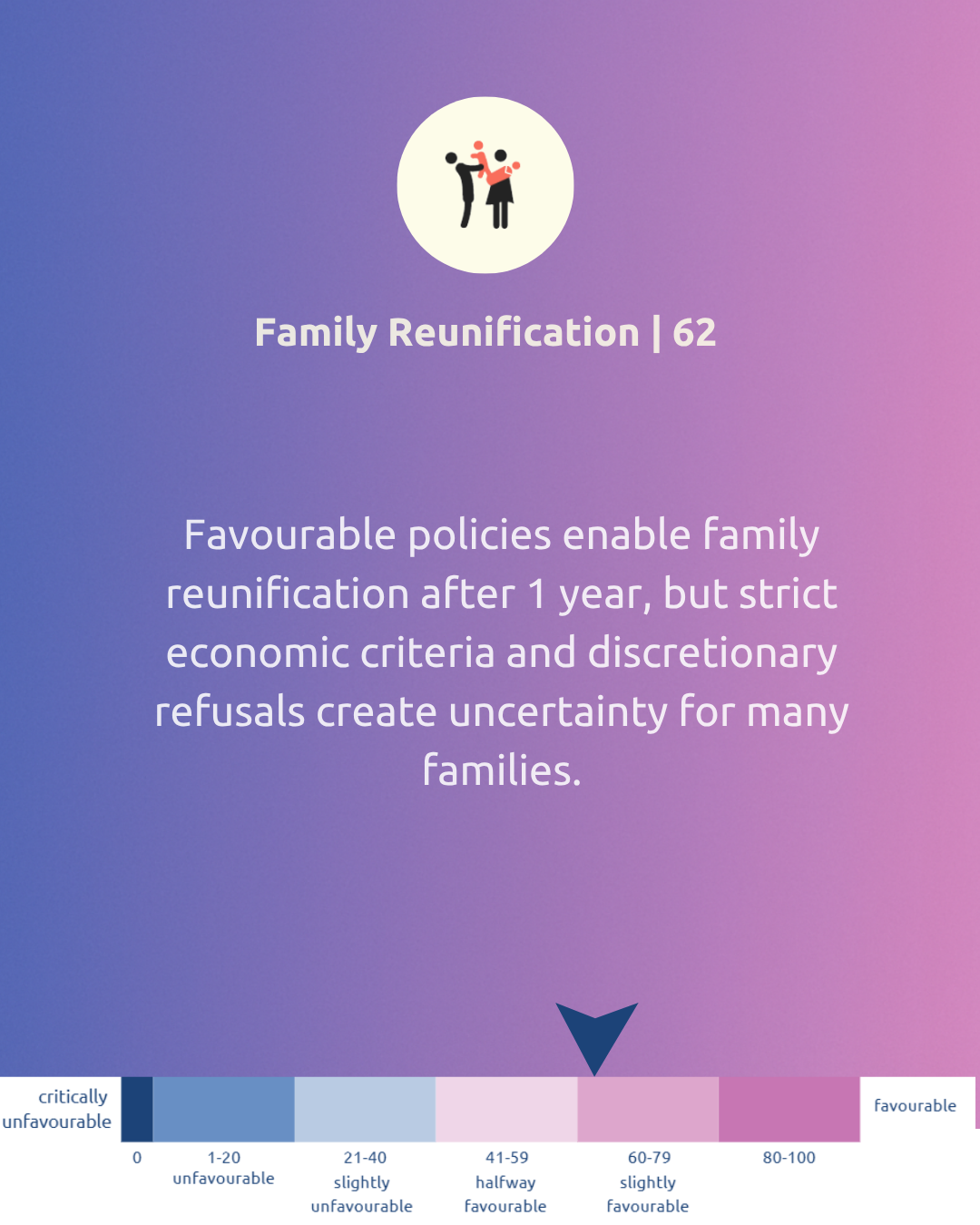
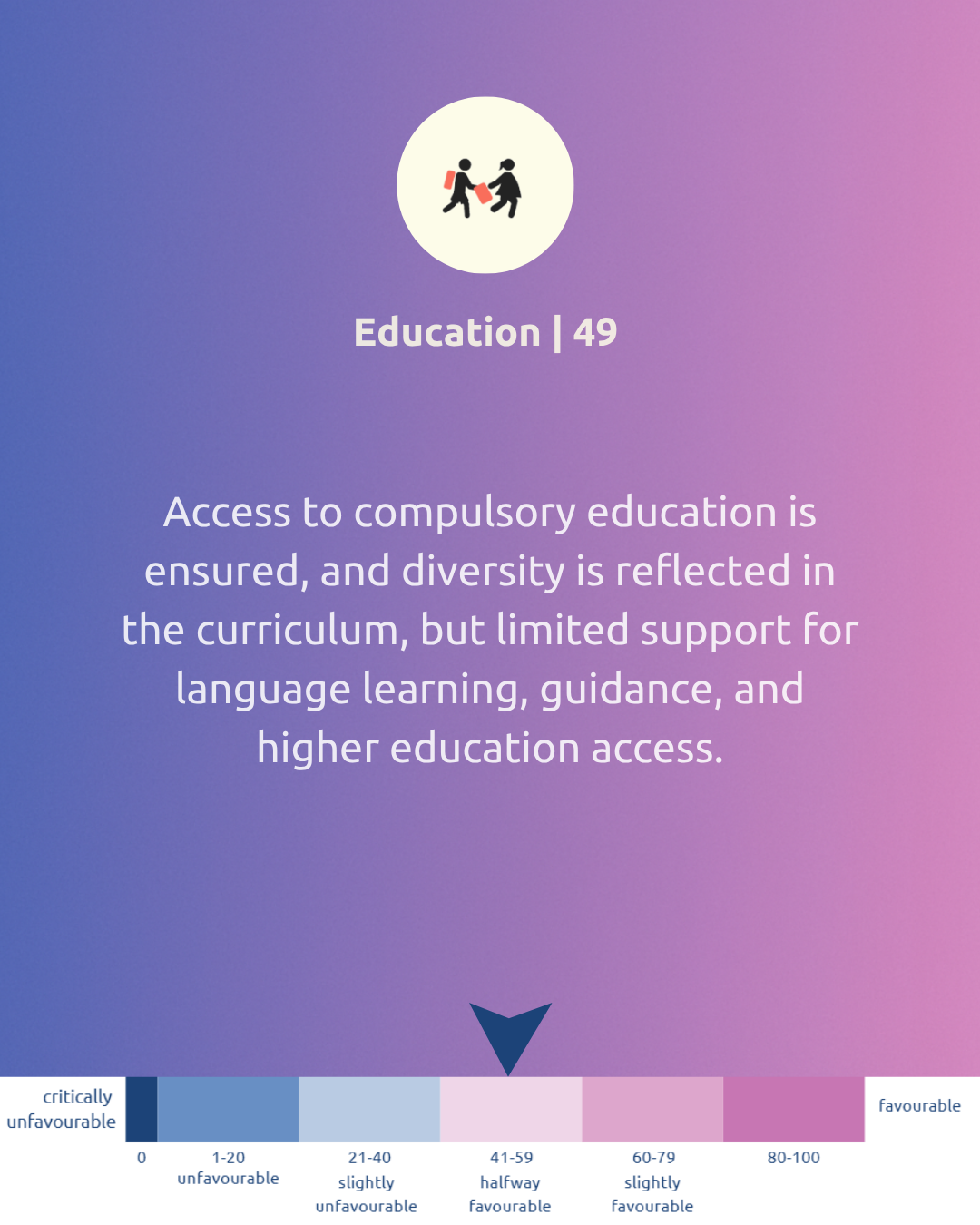
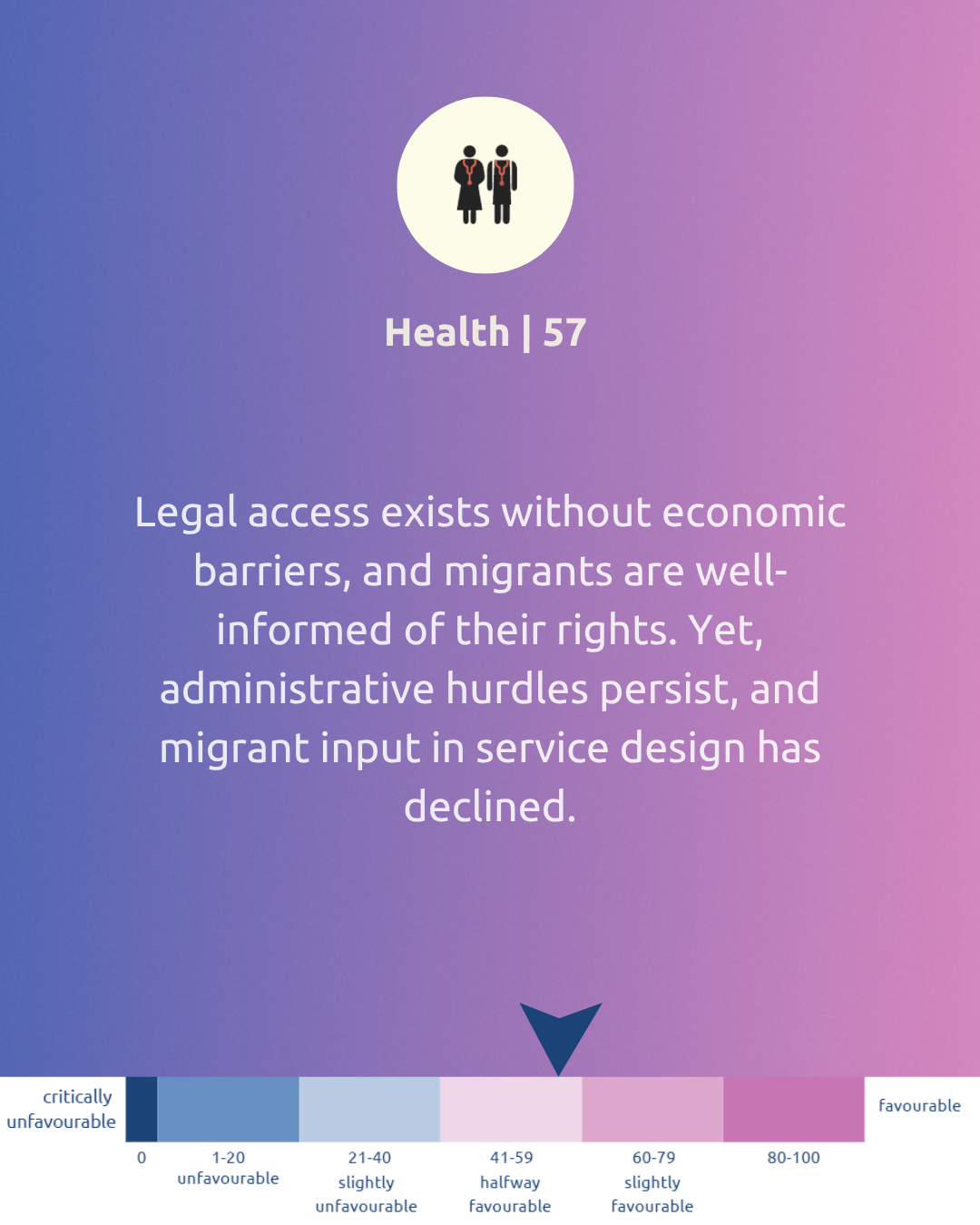
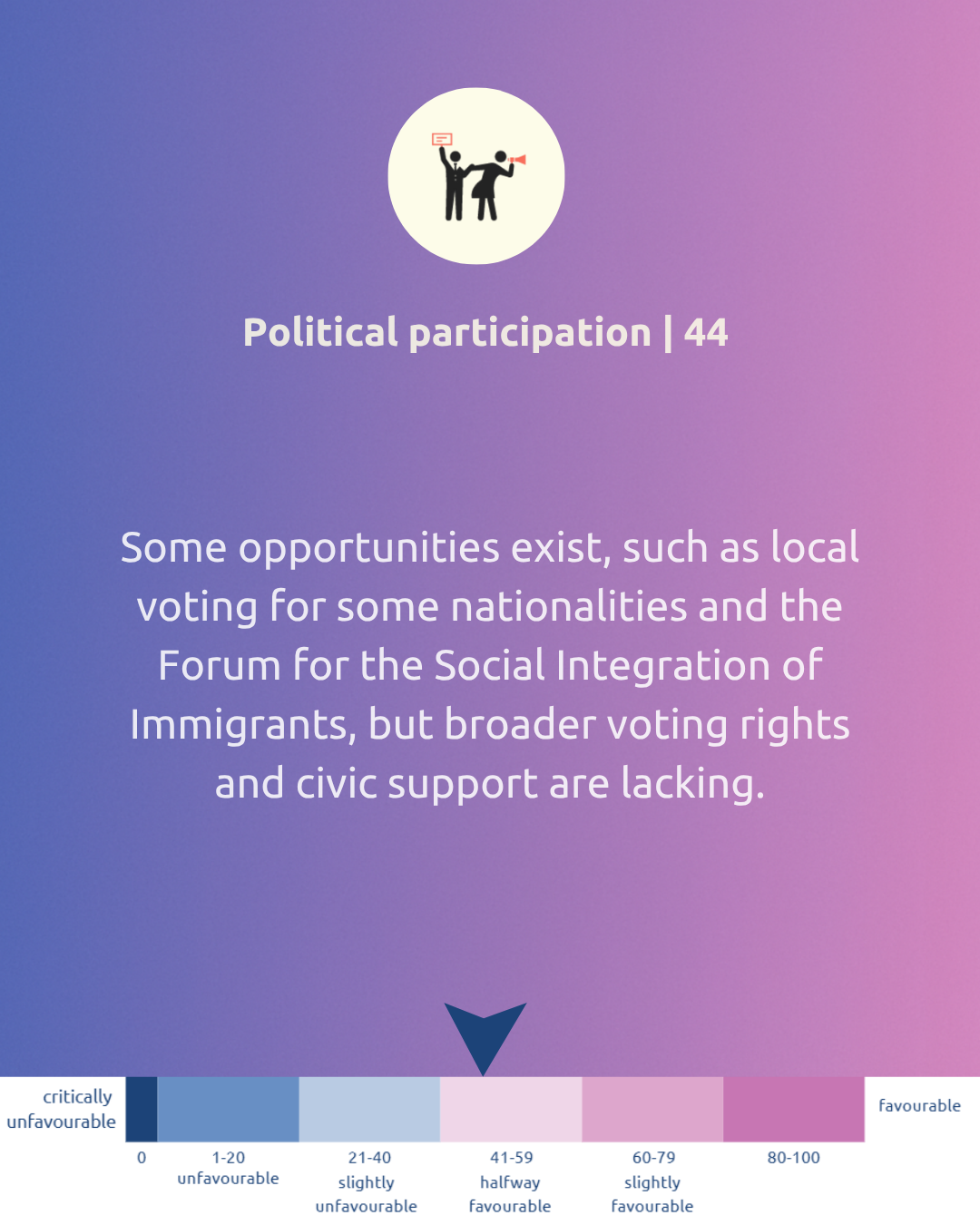
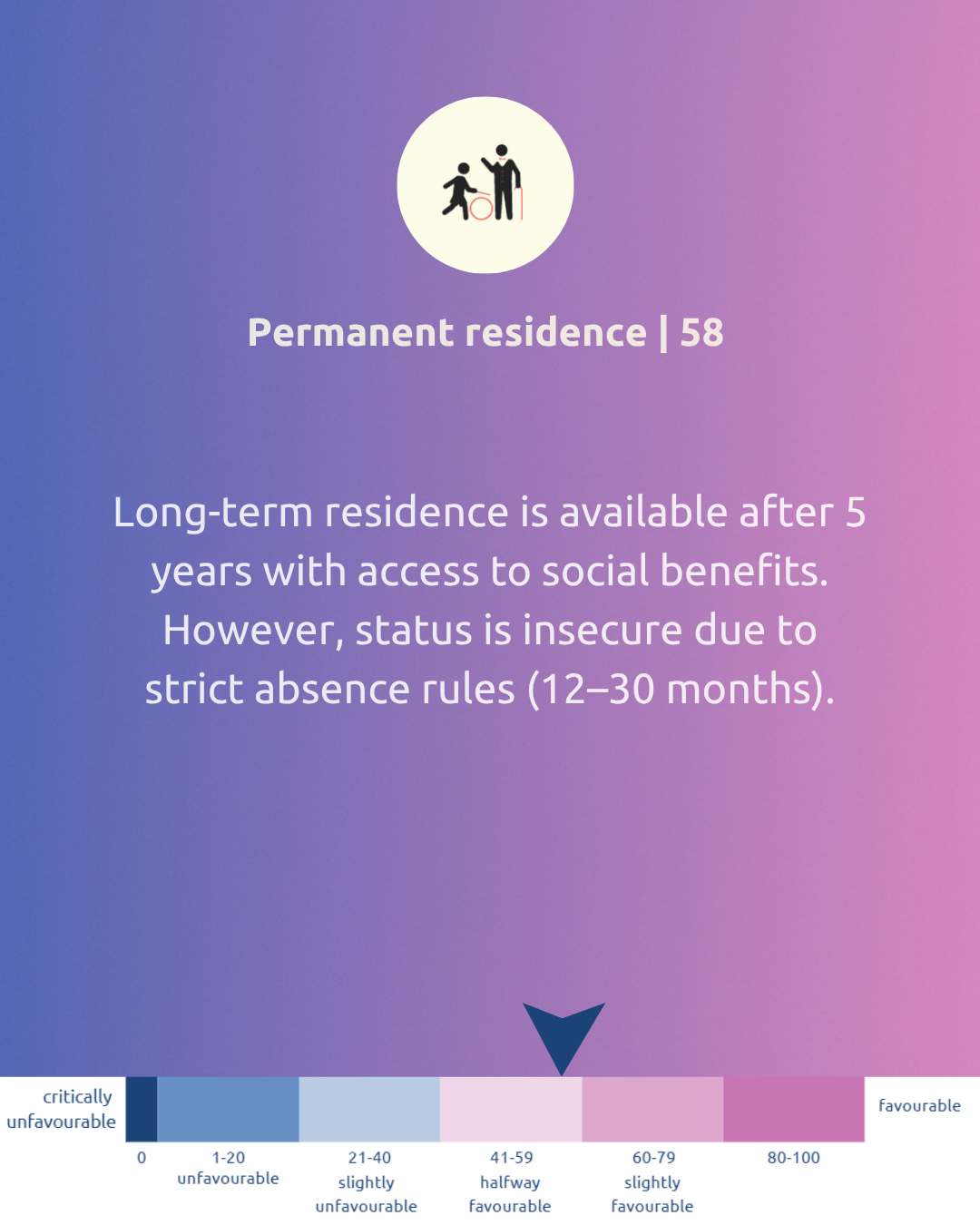
Despite these advances, MIPEX findings show that Spain’s integration framework is not yet fully favourable. With an overall score of 64 out of 100, the country provides migrants with more opportunities than obstacles, but still falls short of ensuring equal access and outcomes across all areas
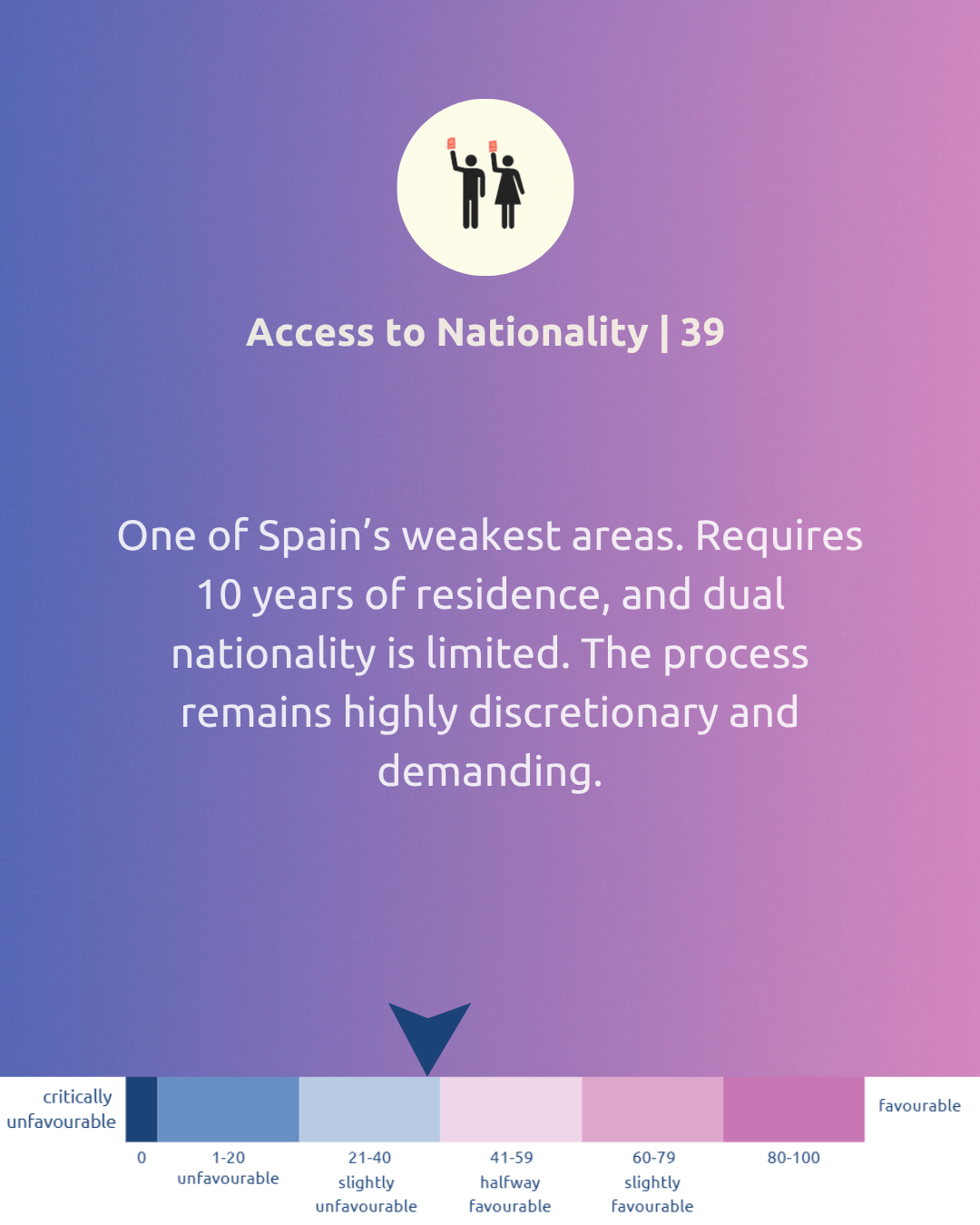
While migrants in Spain benefit from access to many basic rights, policies often only go halfway towards securing full equality. In particular, structural barriers continue to limit long-term integration and access to citizenship.
Key challenges in labour market integration
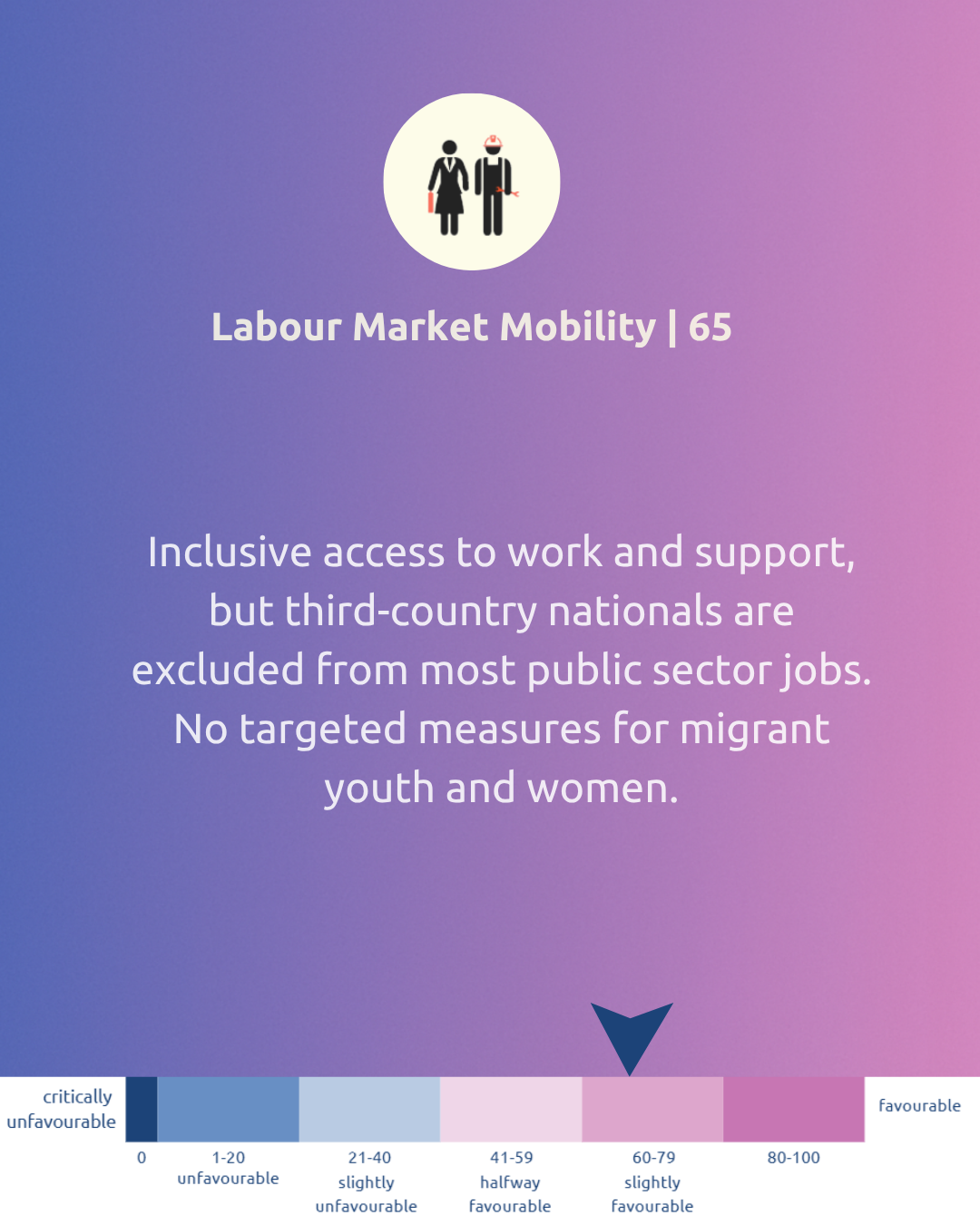
The event placed a strong focus on labour market integration, a central dimension of Spain’s migration system. Migrant workers play a crucial role in the Spanish economy, representing a significant share of the workforce and contributing to key sectors such as care, agriculture, and hospitality.
However, this contribution is often accompanied by persistent inequalities. Migrants are more likely to experience unemployment, temporary contracts, and lower wages. They are also overrepresented in low-skilled jobs, even when they hold higher qualifications.
MIPEX findings and the discussion in Barcelona highlighted several ongoing challenges, including:
- labour market segmentation and precarious employment
- barriers to skills recognition and access to training
- administrative bottlenecks in migration and employment procedures
- gaps in rights protection and access to social benefits
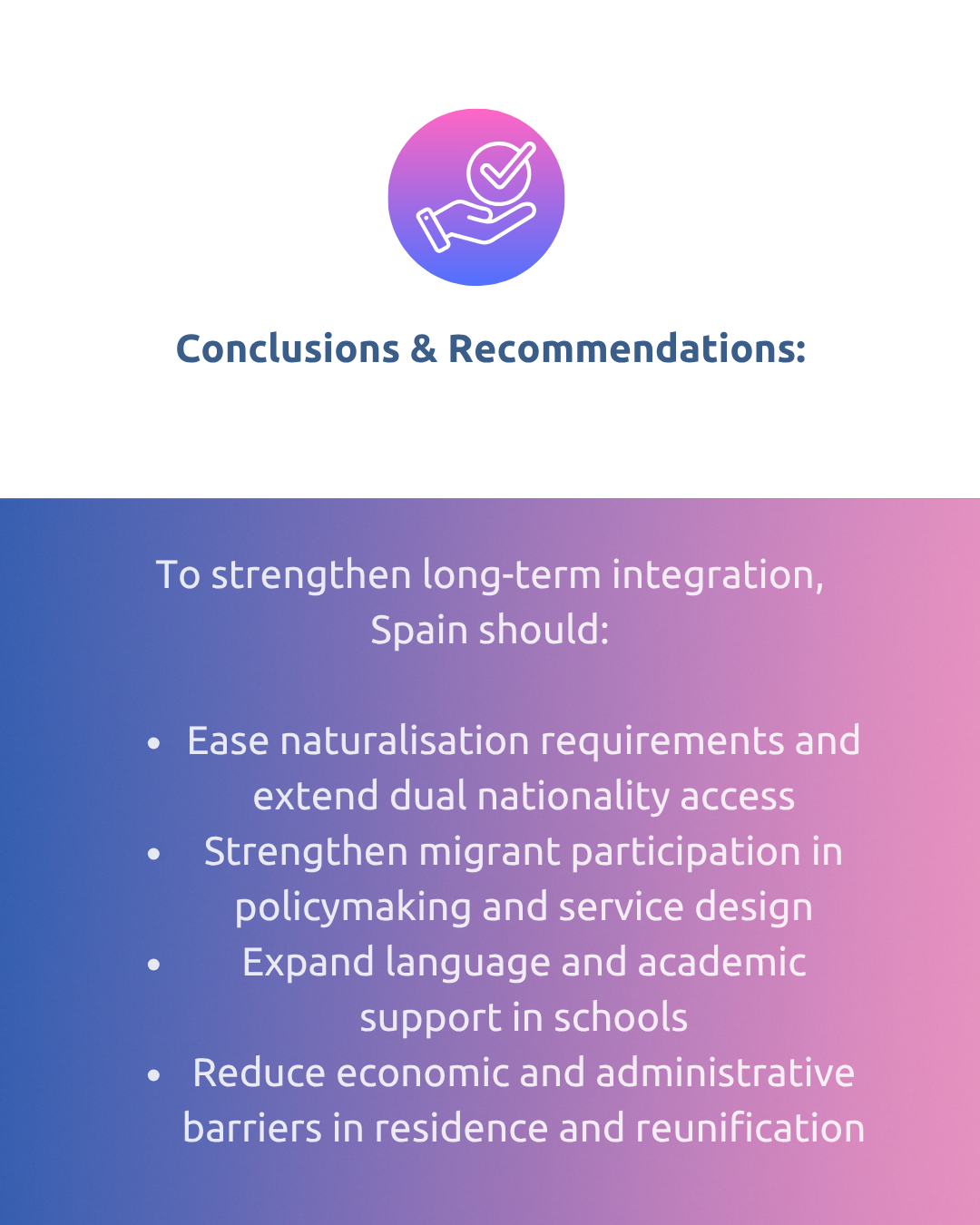
Recent reforms show positive early impacts, but their effectiveness will depend on consistent implementation and adequate institutional capacity.
Looking ahead
The event provided a platform for dialogue on how to build on Spain’s progress and address remaining gaps. Discussions explored how to strengthen legal frameworks, improve coordination between institutions, and ensure that integration policies translate into tangible outcomes for migrant communities.
As Spain continues to develop its approach, MIPEX offers a valuable benchmark to assess progress and identify priorities. The findings presented in Barcelona underline both the country’s potential as a model of inclusive integration and the need for sustained efforts to ensure equal opportunities in practice.

About the Migration Policy Group (MPG)
MPG is an independent think-and-do-tank based in Brussels. MPG’s purpose is rooted in its ability to inspire networks to provide evidence-based projects, research and campaigns in the areas of integration, migration and anti-discrimination.