EU integration policies stagnate at 54/100, with political participation weakest, new MIPEX 2025 shows

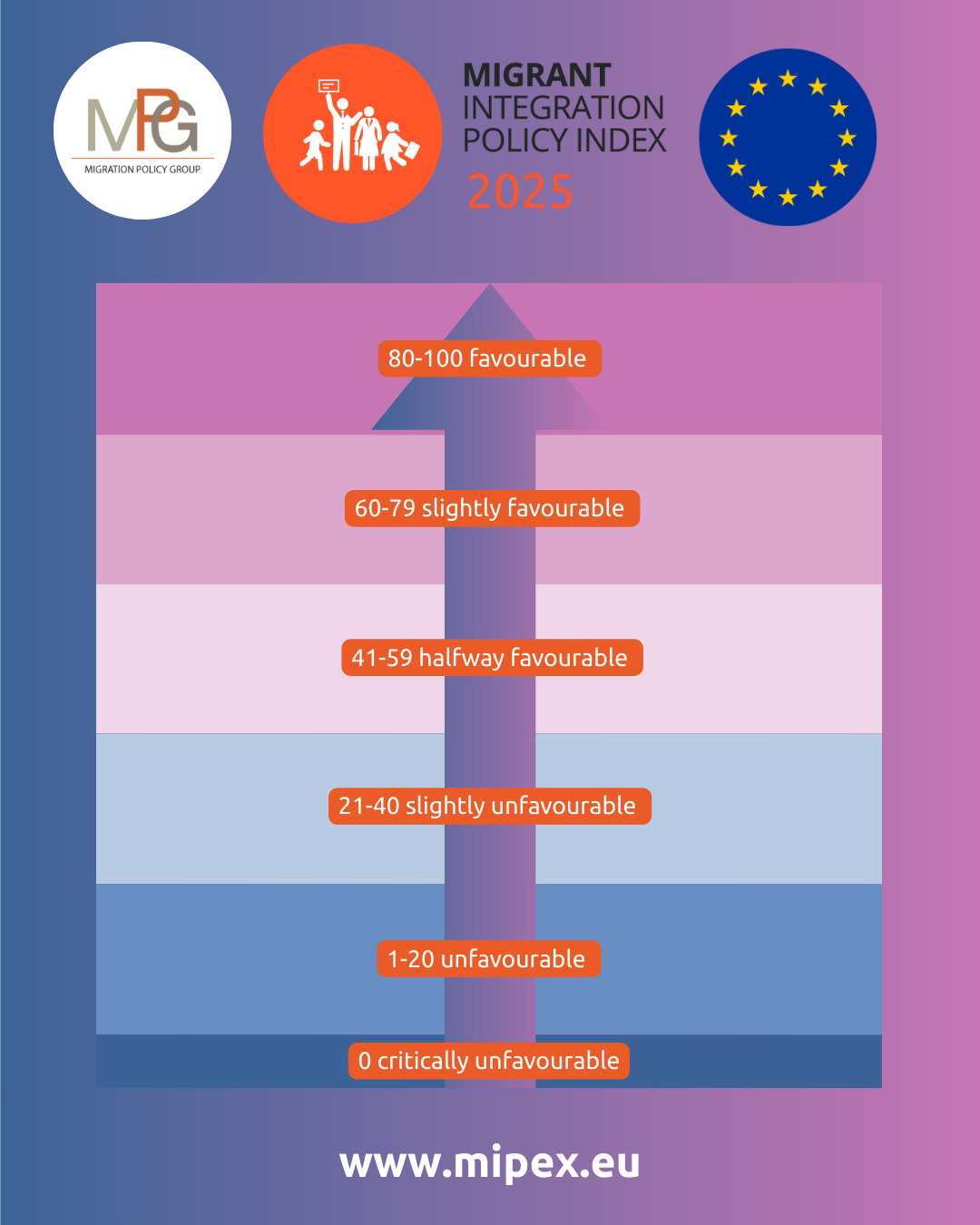
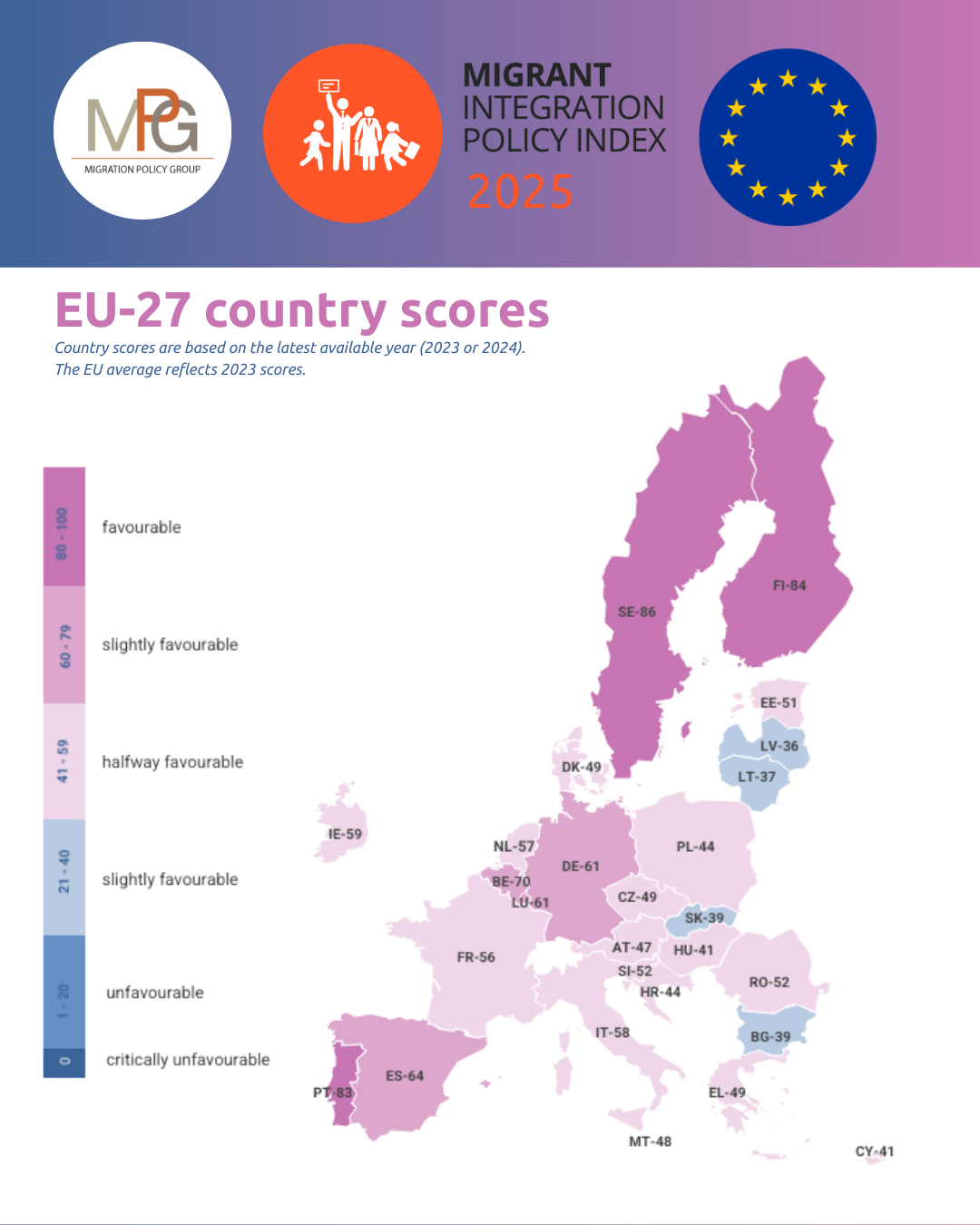
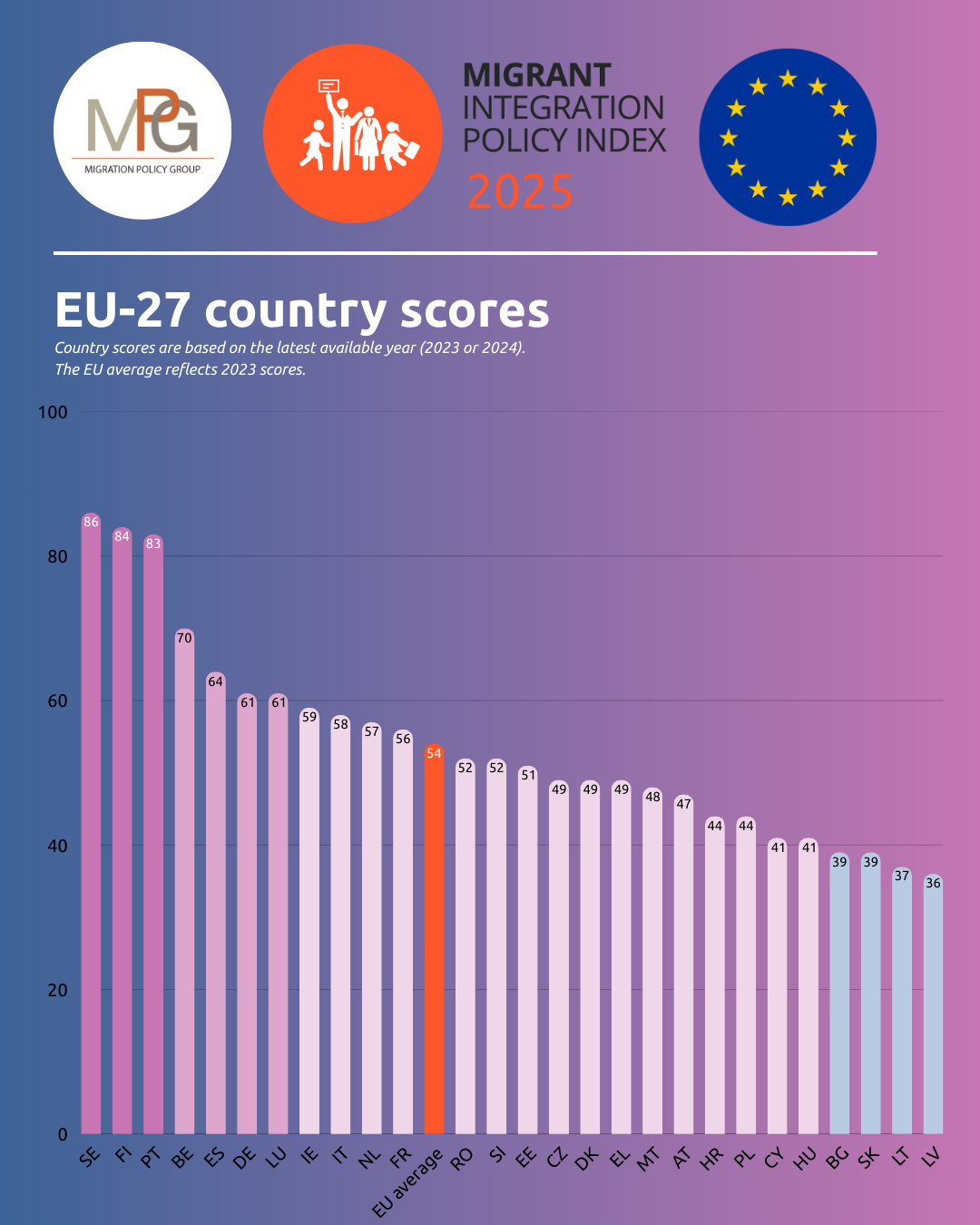
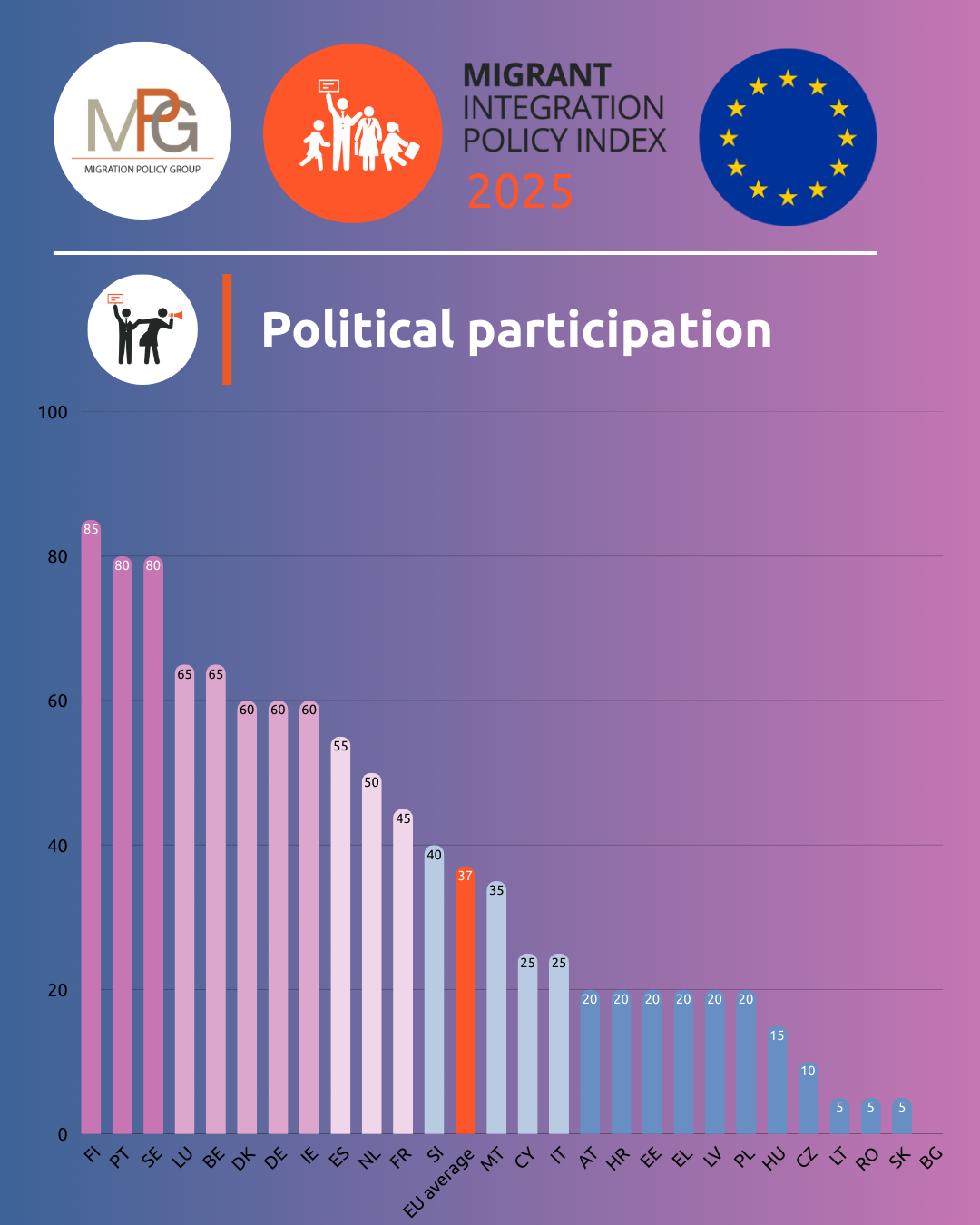
MPG today releases headline findings from the Migrant Integration Policy Index (MIPEX) 2025 EU update, revealing overall stagnation across the Union and persistent gaps between older and newer Member States. The EU-wide average stands at 54/100, with Sweden, Finland and Portugal leading, while post-2004 Member States trail significantly (44 vs. 63 in pre-2004 countries). Political participation remains the weakest policy area at 37/100.
“Across the EU, migrants often enjoy basic rights and some long-term security – but not equal opportunities,” said Başak Yavçan, Head of Research at MPG and co-author of the report. “The data show incremental gains in education and anti-discrimination, but worrying backsliding on access to citizenship and political participation. The arrival of Ukrainian refugees triggered some useful spillover measures in healthcare and education, but their impact on broader and lasting access to services has been limited. If Europe wants cohesive, future-ready societies, investment in education, secure residence, and democratic inclusion cannot wait.”
“Where countries lowered barriers – for example by recognising qualifications faster or strengthening equality bodies – we see tangible improvements,” added Marianna Gorgerino, co-author. “But tightening rules on citizenship and family reunification risks trapping people in limbo and undermining long-term integration.”
Key EU-level findings
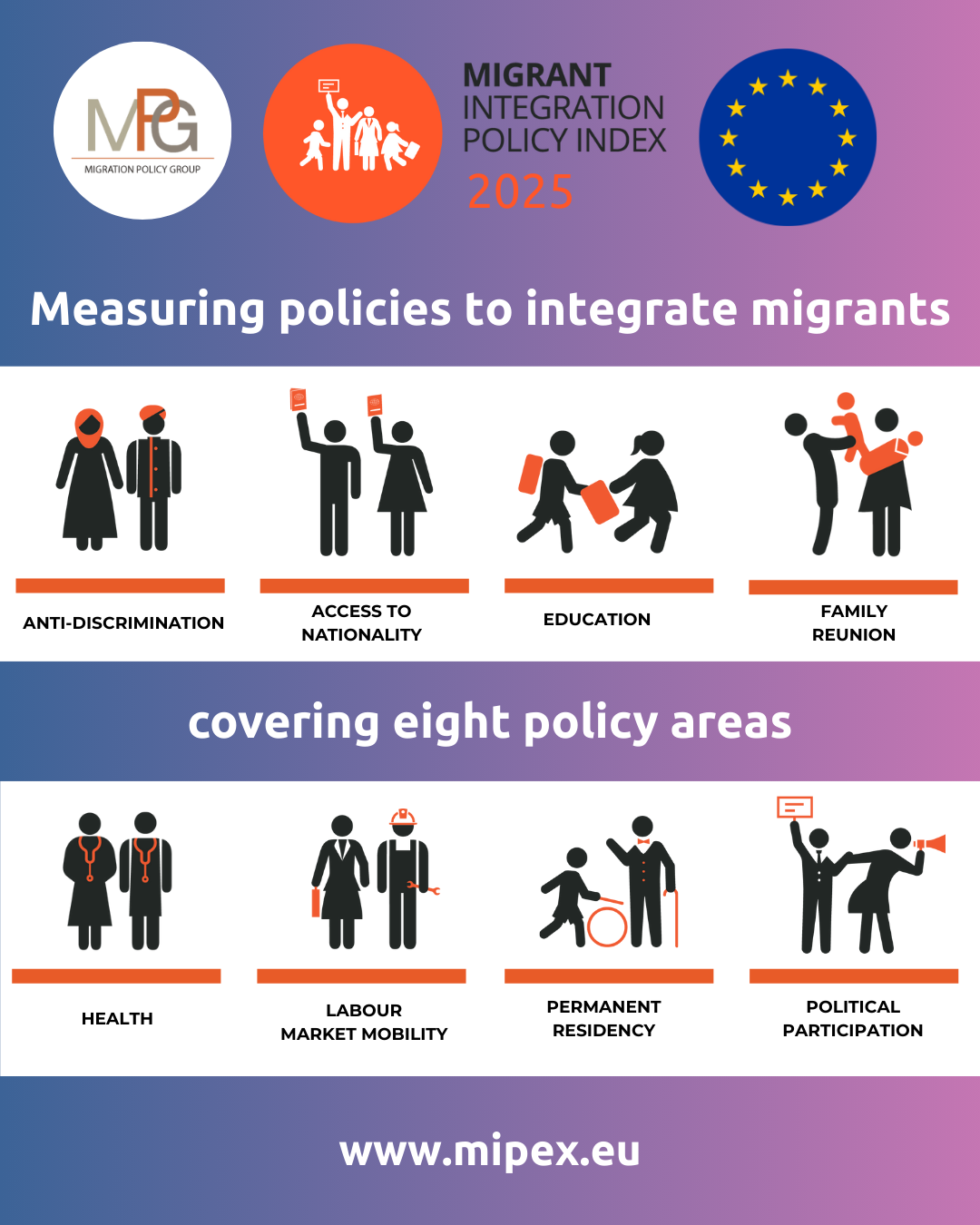
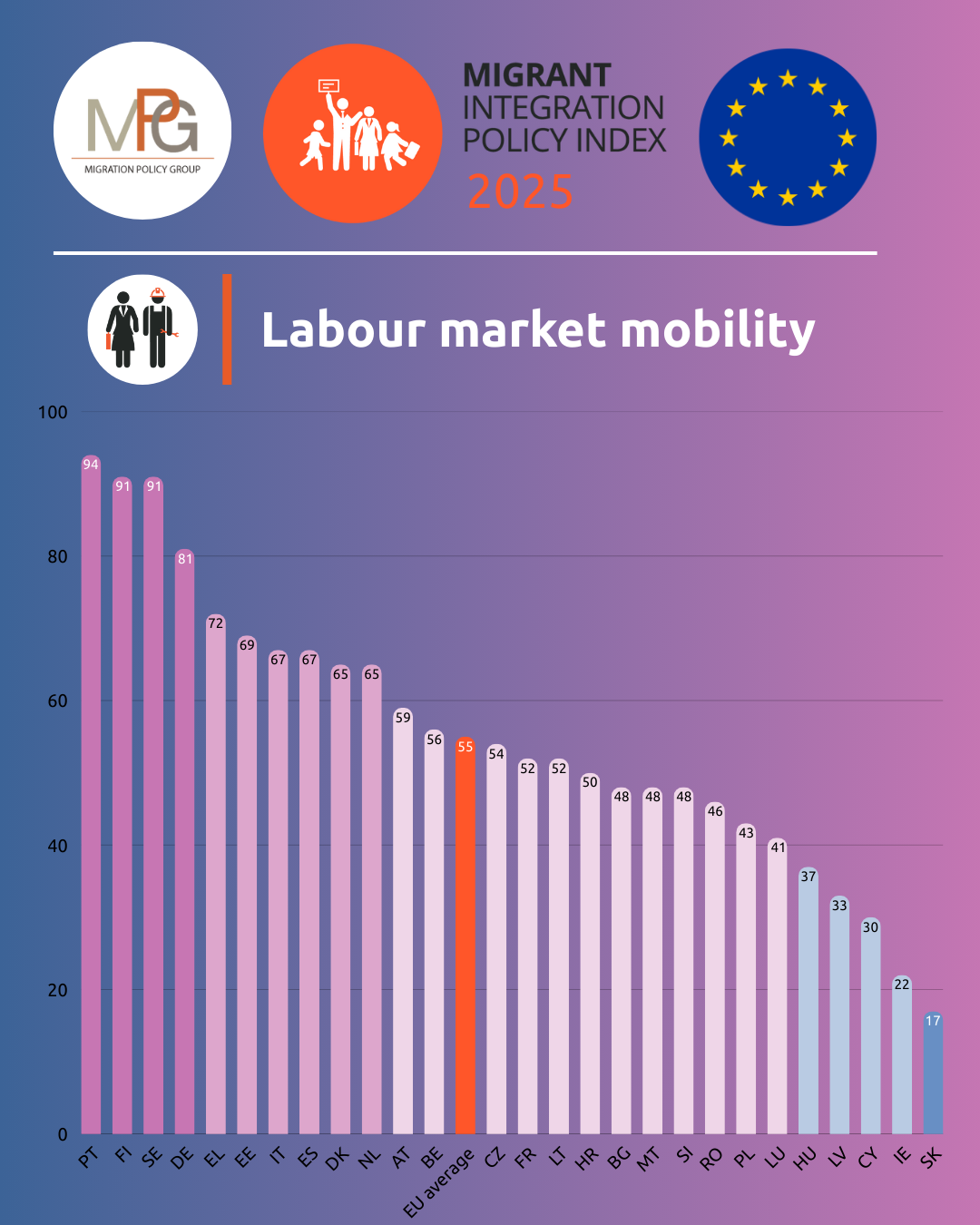
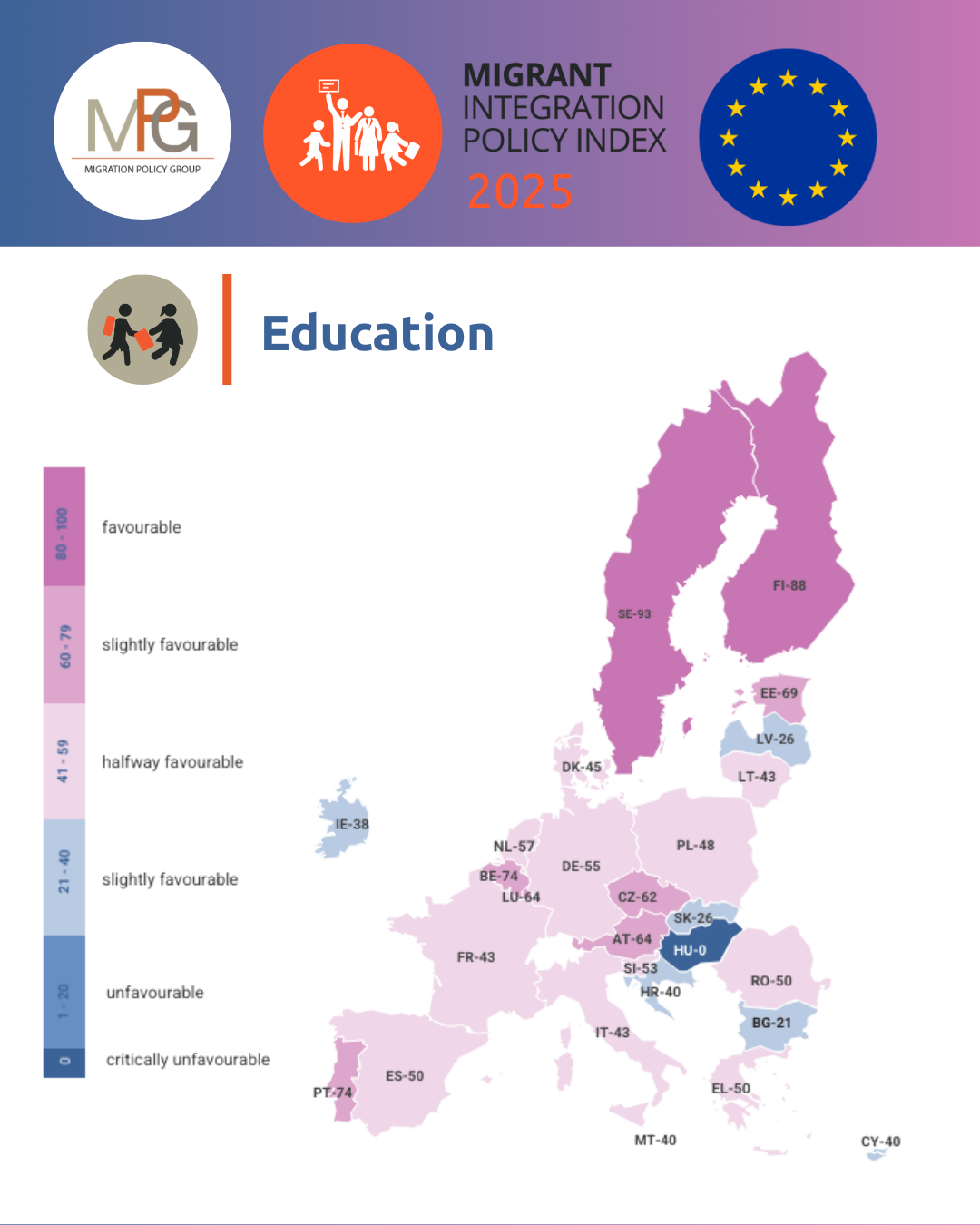
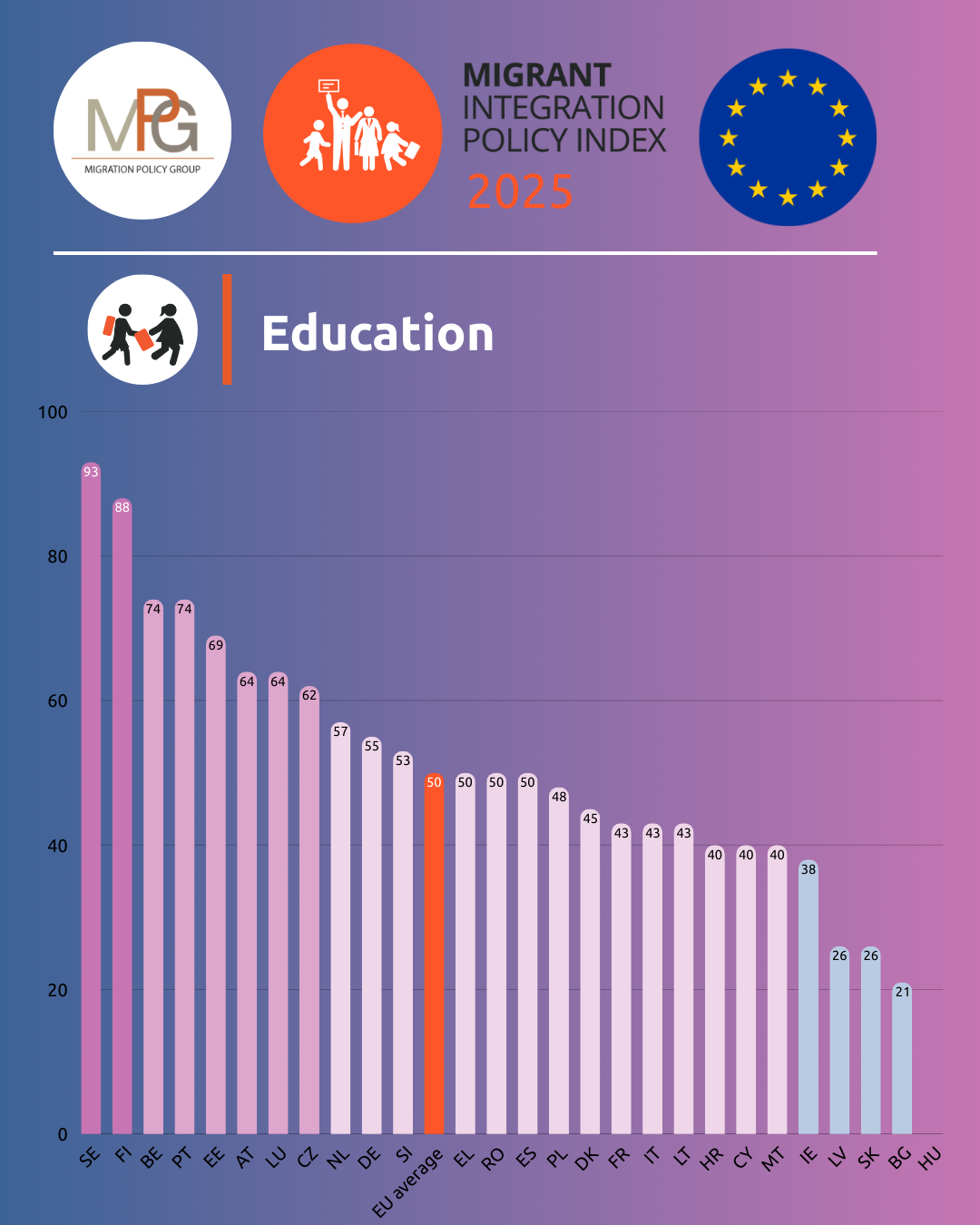
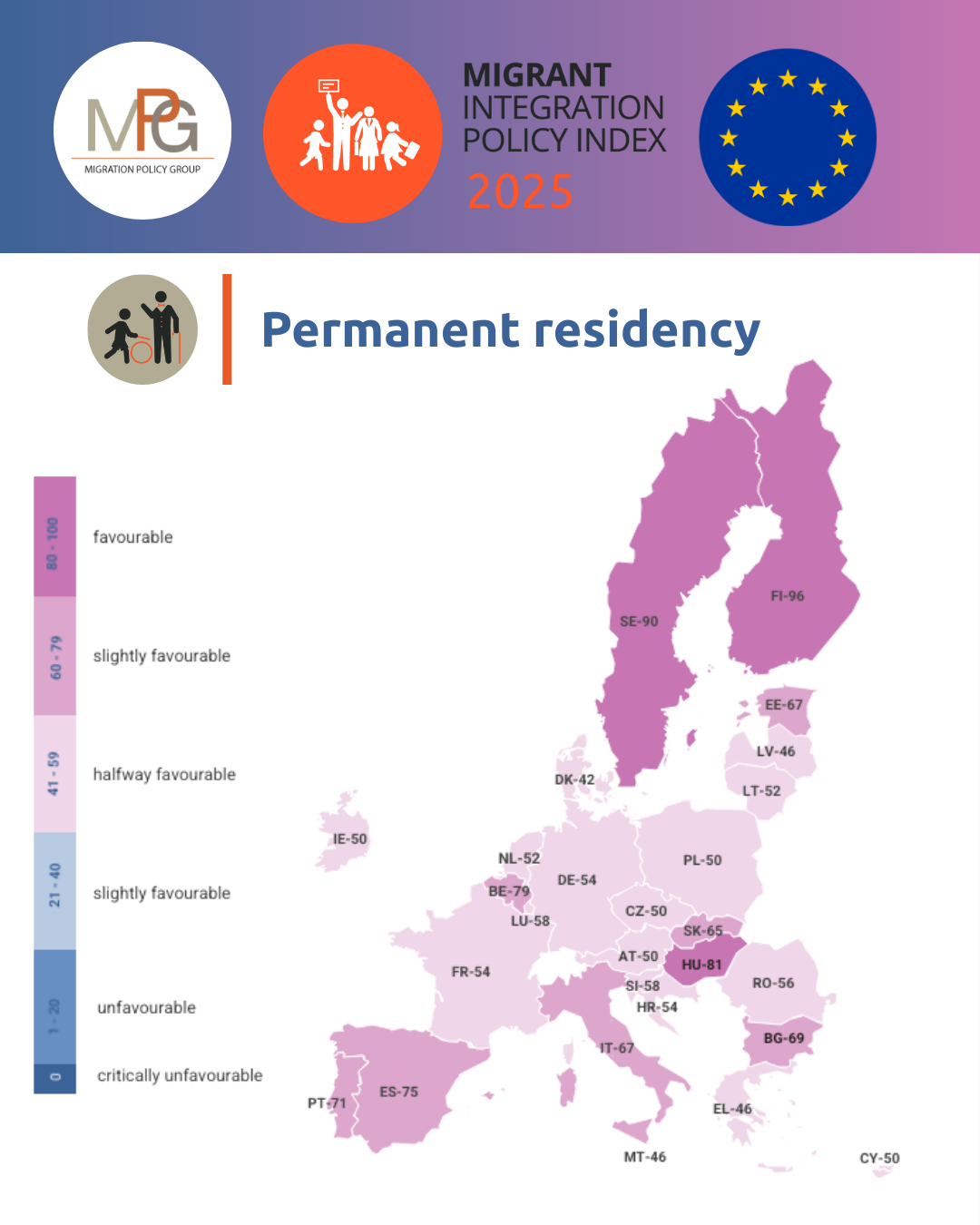
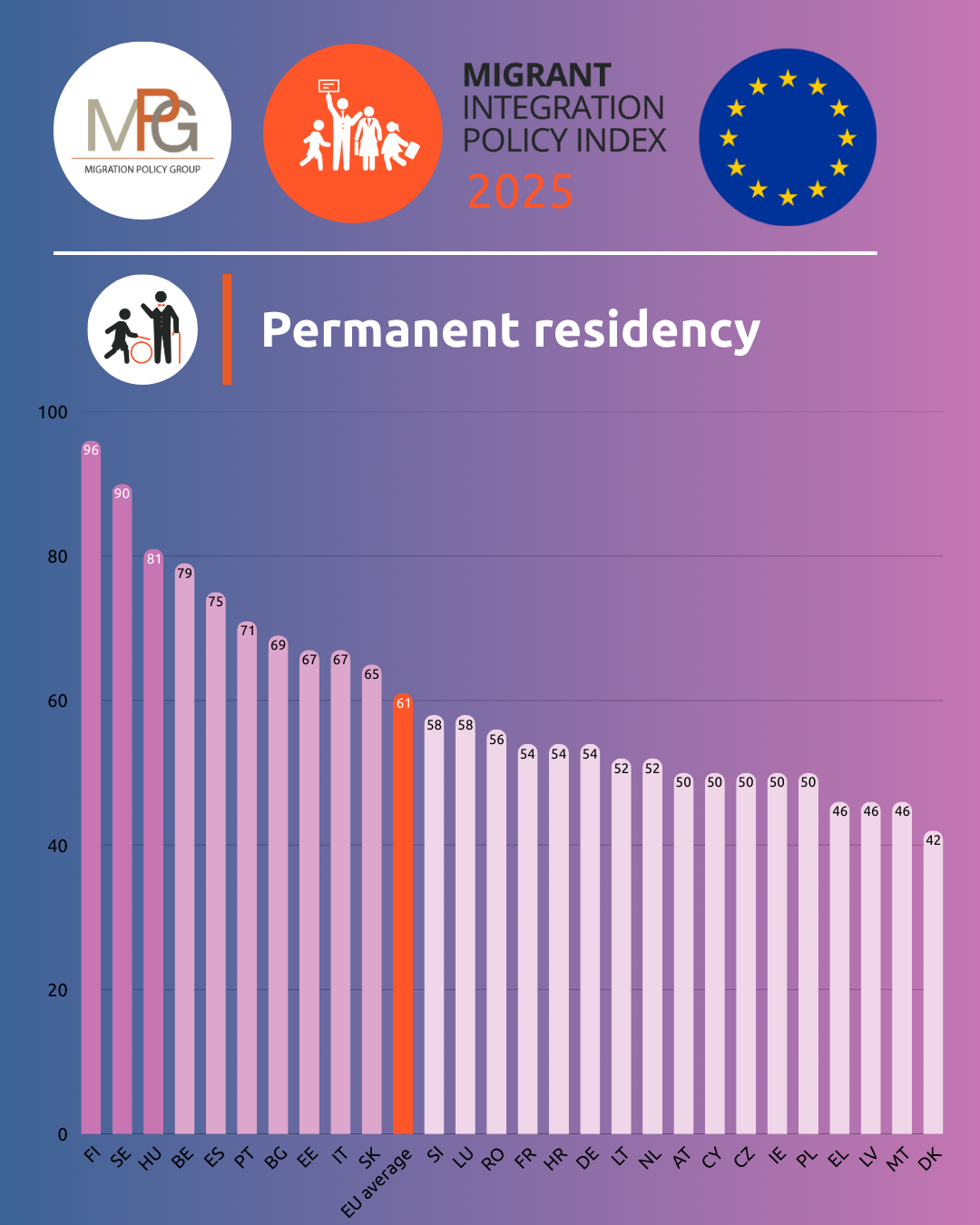
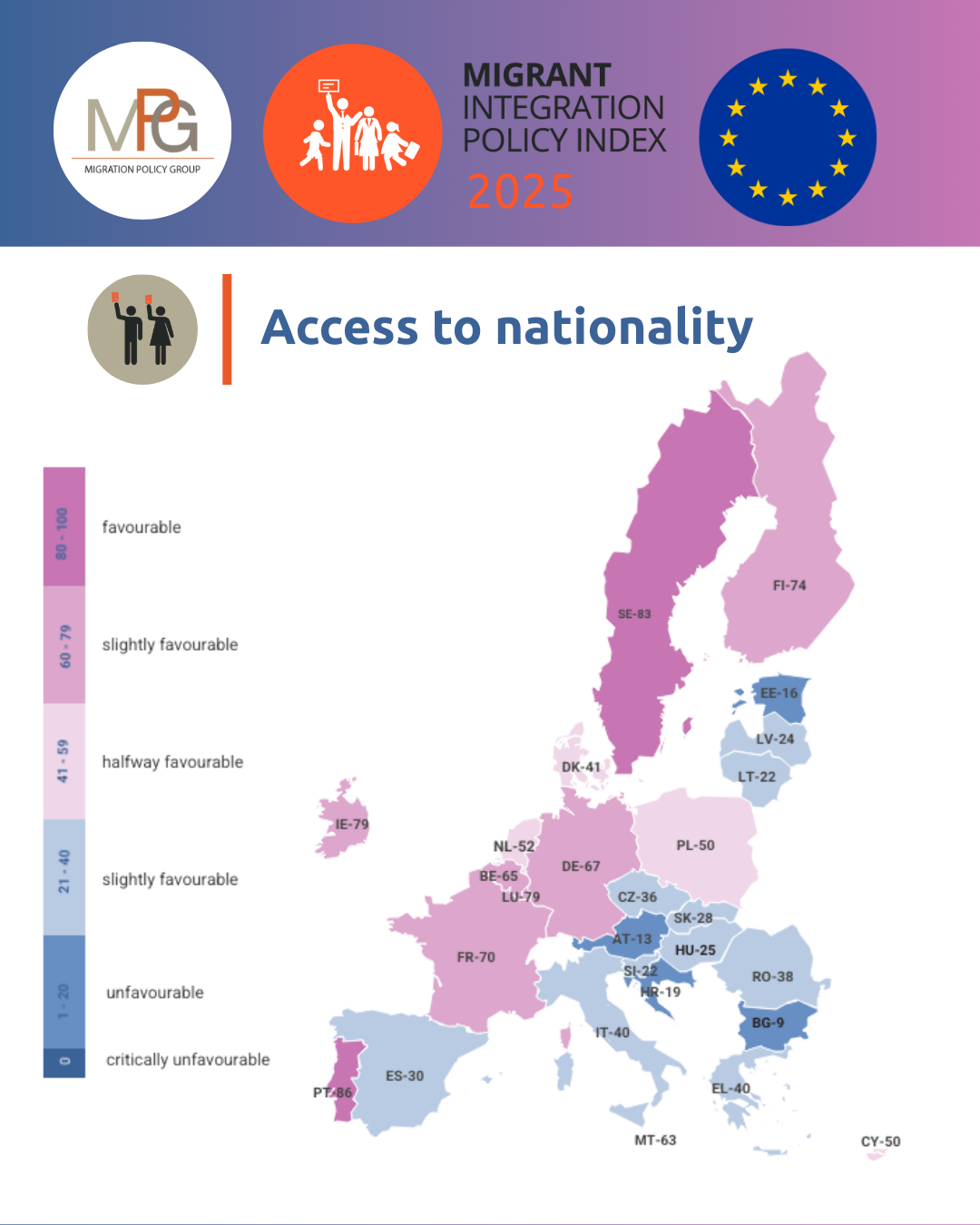
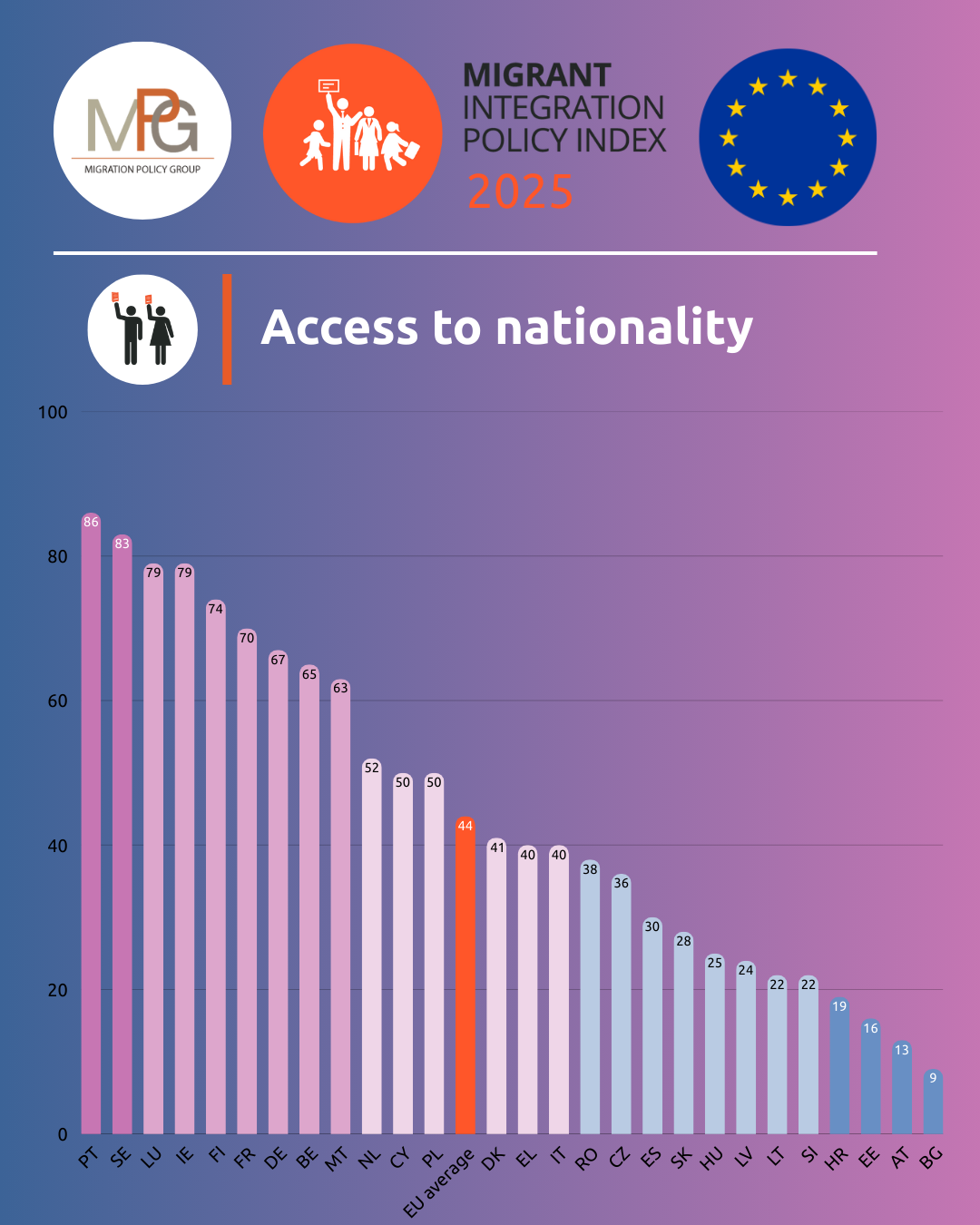
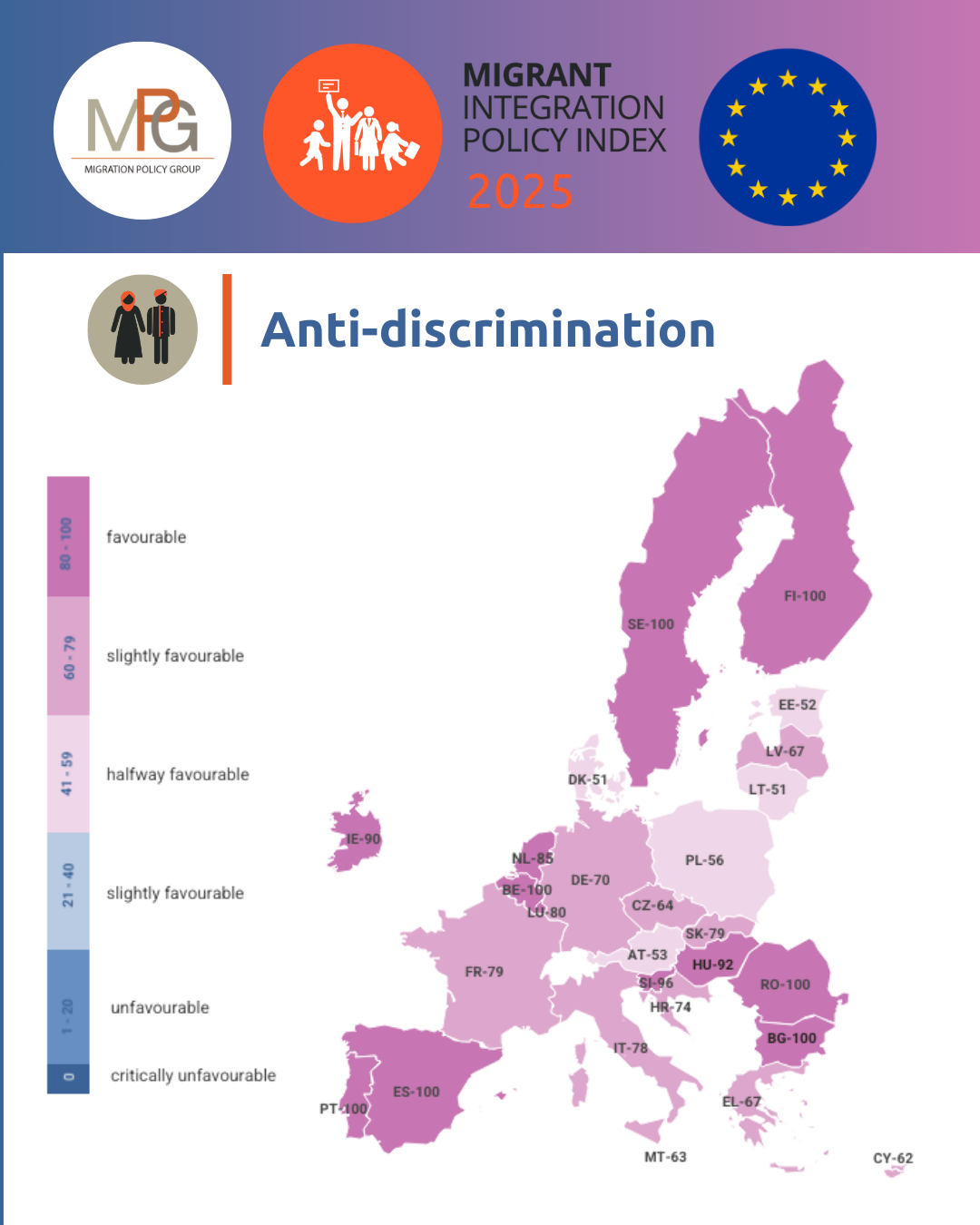
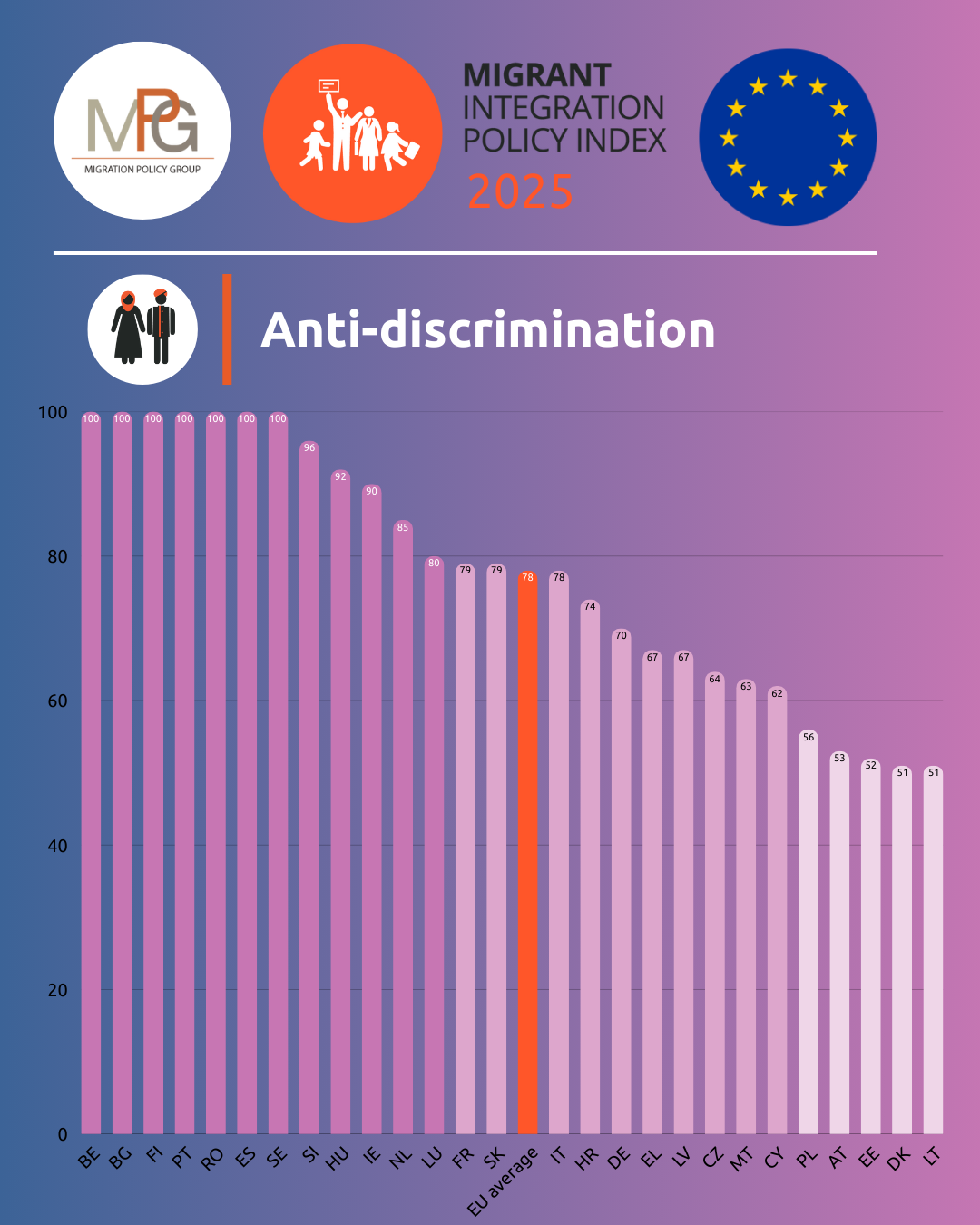
- Overall score: 54/100 – little movement since 2019 (+0.8 points). Strengths: anti-discrimination (78), permanent residence (61), labour market (55). Weaknesses: political participation (37), access to nationality (44), education (50).
- Leaders: Sweden, Finland, Portugal. Majority of countries are only “halfway favourable.”
- EU-14 vs. EU-13 gap: 63 vs. 44, reflecting longstanding divergence in frameworks and opportunities.
- Trends 2019–2023: Gains in education (+3), labour market (+1), anti-discrimination (+1); declines in citizenship (–1) and political participation (–1); marginal change in permanent residence (–0.1).
- Ukraine spillovers: Positive but limited boosts to translation, multilingual guidance, and targeted school support in several Eastern Member States.
Country highlights
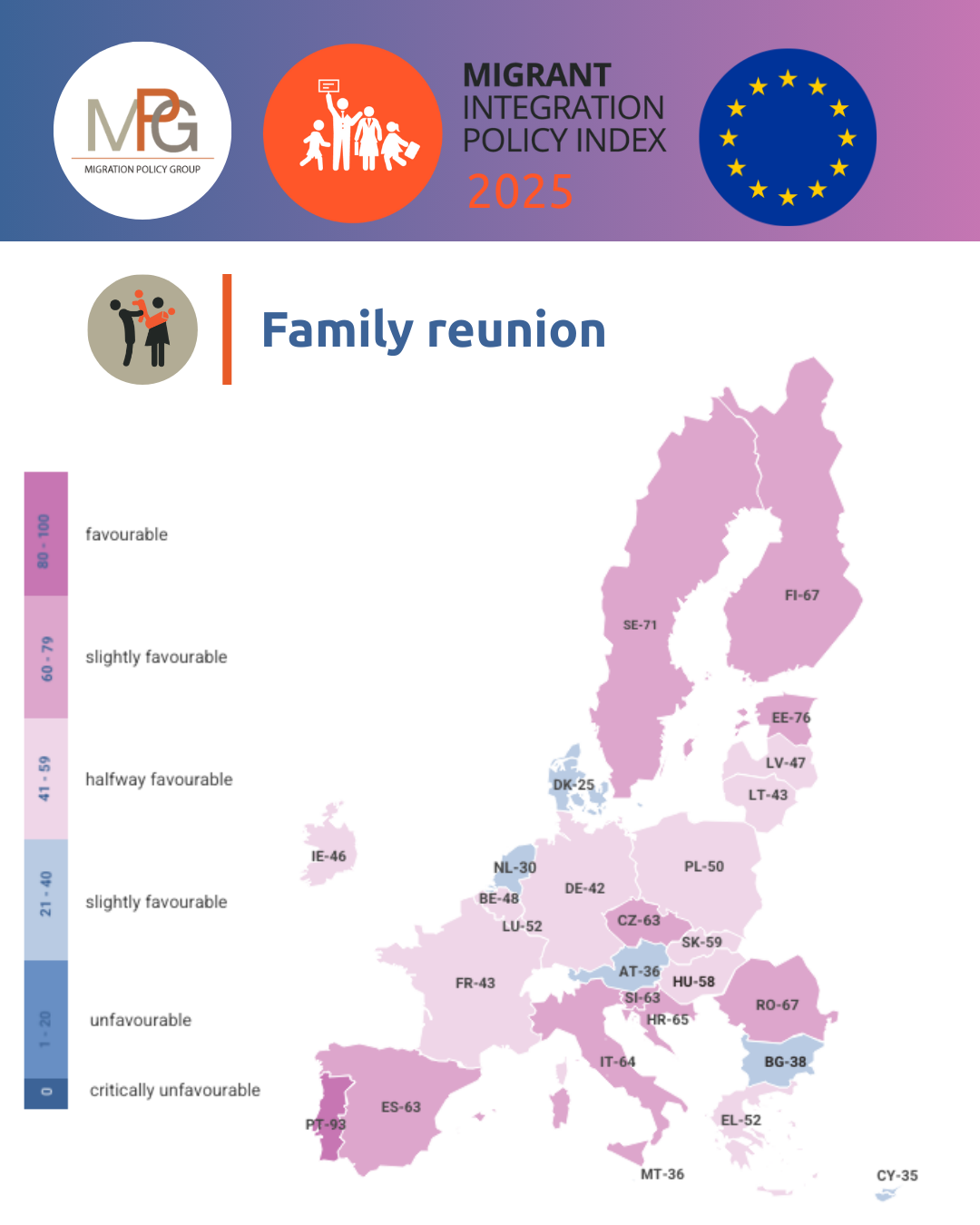
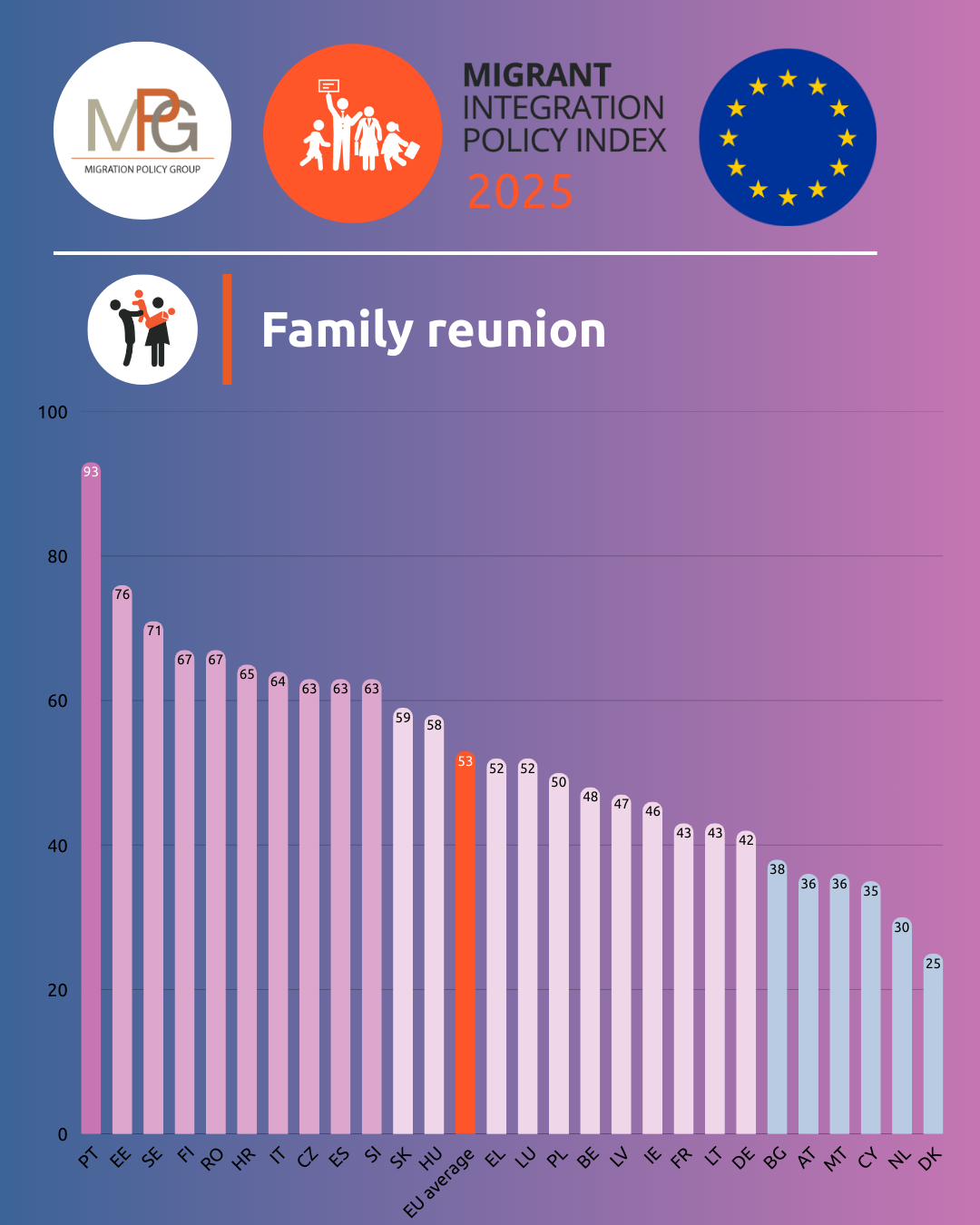
- Germany (2024): More inclusive citizenship rules (dual nationality, reduced residency). Spain (2022): New comprehensive anti-discrimination law strengthening scope and equality body. Portugal & Croatia: Steps to ease family reunification. Slovenia & Greece: Notable labour market reforms.
- Political participation setbacks: Weakened national consultative bodies in Luxembourg and Denmark; limited active information policies in Finland and Ireland.
Why it matters
Inclusive, well-implemented integration policies improve education and employment outcomes, strengthen public trust, and reduce prejudice. Conversely, restrictive approaches – especially in citizenship, family reunification and political participation – undermine democratic inclusion and social cohesion.
Policy implications for EU institutions and Member States
- Make integration investment a core pillar of EU implementation (e.g., New Pact on Migration and Asylum) and narrow cross-country disparities.
- Prioritise education (targeted support, language, guidance), secure residence pathways, and meaningful political participation (voting rights, strong consultative bodies, support for migrant-led organisations).
- Protect and expand anti-discrimination enforcement and equality body mandates.


Unlocking Integration – Enabling Participation
Authors

Dr. Başak Yavçan

Marianna Gorgerino
 About the Migration Policy Group (MPG)
MPG is an independent think-and-do-tank based in Brussels. MPG’s purpose is rooted in its ability to inspire networks to provide evidence-based projects, research and campaigns in the areas of integration, migration and anti-discrimination.