
Webinar | Political Participation of New Europeans: New EU-wide Comparative Findings

Webinar
29 January 2026
Political Participation of New Europeans: EU-wide Evidence on Policies and Participation Outcomes
Research Briefing and Discussion
On 29 January 2026, MPG’s New European Initiative invited researchers, universities, and think tanks to a research briefing and discussion sharing new comparative findings on the political participation of New Europeans across the European Union.
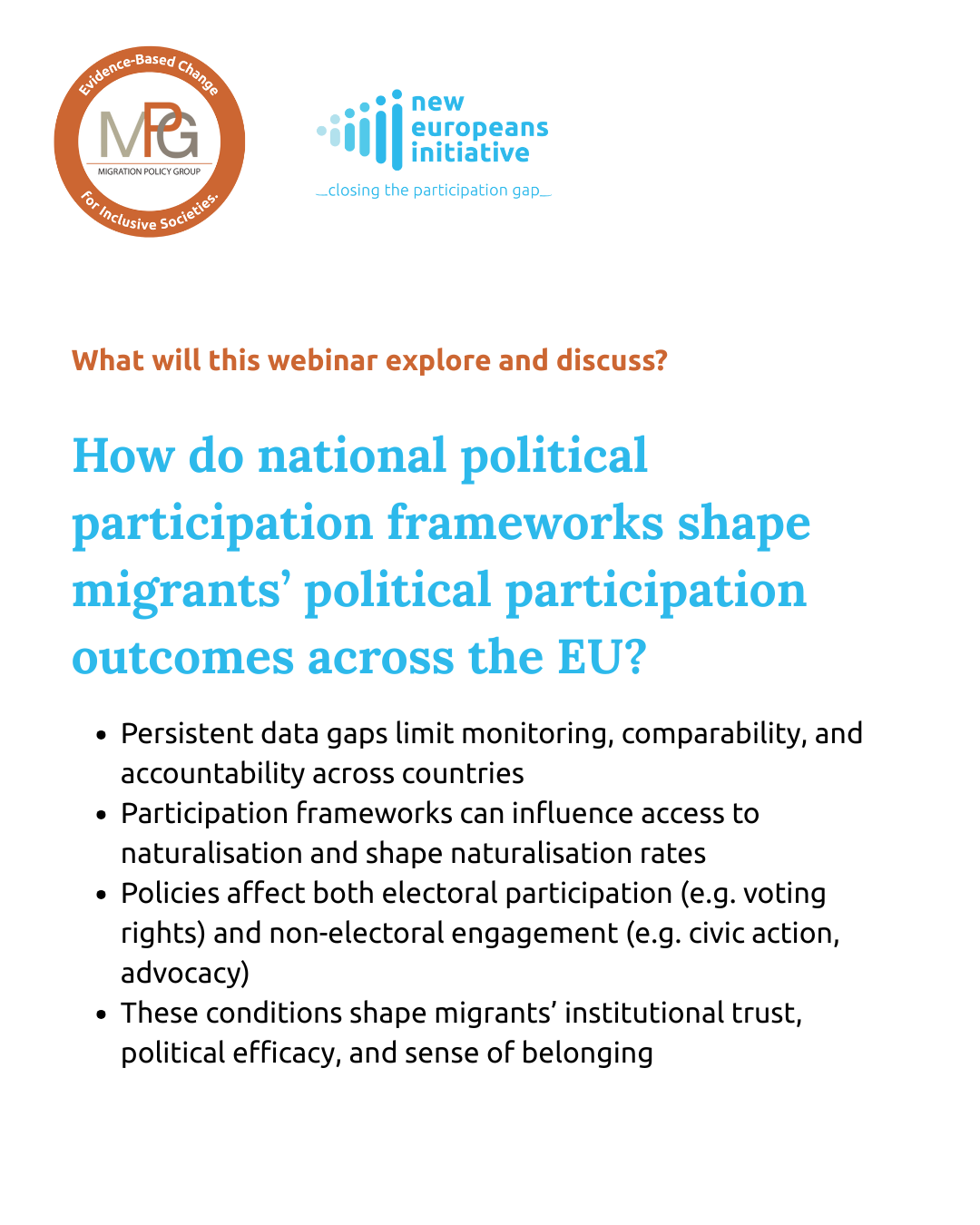
The webinar presented EU-wide research analysing how national political participation frameworks relate to migrants’ political participation outcomes, including naturalisation, electoral and non-electoral engagement, institutional trust, political efficacy, and sense of belonging. The discussion reflected on both the theoretical implications for research on political participation and the practical relevance for democratic governance and policy development in Europe.
Watch webinar recording
An Overview on the Research
Political participation is a cornerstone of democratic governance and a key dimension of social and political integration. In the European Union’s increasingly diverse societies, the political participation of New Europeans, migrants and people with a migrant background, has become central to debates on democratic legitimacy, representation, and democratic resilience. Yet across the EU, opportunities for political participation remain highly uneven, shaped by differences in citizenship regimes, voting rights, civic freedoms, and institutional practices, further accentuating the importance of understanding policy effects.
This research briefing and discussion will share new Migration Policy Group research examining the relationship between national political participation policies and migrants’ political participation outcomes across 22 EU Member States. The research combines the Political Participation Policy Index with administrative and European Social Survey data to analyse associations with naturalisation, electoral and non-electoral participation, institutional trust, political efficacy, and sense of belonging.
Why This Research Matters
- Theoretical implications: The findings contribute to scholarly debates on political integration and participation by demonstrating the central role of institutional and policy contexts in shaping political engagement. Political participation emerges as a multidimensional process that extends beyond voting to include non-electoral engagement and subjective dimensions such as trust and political agency.
- Practical and policy relevance: More inclusive political participation frameworks are associated with higher naturalisation rates, stronger institutional trust, and greater political efficacy among migrants. However, the research shows that formal rights alone are insufficient; participation outcomes are strongest where rights are combined with active encouragement, civic education, and support for migrant-led civil society.
- Research and data implications: The study highlights persistent EU-wide data gaps in measuring migrant political participation, reinforcing the need for improved administrative data collection and stronger integration of survey and registry data to support comparative research and evidence-based policymaking.
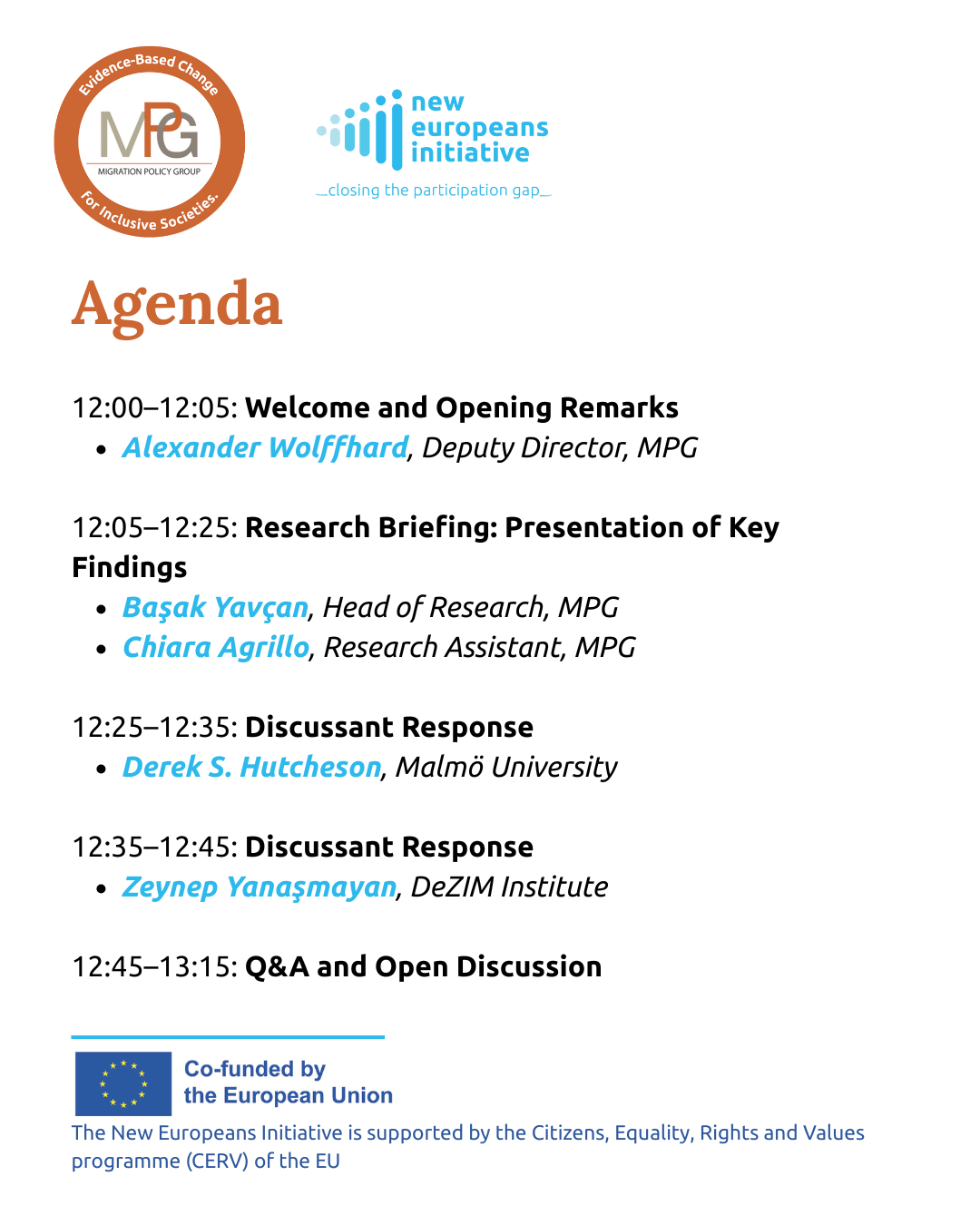
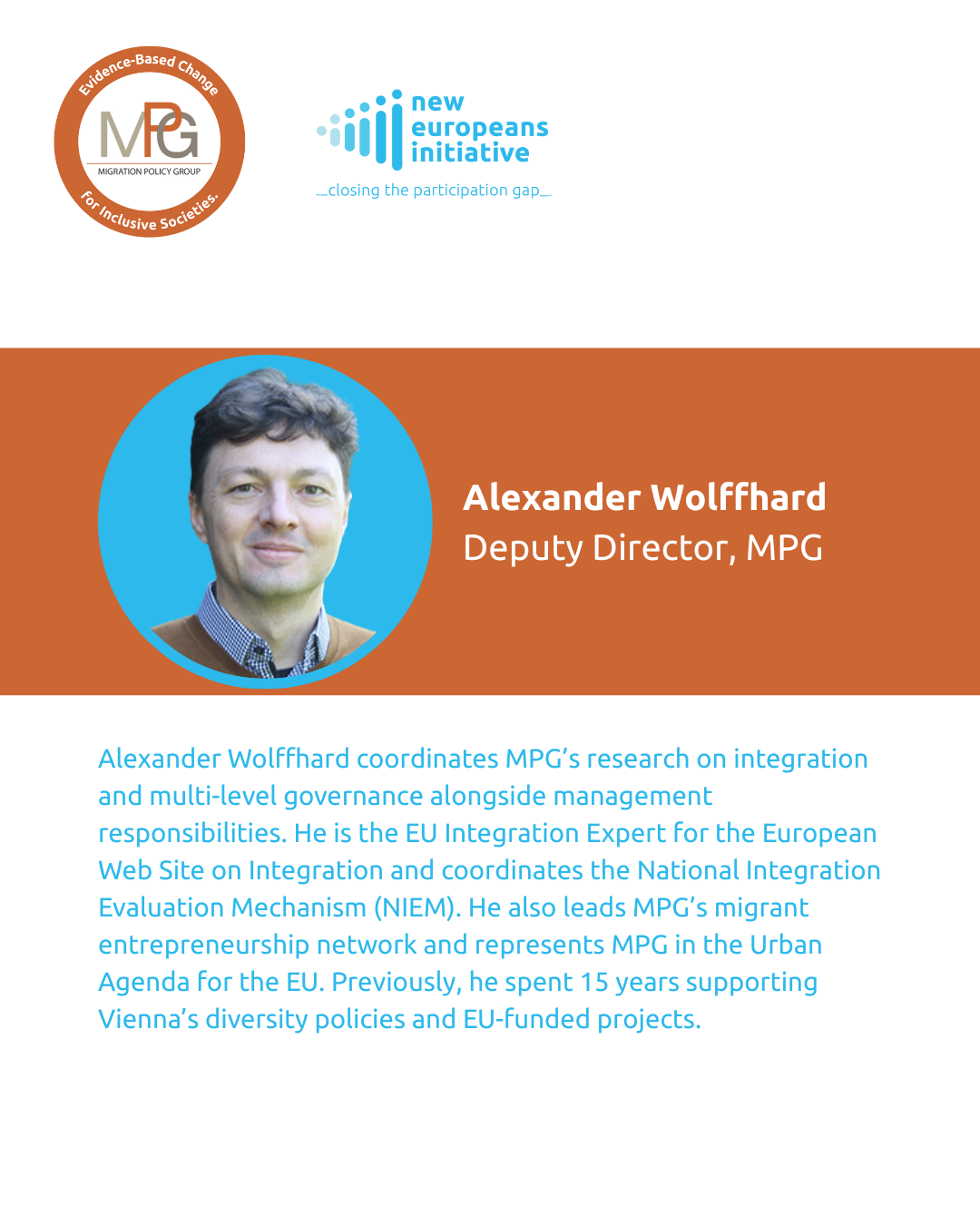
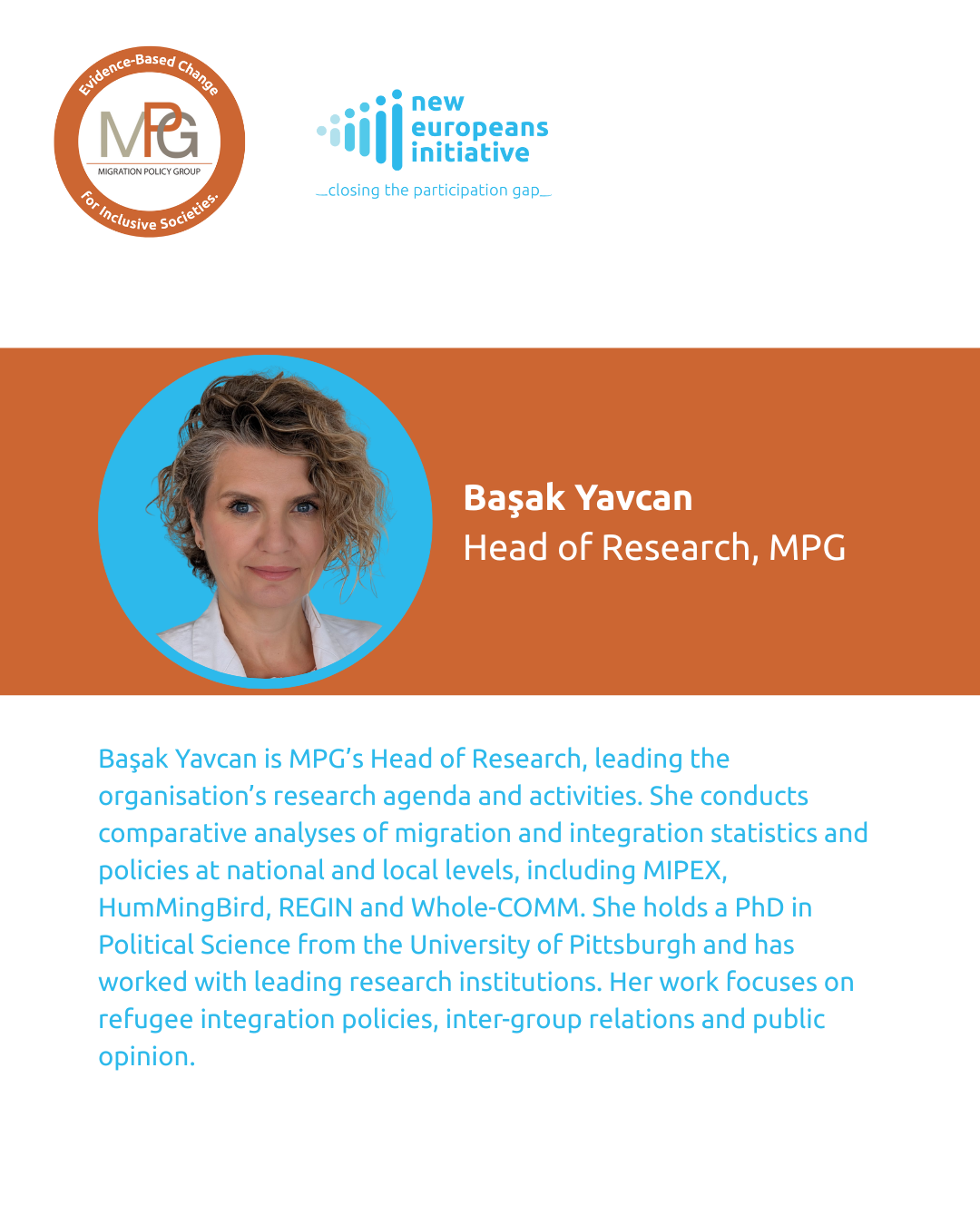
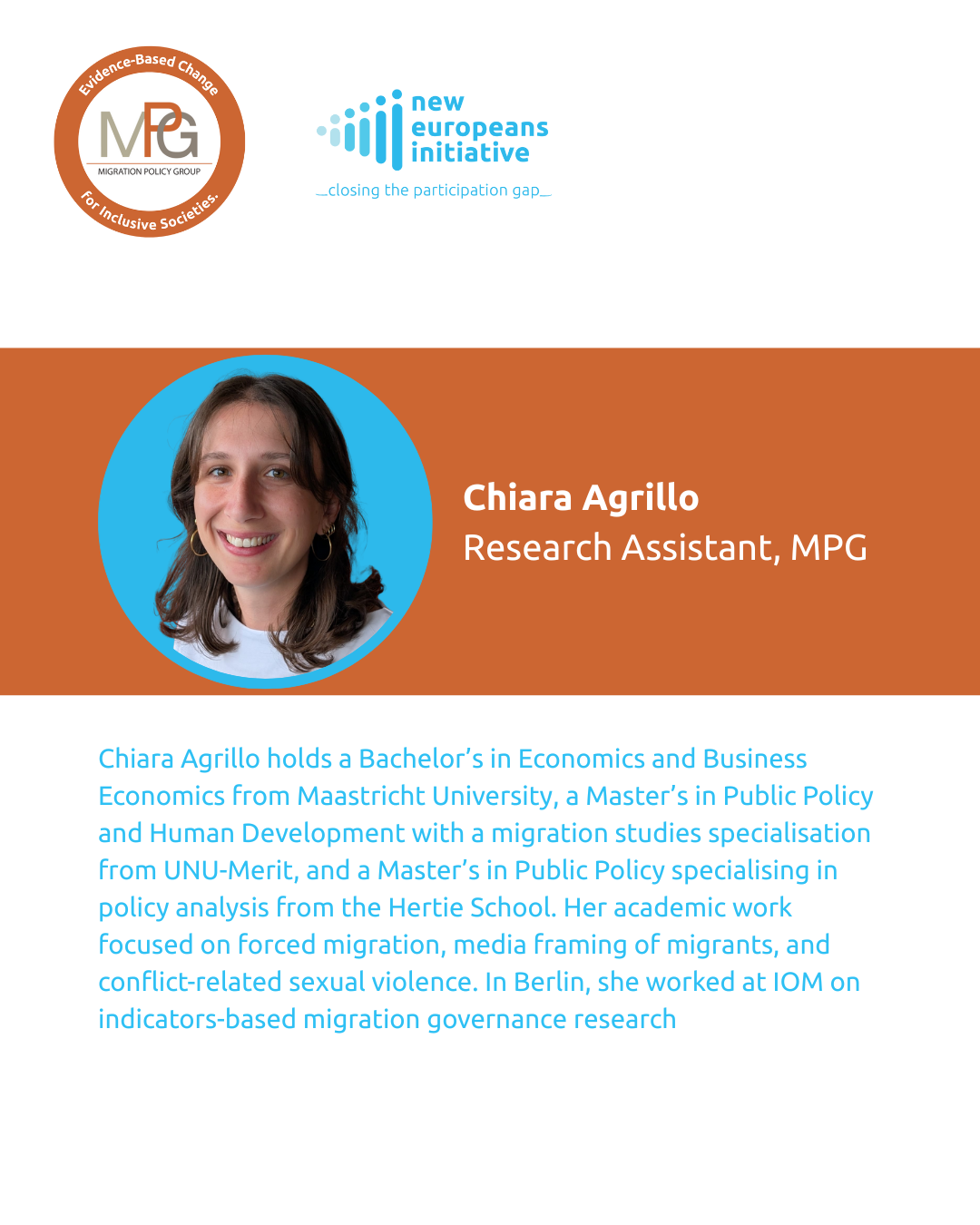
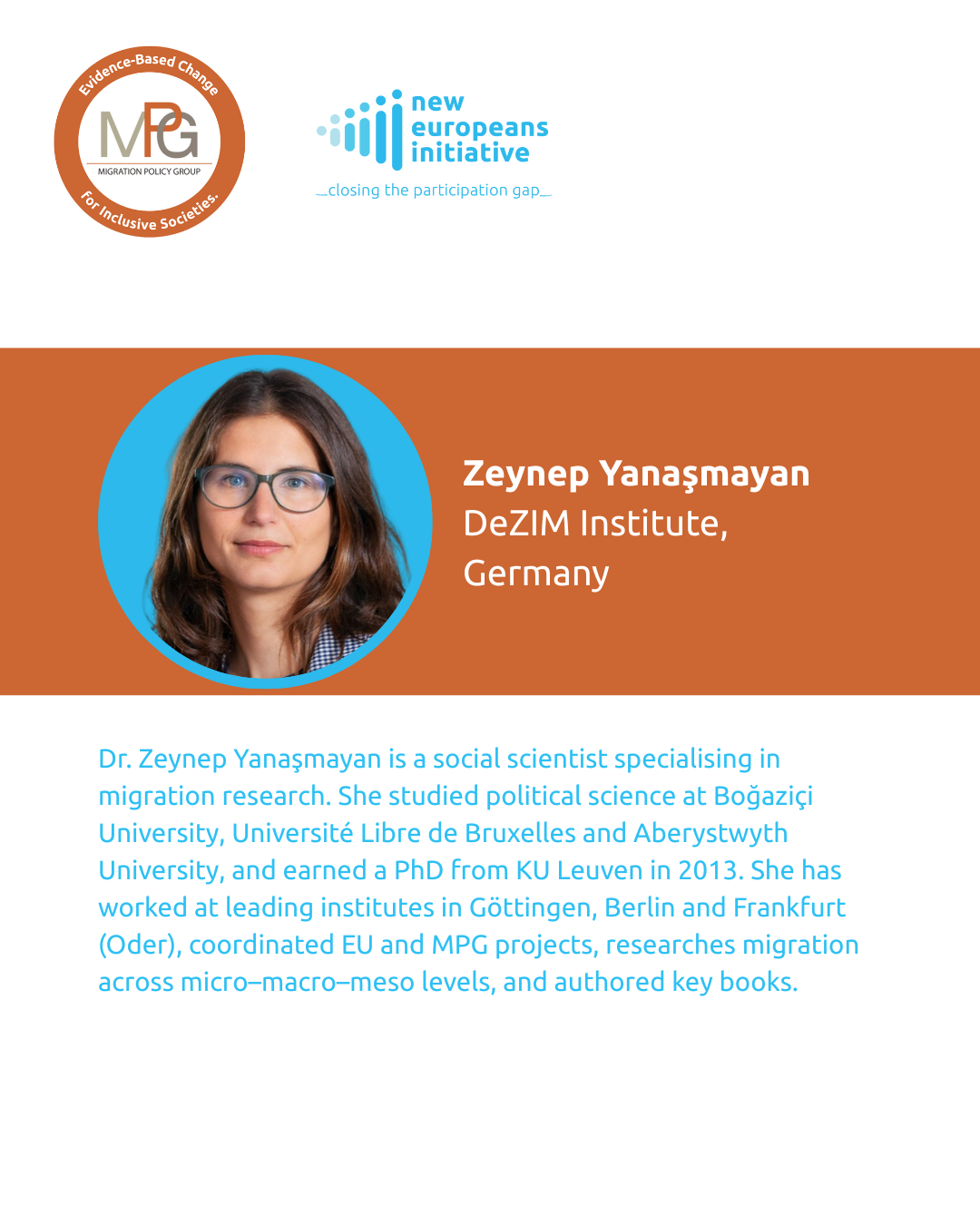
Webinar programme and speakers


 About the Migration Policy Group (MPG)
MPG is an independent think-and-do-tank based in Brussels. MPG’s purpose is rooted in its ability to inspire networks to provide evidence-based projects, research and campaigns in the areas of integration, migration and anti-discrimination.