MPG Presents MIPEX Findings and Advances New Governance Toolkit at Council of Europe ADI-INT Meeting
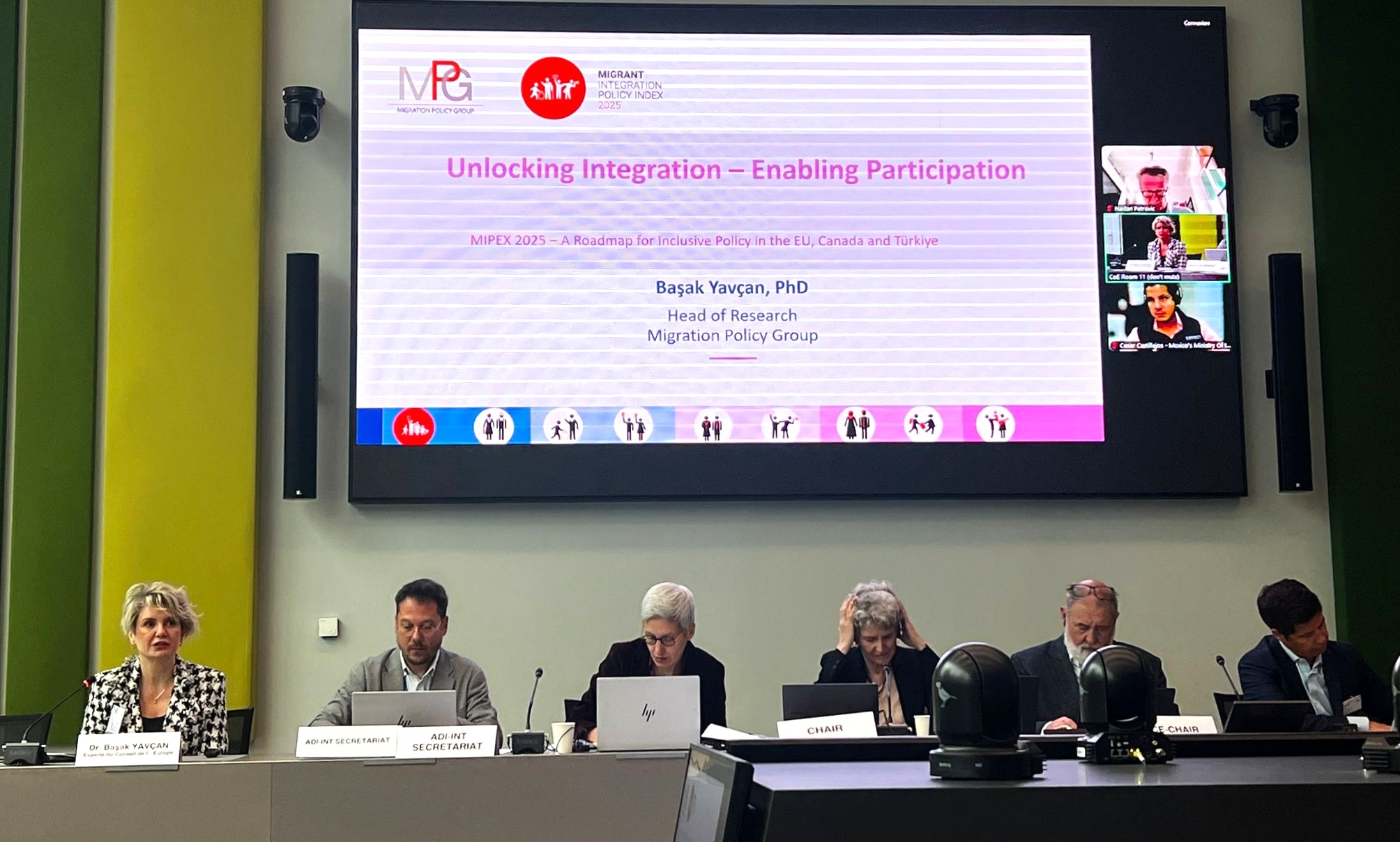
MPG part in the 9th meeting of the Committee of Experts on Intercultural Inclusion (ADI-INT), organised by the Council of Europe on 14-15 May 2026 in Strasbourg. The meeting brought together experts, policymakers, and practitioners working to strengthen intercultural inclusion and multi-level governance across Europe.
During the meeting, MPG’s Head of Research, Başak Yavçan, presented recent findings from the Migrant Integration Policy Index (MIPEX), focusing on comparative results for the EU, Canada, and Türkiye. The presentation explored how current political developments are shaping integration policies and highlighted emerging challenges linked to political polarisation, democratic backsliding, and shifting policy priorities.
The discussion that followed reflected many of the pressing questions currently facing policymakers and practitioners across Europe. Participants exchanged views on how integration can remain high on the political agenda in increasingly difficult political contexts, what local and regional authorities can do when national governments deprioritise integration policies, and how actors can respond to setbacks in equality and inclusion frameworks.
The conversation also underscored the importance of political participation and representation, stressing that migrants themselves must have a meaningful seat at the table in order to shape integration policies effectively. Additional topics included gender-sensitive approaches to integration, policies targeting people displaced from Ukraine, and the role of labour market inclusion in fostering long-term social cohesion.
The meeting also provided an opportunity to discuss the forthcoming Self-assessment tool of multi-level governance for intercultural integration, currently being developed within the Council of Europe framework by MPG. The tool aims to support users in assessing key aspects of multi-level governance for migrant integration in their own contexts and identifying areas for improvement in policy coordination, stakeholder engagement, and implementation across different levels of governance.
The self-assessment framework is built around three key dimensions:
- Intercultural strategy: whether inclusive policy frameworks exist, are comprehensive, and involve different levels of government.
- Government coordination: how effectively national, regional, and local authorities cooperate and share responsibilities.
- Stakeholder participation: the extent to which civil society, migrant communities, and other actors are involved in shaping and implementing policies.
The toolkit will be made available soon through the Council of Europe Intercultural Cities Programme.
More information about the meeting is available in the Council of Europe article on the 9th ADI-INT meeting.
About the Migration Policy Group (MPG)
MPG is an independent think-and-do-tank based in Brussels. MPG’s purpose is rooted in its ability to inspire networks to provide evidence-based projects, research and campaigns in the areas of integration, migration and anti-discrimination.