
New research explores how policies shape migrants’ political participation across Europe
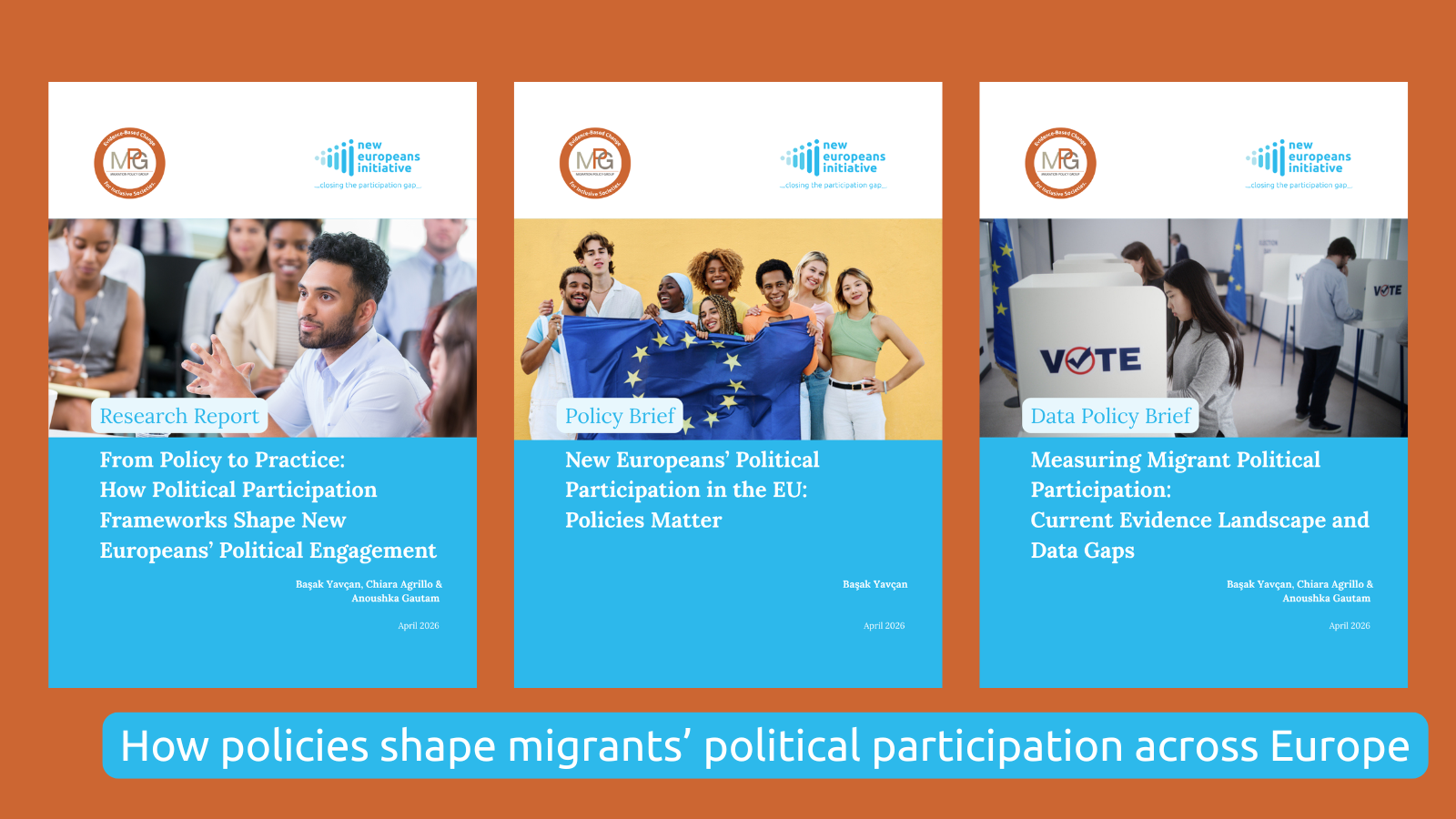
The New Europeans Initiative launches three new publications examining a key question for European democracies: how do political participation policies influence migrants’ engagement, representation, and sense of belonging?
Together, the research report, policy brief, and data policy brief provide one of the most comprehensive analyses to date of the relationship between policy frameworks and participation outcomes across the EU.
From policy to practice: what the research shows
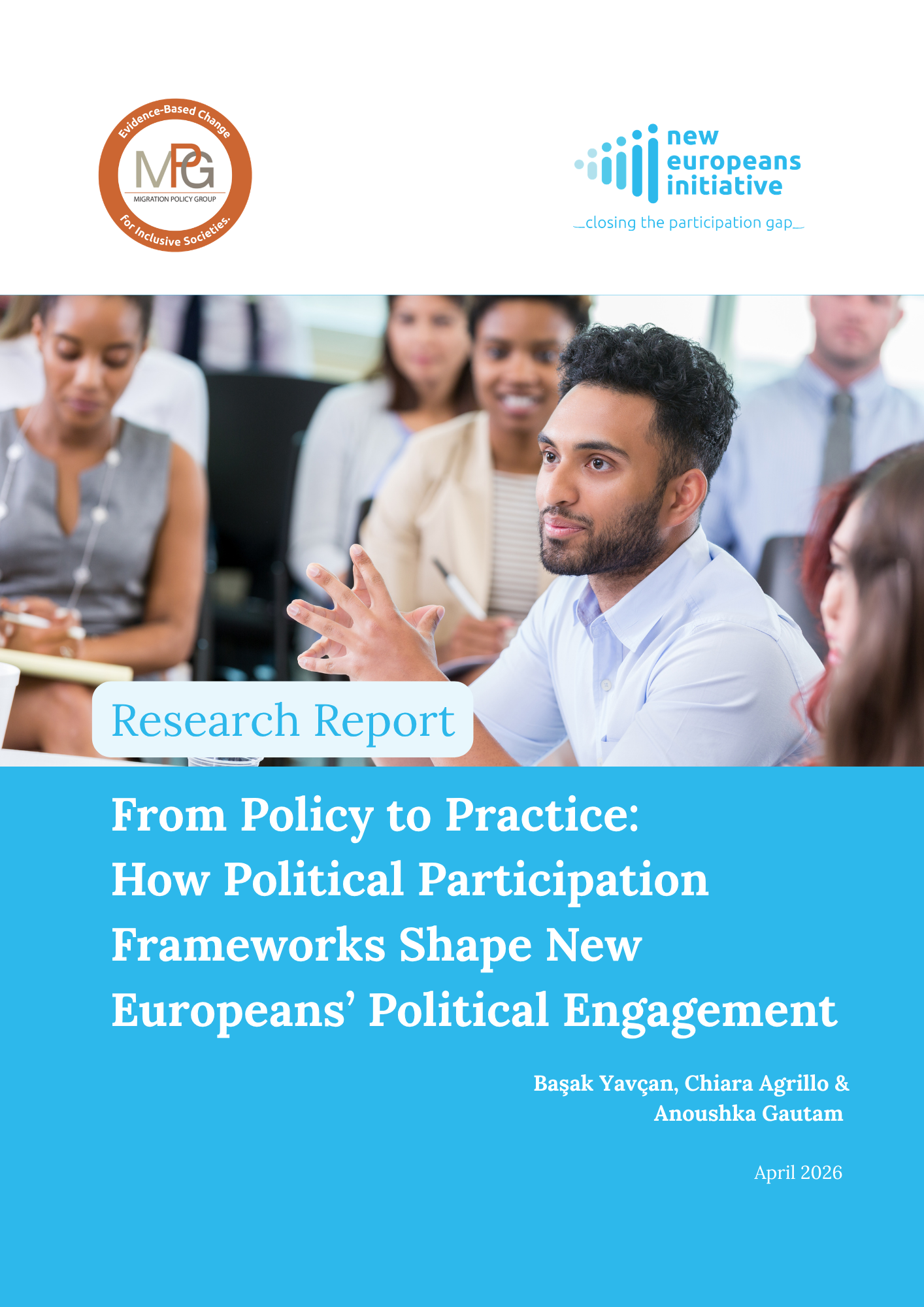 The flagship report analyses 22 EU Member States using the Political Participation Policy Index and a wide range of outcome indicators, including naturalisation, voting, non-electoral participation, and political attitudes.
The findings show a consistent association between more inclusive policy frameworks and stronger political engagement. Countries with more accessible citizenship regimes tend to have higher naturalisation rates, particularly among non-EU citizens. Inclusive policies are also linked to higher levels of political trust and a stronger sense of political efficacy among migrants.
However, the relationship between policies and outcomes is not always straightforward. Formal rights alone, such as voting rights or access to citizenship, do not automatically translate into higher participation.
Policies matter, but only with the right conditions
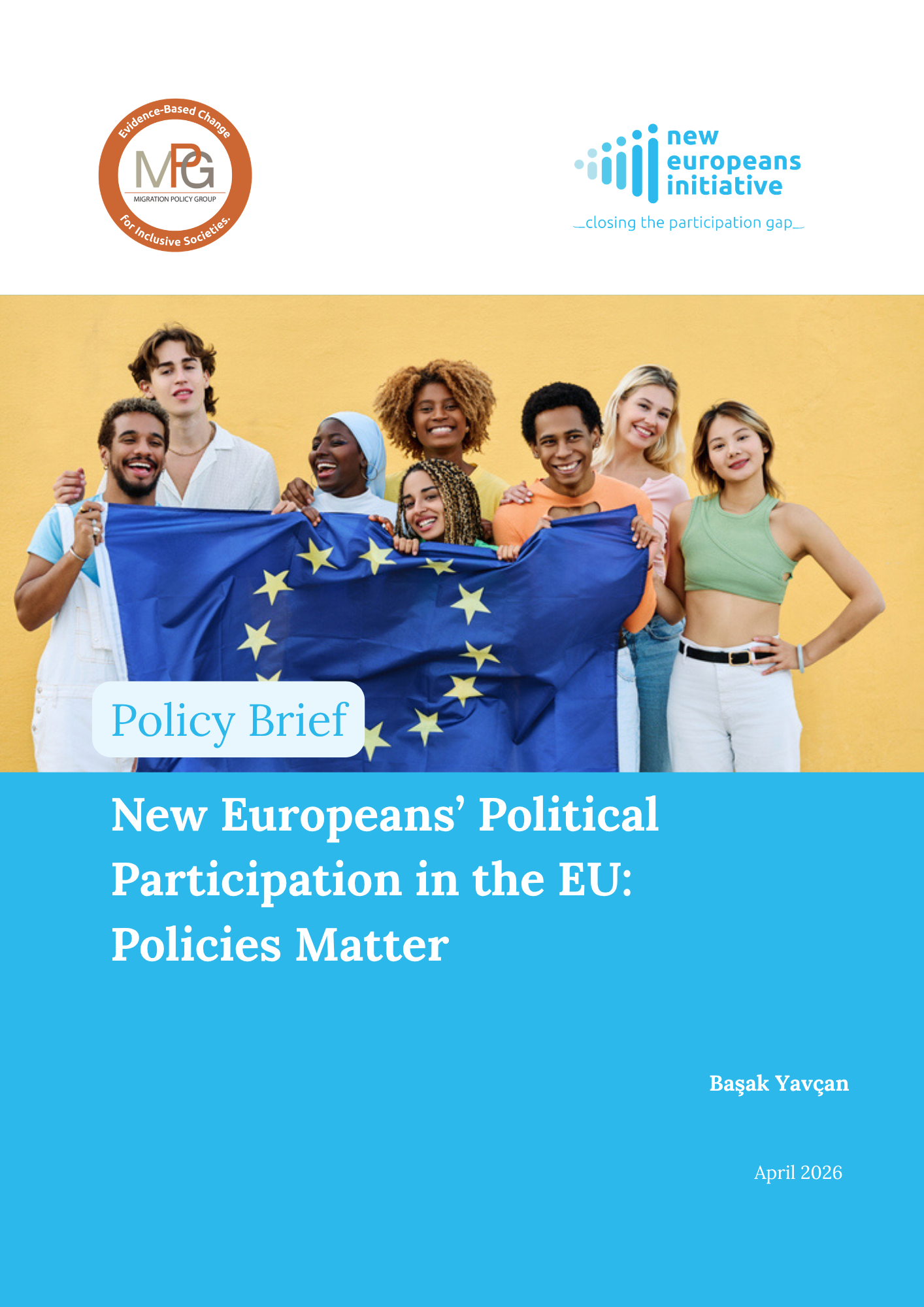 The policy brief highlights a central message for policymakers: political participation policies do matter, but their effects are neither automatic nor uniform.
Inclusive legal frameworks are most effective when combined with:
- active encouragement to participate, including outreach and mobilisation
- accessible and inclusive civic education
- strong institutional support for migrant-led civil society
- an open civic space that enables participation beyond elections
Without these complementary measures, even well-designed policies may have limited impact.
A persistent challenge: lack of data
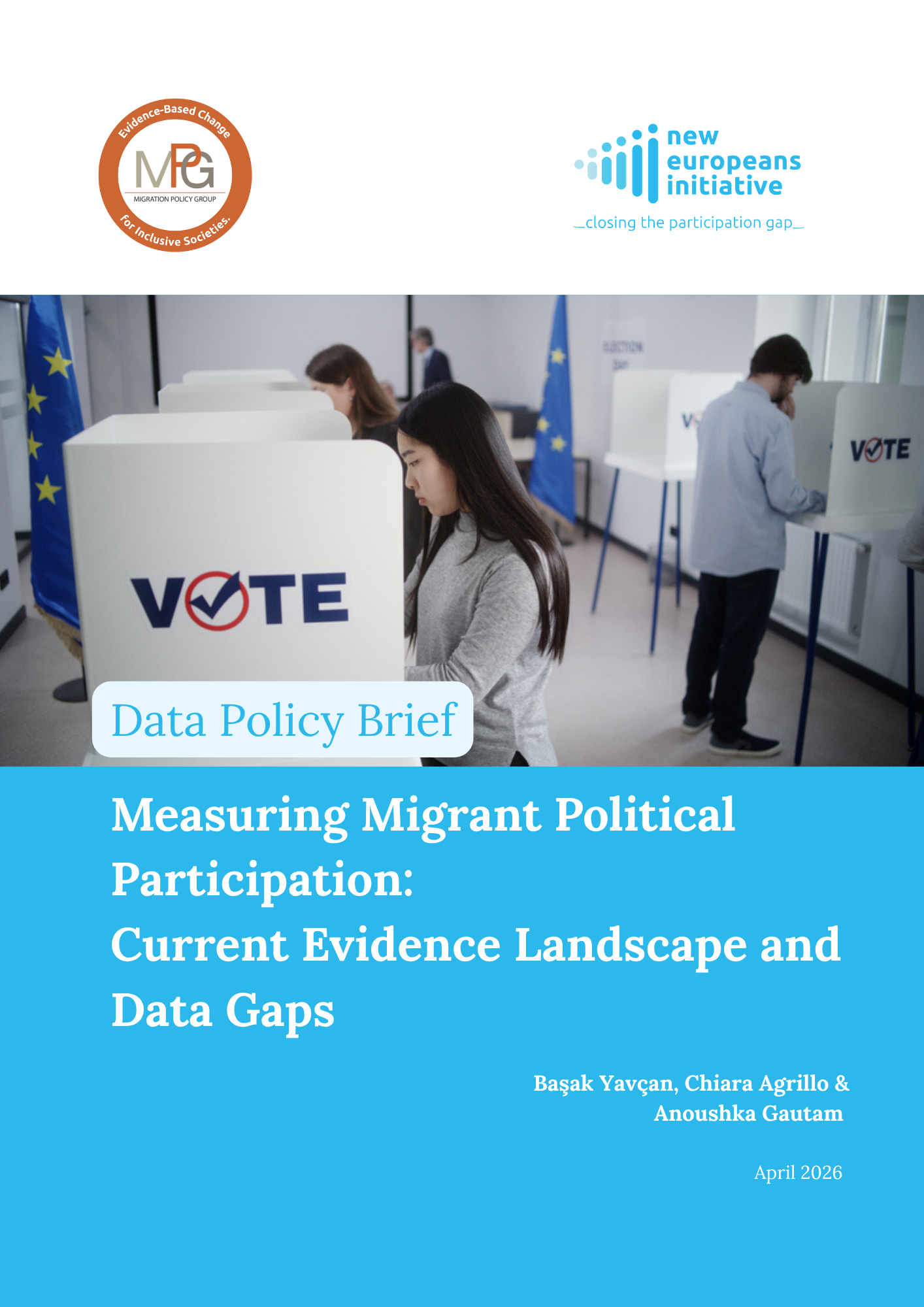 Across all three publications, a major barrier emerges: the lack of reliable and comparable data on migrant political participation.
The data policy brief shows that:
- administrative data on participation outcomes are scarce and fragmented
- definitions of “migrant” vary across countries
- comparable data on voting, representation, and non-electoral participation are limited
As a result, surveys remain the main source for analysis, despite known limitations. Strengthening data collection and coordination is essential to monitor participation gaps and assess policy impact effectively.
Three publications, one shared goal
Each publication targets a specific audience while contributing to a shared objective of strengthening evidence-based policymaking:
- Research report: provides in-depth analysis for academics and the research community
- Policy brief: offers actionable recommendations for integration policymakers and practitioners
- Data policy brief: addresses key challenges for data stakeholders, including Eurostat, OECD, and national statistical systems
Towards more inclusive democracies
This research sends a clear message: enabling migrants’ political participation requires more than formal rights. It demands coordinated policies, supportive institutions, and better data.
By bridging the gap between policy design and real-world outcomes, the New Europeans Initiative aims to support more inclusive, representative, and resilient democratic systems across Europe.
Publications
Authors

Başak Yavçan
Head of Research

Chiara Agrillo
Research Intern

Anoushka Gautam
Former Research Intern
About the Migration Policy Group (MPG)
MPG is an independent think-and-do-tank based in Brussels. MPG’s purpose is rooted in its ability to inspire networks to provide evidence-based projects, research and campaigns in the areas of integration, migration and anti-discrimination.